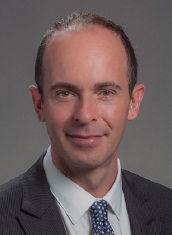

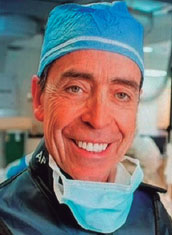
Augusto D. Pichard graduated with honors in Medicine from Universidad Católica de Chile (Santiago, Chile) and completed his fellowship in Cardiology at Cleveland Clinic (Ohio, United States) (1971–1973), where he remained until 1975. That year, he was appointed director of the cath labs at Mount Sinai Hospital in New York, where he performed the institution’s first angioplasty in 1979. After spending a year in Chile, where he introduced angioplasty, he was appointed director of the cath labs at MedStar Washington Hospital Center in 1983. Under his leadership, the center became one of the world’s leading institutions in interventional cardiology, training generations of interventional cardiologists who now hold leadership positions worldwide. He was Professor of Medicine at Georgetown University and received the Alexander J. Lindsay Award for Excellence in Teaching. He has authored more than 800 scientific publications. Augusto D. Pichard is a cofounder of the Transcatheter Cardiovascular Therapeutics (TCT) and Cardiovascular Research Technologies (CRT) conferences, as well as a founding member and Master of the Society for Cardiovascular Angiography and Interventions (SCAI). From 2017 to 2021, he served as Medical Director of Abbott’s Structural Heart Division and Global Director of its TAVI program.
Although you are regarded as one of the pioneers of interventional cardiology, the early stages of that career path must not have been easy. Could you describe how you came to join Cleveland Clinic and what ultimately led you toward interventional cardiology?
I was a Cardiology fellow in Santiago (Chile), and had absolutely no intention of moving to the United States. F. Mason Sones, the father of coronary arteriography and head of the department at the Cleveland Clinic, personally called me to offer me a fellowship in cardiology and cardiac catheterization. I thanked him and declined. He then asked me to speak with my supervisors before turning down the offer, and that is exactly what I did: they sent me to Cleveland!
At the time, coronary artery bypass surgery—which René Favaloro had developed at that same institution—was highly controversial. Most centers did not yet accept it as a valid treatment option, and the evidence supporting it was still very limited. I presented a study at the American Heart Association meeting showing, for the first time, that surgery provided better outcomes than optimal medical therapy in patients with left main coronary artery disease. The audience strongly challenged the findings. I learned a great deal in that room. The clinical volume was extraordinary. Every evening, I reviewed the day’s cases, photographed the coronary angiograms, and eventually published them as an atlas. I remained on the faculty for another 2 years, training fellows and performing a great deal of catheterizations.
Before establishing a world-renowned referral center in Washington, you worked at Mount Sinai Hospital in New York, where you directed the cath lab. What were the main lessons you learned from that period, and how did they shape your future career?
I moved to New York at the invitation of Richard Gorlin, from Harvard, who was joining Mount Sinai Hospital with his team and asked me to go with them to direct the cath lab. Academic life was extremely demanding: clinical conferences began at 7 in the morning, followed by lectures and meetings throughout the day. When I arrived, cardiac catheterizations were being performed in a room borrowed from the radiology department. I had to build the service from the ground up, establish dedicated cath labs, and launch clinical and experimental research programs.
That was where I first heard about Andreas Grüntzig and angioplasty. We immediately initiated an animal protocol to study the effects of balloon dilation on the artery and myocardium, which allowed us to introduce the technique into clinical practice at a very early stage. Those first 10 years in the United States taught me the importance of working within large teams, rigorously validating every advance scientifically, and allowing intellectual satisfaction to be the main driving force. Nobody thought of maximizing revenue, and everyone focused on advancing the specialty.
In Washington, you recruited professionals who would later achieve major international recognition, such as Gregg Stone, Martin Leon, Ron Waksman, Ran Kornowski, Gary Mintz, Jeff Popma, Roxana Mehran, Alexandra Lansky, and George Dangas. What do you remember about that group, and what advice would you give about surrounding yourself with talent in an environment in which some leaders may perceive their brightest collaborators as a threat?
After a period at the Universidad Católica de Chile, I moved to Washington Hospital Center, which at the time was a private hospital with very limited interventional activity, performing only 3 to 5 catheterizations per day. I reorganized the service, built new cath labs, established a prospective database, introduced coronary angioplasty and mitral and aortic valvuloplasty, and organized our first live-case course, devoted to aortic valvuloplasty, along with Alain Cribier.
The program grew rapidly. Once I reached a volume of 1000 procedures per year, I decided to build a group. Many colleagues advised me to recruit people who would not threaten my position. I did exactly the opposite: I looked for the most talented people I could find. That is how Martin Leon, Kenny Kent, and Lowell Satler came to join us, with the rest of the group following later. We divided income equally to eliminate financial competition, declined industry benefits, and decided not to patent our innovations. Eventually, we were performing more than 15,000 procedures per year and producing the highest volume of publications in the United States. Team spirit made everything possible: listening to every member of the group and working without internal rivalry, always keeping the patient at the center of everything we did.
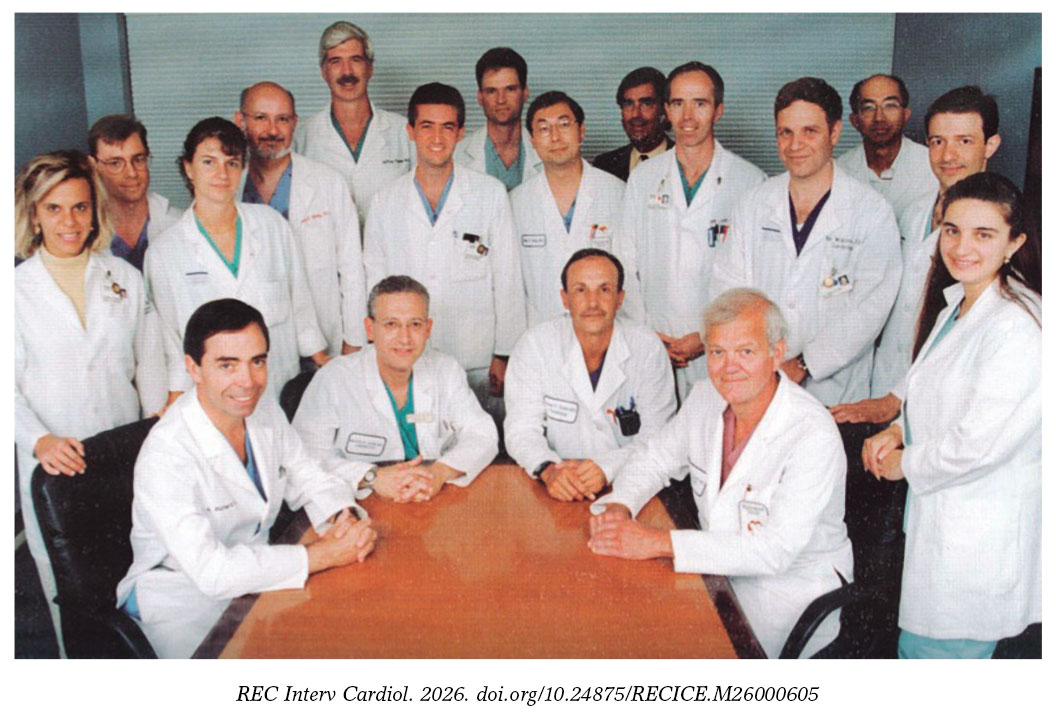
Washington Hospital Center team in 1997. Bottom row, from left to right: Augusto Pichard, Martin Leon, Lowell Satler, and Kenneth Kent. Top row: Andrea Abizaid (first), Alexandra Lansky (third), Gary Mintz (fourth), Jeffrey J. Popma (fifth), Alexandre Abizaid (sixth), Ran Kornowsky (seventh), Ron Waksman (eleventh), and Roxana Mehran (fourteenth), together with their colleagues.
Teaching has been a focal point of your career. What did you try to instill in the fellows you trained?
Our fellows were essential to the success of the group. We structured the fellowship as 1 year devoted to research followed by 1 clinical year, so that they would leave with a strong methodological foundation from which they could continue to develop independently. It worked well. Many of them are now leaders in the specialty in their own institutions and countries. Beyond technical skills, what I tried to instill in them was rigor, curiosity, and a permanent desire to learn. And perhaps the idea that medicine is not an individual pursuit.
How was TCT created, and what role has it played in the global dissemination of cardiovascular intervention?
The idea came from Martin Leon and Kenny Kent. The first meeting was held in 1988, with fewer than 200 attendees and a single live case transmitted from Georgetown Hospital. In 1989, with the establishment of the Washington Cardiology Center, we took responsibility for continuing the meeting and developed a format centered on the presentation of rigorous scientific data and the real-time demonstration of the technologies we were developing. We invited the world’s leading experts to participate as panelists, and the meeting rapidly became a major international reference point in interventional cardiology. From the outset, what set it apart was the opportunity for direct interaction among cardiologists, researchers, and industry representatives. It remains a highly relevant meeting today, and its format has expanded considerably to include workshops, hands-on training, live cases, and presentations of emerging technologies.
You have always emphasized that every member of the cath lab team—physicians, nurses, technicians, and support staff—is essential. Why is team culture so important in interventional cardiology?
From the very first day, I made it clear that every member of the team, from those responsible for cleaning the area to the department chiefs, had a role in decisions concerning the cath lab. We held weekly meetings to review how the system was functioning, and anyone could give their opinion. Decisions were not made simply because the chief said so; they were made because the group had reached a consensus. Moreover, we organized social events for the entire staff, including a Thanksgiving lunch in which everyone contributed in their own way. A team that feels valued works differently, and that ultimately has an impact on patient outcomes.
Throughout the course of a long career, complications are inevitable. How does one learn to deal with them?
By documenting them, analyzing them as a group, and publishing them. That is the best way to learn how to prevent them from happening again and how to respond when they occur. In our department, we consistently emphasized reviewing every complication collectively and sharing the results, even when the outcomes were unfavorable. Currently, we have an annual meeting and a monthly publication devoted specifically to this topic. High-volume practice was essential too. Being in the cath lab every day allowed us to develop the skills required to manage complex situations without increasing the rate of complications.
Interventional cardiology requires extraordinary dedication. What place should personal life have within that career?
At the beginning of my career, I made one decision: I would be home for dinner with my family at 7 every evening. I later extended that principle to the entire staff. To make this compatible with clinical work, we progressively moved the start of procedures earlier until we were beginning at 6:30 in the morning, with the patient already on the table at 6:00 sharp. After 6 in the evening, I did not accept any more medical commitments. Family dinner was sacred: no television, all of us sitting together in the dining room, talking about our day. My children and I did homework together after dinner. I could never go to their weekday games, but I was there on the weekend ones. When I traveled to conferences, I always returned as soon as possible. On three occasions, I traveled to Japan and Australia and returned without staying overnight. You cannot get your personal life back. The hospital is always there.
You retired from active clinical practice approximately 5 years ago. How did you experience that process, and what would you recommend to those approaching that stage?
My advice is to retire at the peak of your career, without waiting for your technical skills, energy, or physical endurance to begin to decline. I would not recommend either a gradual withdrawal involving 1 procedure per week. Interventional cardiology requires high-frequency practice to maintain proficiency. When you stop, you are done.
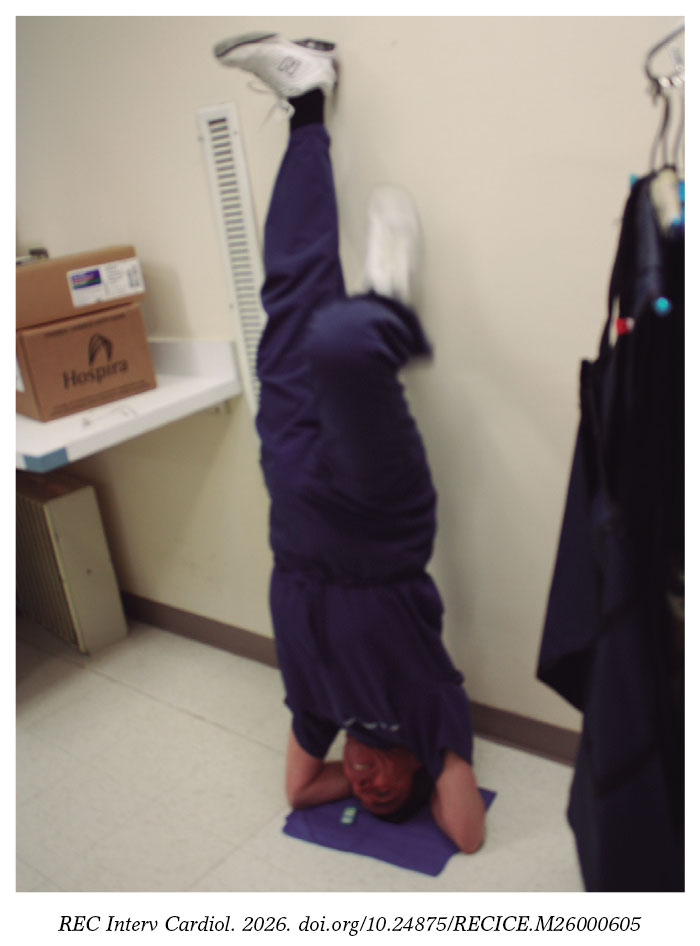
Augusto Pichard performing back-strengthening exercises between cases.
That said, what comes afterward is fascinating. A medical career is a life of service, and my recommendation is to find a way to continue serving the community in a different capacity. There is a huge world outside the hospital setting, equally fascinating, that for decades you simply have not had the time to explore it.
What message would you give to the new generations of interventional cardiologists?
That this is an extraordinary career. It is certainly demanding, but the satisfaction of restoring a patient’s cardiovascular health has no equivalent. As I used to tell my team in the cath lab, it is like running a marathon: you may be exhausted, but reaching the finish line makes all the effort worthwhile. Work as a team. This is not a specialty to practice in isolation. Do not hesitate to refer a patient to someone with greater experience in that particular case, whether at your own center or elsewhere. Start doing back-strengthening exercises from day one. I have done them throughout my life and, despite spending decades in the cath lab, I have no functional limitations. And assess the whole patient: their emotional state, diet, physical activity, inflammatory profile, and physical examination findings. Angiography is only one side of the whole story.
FUNDING
None declared.
STATEMENT ON THE USE OF ARTIFICIAL INTELLIGENCE
Artificial intelligence was not used in the preparation of this manuscript.
CONFLICTS OF INTEREST
None declared.
ABOUT THE AUTHOR
Rafael Romaguera is associate editor of REC: Interventional Cardiology and Head of the Interventional Cardiology Section at Hospital Universitari de Bellvitge (Barcelona, Spain). Augusto Pichard was his mentor during his training period in Washington, DC.