
Interview
An interview with Camino Bañuelos
Una entrevista con Camino Bañuelos
aServicio de Cardiología, Hospital Clínico San Carlos, Instituto de Investigación Sanitaria del Hospital Clínico San Carlos (IdISSC), Madrid, Spain bServicio de Cardiología, Hospital Clínico Universitario de Santiago de Compostela, Santiago de Compostela, A Coruña, Spain
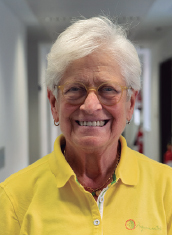
Camino Bañuelos (Puebla de Alcocer, Badajoz, 1947) belongs to the pioneering generation of women physicians who transformed interventional cardiology in Spain. Her vocation was kindled in adolescence, inspired by her father’s stories, a health care worker during the Spanish Civil War. After overcoming academic and social barriers in an era when few women studied medicine, she began her career in the Madrid mountain range, where she is still remembered for her warmth and dedication. She soon entered the emerging field of interventional cardiology at Hospital Clínico San Carlos (Madrid, Spain) becoming a reference in cardiac catheterizations, valvuloplasties, and as a teacher of future specialists.
In the first place, could you give us a brief overview of your biography?
I was born in Extremadura (Spain) in 1947, into a family of public servants. I was the youngest of 3 siblings. My life seemed destined for a different path, but a failed exam opened the door to what would become my true vocation: medicine. When I was 14, my parents offered me a job at a bank in Toledo (Spain), provided that I passed the reválida—Spain’s national secondary school exam required for university admission—which ended up shaping my future. I failed it, but after retaking it, I was able to continue studying. That “failure” ended up shaping my future.
Why did you decide to study medicine?
My inspiration came from home: my father, who had worked as a nurse during the Civil War, passed his passion for medicine over to me through the stories he told from that time. That was how my dream of becoming a doctor was born, at a time when very few women dared to take that step.
A student against convention… Did you face difficulties because of that?
In my class at the School of Medicine of Complutense University of Madrid (Madrid, Spain), less than 10% of students were women, and discrimination was evident. I remember one day when a professor said: “Ladies, what are you doing here and not at home waiting for a good husband to come your way?” The entire classroom fell completely silent, and the session resumed as though nothing had occurred. My school years were also marked by student uprisings that even led to the faculty’s closure for a year. To reopen, we had to apologize to the government!
You began your career in rural medicine. How were your first steps as a doctor?
After graduating, I began working in several small towns in the Madrid mountains—Cabanillas, Venturada, Valdemanco, and Redueña. There were no health centers there, so I held consultations at the town hall. My work focused on vaccination campaigns and prevention of rheumatic fever, which meant diagnosing childhood tonsillitis early and treating it with penicillin. Even today, some neighbors remember those times! When I walk through Cabanillas, some dads tell their children: “That doctor used to chase me with a syringe when I was little.”
From primary care to interventional cardiology—how did that transition happen?
While working in the Madrid mountains, I began my cardiology training under the mentorship of Pedro Zarco and Luis Martínez Elbal. With them, I learned to perform diagnostic catheterizations, coronary angiographies, and ventriculograms via femoral access and humeral surgical dissection—techniques that, in the 1980s, were essential to refer patients for surgery. I also entered the emerging field of echocardiography, then performed in M-mode. In the cath lab, I also met Ester de Marco Guilarte, another pioneering cardiologist who, after participating in diagnostic cardiac catheterizations, later specialized in pediatric cardiology.
In 1982, I joined the Cardiopulmonary Exploration Unit at Hospital Clínico San Carlos (Madrid, Spain) where I conducted consultations, cardiac catheterizations, and echocardiograms. In the afternoons, I worked at a clinic in Torrejón de Ardoz. Things were not as they are now; I remember driving patients with arrhythmias to Madrid in my own car for hospitalization.
You witnessed major advances in interventional cardiology firsthand. What do you remember from that time?
The arrival of Carlos Macaya at Hospital Clínico in 1985 marked a turning point: he brought plain old balloon angioplasty, and a few years later, stenting. In 1989, we both learned the mitral valvuloplasty technique directly from Masami Inoue, who developed it. Because of that experience, I was able to teach the procedure to colleagues such as Rosana Hernández Antolín and specialists from hospitals across the country. That teaching role took me abroad; I fondly remember my time in Cuba, where I performed a valvuloplasty on a pregnant patient, and in Romania too.
At the end of the 1980s, together with Carlos Macaya and under the direction of Alain Cribier, I learned balloon dilation for severe aortic stenosis, a procedure later discontinued because of its limited efficacy, yet one that marked a milestone in the history of cardiology.
After an alert in the cath lab at Hospital Clínico San Carlos in 2008. Camino Bañuelos (second from left) with Tamara Gorgadze (fellow), Vera Rodríguez (nurse), and María José Morales (nurse).
In the 1990s, Hospital Clínico became an international training hub. You were recognized not only as a cardiologist but also as a teacher. How do you remember that time?
During those years, with the consolidation of the stent, Hospital Clínico attracted physicians from across Latin America to train in interventional techniques. I have always believed that properly training young doctors is a fundamental responsibility: the better we prepare them today, the better they will care for us when we grow old. I still remember those long afternoons of complex cardiac catheterizations and angioplasties with fellows, often late into the night, while the nursing staff, exhausted, joked about closing the lab.
Did you face obstacles because of being woman?
Honestly, I never felt any significant barriers from my colleagues for being a woman. What I did notice, especially in the early years, was a certain disbelief from patients, who would call me “Miss” or address me informally, not realizing I was the doctor.
Would you like to leave a message for new generations?
I would tell them that although medicine demands effort and commitment, it gives back much more than it takes. Do not be afraid to make mistakes or to fight for your place; every step you take today will open the door for those who will come after you.
Camino Bañuelos at the tribute paid to her by her colleagues during the 16th Annual Meeting of the Interventional Cardiology Association of the Spanish Society of Cardiology (ACI-SEC), held in Santiago de Compostela in June 2025. With her, from left to right: Ana Belén Cid Álvarez, Pilar Jiménez Quevedo, and Nieves Gonzalo.
FUNDING
None declared.
STATEMENT ON THE USE OF ARTIFICIAL INTELLIGENCE
None used.
CONFLICTS OF INTEREST
None declared.
ABOUT THE AUTHORS
Pilar Jiménez Quevedo is an interventional cardiologist at Hospital Clínico San Carlos. Ana Belén Cid Álvarez is an interventional cardiologist at Hospital Clínico Universitario de Santiago de Compostela (Galicia, Spain) and president of the Interventional Cardiology Association of the Spanish Society of Cardiology (ACI-SEC).
The ACI-SEC honored Camino Bañuelos at its 36th Annual Meeting in gratitude for her legacy—that of a woman who forged a path in a field where few, at that time, succeeded, and who helped transform cardiology in Spain.
Editor's page
Original articles
Editorials
Original articles
Editorials
Post-TAVI management of frail patients: outcomes beyond implantation
Unidad de Hemodinámica y Cardiología Intervencionista, Servicio de Cardiología, Hospital General Universitario de Elche, Elche, Alicante, Spain
Original articles
Debate
Debate: Does the distal radial approach offer added value over the conventional radial approach?
Yes, it does
Servicio de Cardiología, Hospital Universitario Sant Joan d’Alacant, Alicante, Spain
No, it does not
Unidad de Cardiología Intervencionista, Servicio de Cardiología, Hospital Universitario Galdakao, Galdakao, Vizcaya, España