
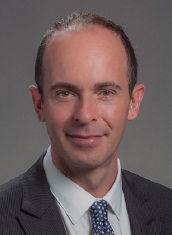
Lorenzo Azzalini is the Director of Interventional Cardiology Research and Professor of Medicine at the University of Washington, in Seattle (United States). His clinical and research focus is percutaneous coronary intervention (PCI) for chronic total occlusion (CTO), a field in which he is internationally recognized as a leading expert. He has authored more than 330 peer-reviewed publications, including numerous articles in Journal of the American College of Cardiology, Circulation, and European Heart Journal. Dr. Azzalini has received multiple international awards, performed live case demonstrations at major scientific meetings worldwide, and is deeply committed to education, training fellows and interventional cardiologists globally in advanced techniques for complex coronary revascularization.
What originally motivated you to pursue a career in medicine, and later to specialize in interventional cardiology?
During high school, I became fascinated by how incredibly complex and coordinated the human body is. The more I learned about physiology, the more I wanted to truly understand how things work —and what happens when they don’t. I was drawn to medicine because it offered not only the opportunity to understand disease at a fundamental level, but also the ability to intervene and help “fix” what had gone wrong.
During medical school, I found myself especially drawn to cardiology. I was struck by how the dysfunction of a single organ could have such immediate and catastrophic consequences. At the same time, given the prevalence of cardiovascular disease, the potential to make a meaningful clinical impact was substantial.
I fell in love with interventional cardiology during my residency. while working night shifts, I cared for patients with acute myocardial infarction who would go straight to the cath lab. Seeing an interventional cardiologist open an occluded artery and watching a patient stabilize almost in real time was unforgettable. In those moments, I realized that I didn’t just want to understand cardiovascular disease—I wanted to be a physician who could intervene during the most critical situations and make a difference.
Your training spanned Italy, Spain, Canada, and the United States. How did exposure to these different health care systems shape your development as a physician and scientist?
My training path has taken me through very different health care systems, each of which shaped me in a distinct way. In Italy, at the University of Padua, I developed a strong theoretical foundation in medicine. There is something powerful about training at an institution with an 800-year-long history—it instills a deep respect for the science of medicine and for the generations of physicians who came before us.
In Spain, at the Hospital de la Santa Creu i Sant Pau in Barcelona, I experienced significant clinical growth. I was exposed to the full spectrum of cardiology and developed a strong sense of responsibility for patient care. Both in Italy and Spain, I learned that medicine is fundamentally human. It’s about being present for patients and their families, especially when we cannot offer a cure, and about sharing both hope and hardship.
My interventional training at the Montreal Heart Institute in Canada was transformative. I developed technical skills across a wide range of coronary and structural heart procedures and saw firsthand how careful planning and attention to detail can change a patient’s trajectory in a single procedure.
Relocation to the United States, and particularly to the University of Washington, pushed me even further. The complexity of coronary artery disease here demands that we as interventional cardiologists learn different techniques to deal with very prevalent problems, including severe coronary calcification, chronic total occlusions, and revascularization in patients with prior coronary artery bypass graft surgery.
If there is a unifying theme in my journey it is this: medicine has required me to keep learning, adapting, and evolving—and that’s exactly what continues to motivate me.
Complex coronary intervention, especially CTO PCI, requires a very particular mindset. What initially attracted you to this field, and specifically to CTO interventions?
I have always viewed CTO as incredibly complex puzzles—the kind that only a few people are willing to take on. What struck me early on was that many of these patients were simply told nothing could be done. As a result, they continued to experience significant symptoms and limitations, not because treatment was impossible, but because it required a very specific skill set. I felt strongly that these patients should have access to high-quality revascularization, which motivated me to pursue expertise in CTO intervention.
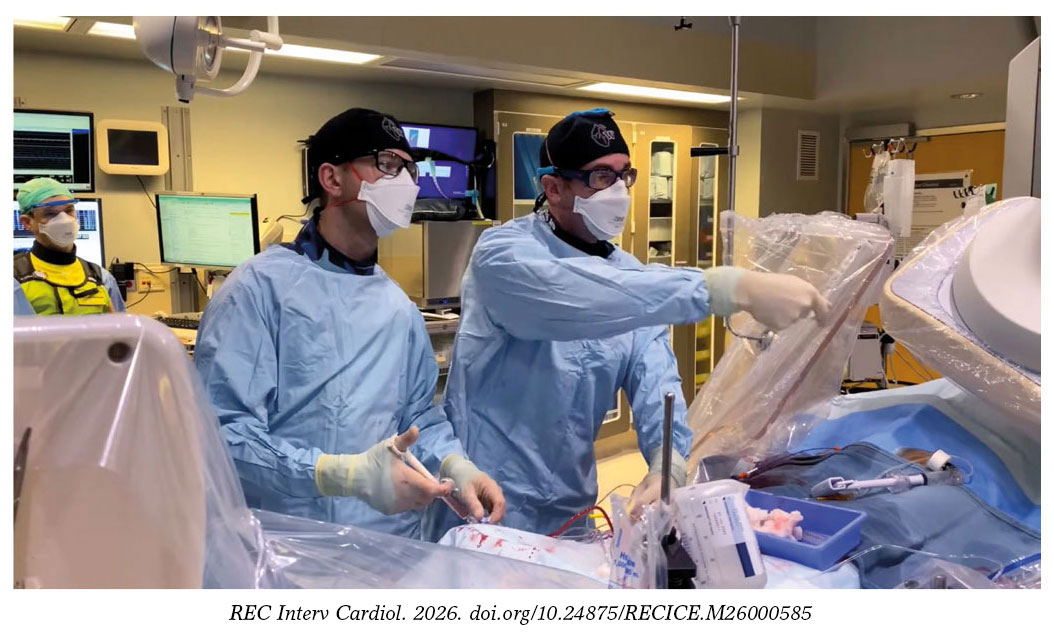
Lorenzo Azzalini (on the right), in a picture taken in the cath lab at the University of Washington Medical Center with an interventional cardiology fellow (September 2022).
CTO work requires a particular mindset. Operators must be comfortable with long procedures, uncertainty, and constant problem-solving. It demands patience, edurance, and an obsessive attention to detail, because a single misstep at the wrong time can have serious consequences. It also requires deep familiarity with every device and technique, as well as the ability to anticipate and manage complications in a calm and systematic manner.
There is also a shared mindset among many operators in this field: we’re drawn to challenges that others may avoid. We’re willing to spend hours focused on opening a single lesion while others finish multiple cases and go home. It’s demanding, sometimes humbling work, but incredibly rewarding.
I truly believe that high-level training in CTO PCI sharpens every aspect of your practice and ultimately makes you a better interventionalist in all coronary interventions.
You have authored numerous studies on CTO PCI, ranging from registries to reviews and consensus documents. Which contributions do you believe have had the greatest impact on daily practice or on how we conceptualize CTOs?
From early on in my CTO practice, I recognized that technical skill alone was insufficient. If I truly wanted to provide the best care, I needed to evaluate my outcomes, challenge my assumptions and share what we were learning with the broader community. That mindset led me to collaborate closely with colleagues and contribute to nearly 100 original studies on CTO PCI.
Several contributions stand out. In 2017, we published a large multicenter study examining CTO PCI in the setting of in-stent restenosis.1 We showed that simply re-stenting these lesions had limited long-term durability. That work helped shift the conversation and opened the door to exploring alternative strategies, such as drug-coated balloons, for this challenging subset.
That same year, we reported outcomes of CTO PCI performed via ipsilateral, often epicardial, collaterals.2 At a time of increasing enthusiasm for complex retrograde approaches, our data highlighted the higher risk of perforation and tamponade in this setting. I think that study contributed to a more balanced and cautious framework for procedural decision-making.
The study I am most proud of, however, is our recent randomized trial evaluating the subintimal tracking and re-entry (STAR) technique.3 It was the first large trial comparing technical strategies in CTO PCI. We demonstrated that a bailout investment approach with STAR and deferred stenting can achieve high staged success rates without added risk, supporting a safer and more reproducible strategy. I believe this work is contributing to a shift in the field toward a paradigm that prioritizes procedural safety without compromising effectiveness, ultimately benefiting both operators and patients.
CTO PCI has not consistently demonstrated a mortality benefit in randomized trials, despite symptomatic improvement and observational signals. How should we interpret this apparent paradox?
As physicians, we are naturally oriented toward increasing survival: extending life is fundamental to what we do. But mortality represents only one outcome. For many of our patients, symptoms, functional capacity, and quality of life are equally important outcomes.
CTO PCI has a powerful and very consistent impact on quality of life. You truly understand this when patients return to the clinic after a successful recanalization. They tell you they can walk without stopping, travel again, or run after their grandchildren— things they had quietly given up on, assuming they were simply “getting older”. That kind of transformation is real, even if it doesn’t show up as a mortality curve on a trial report.
It’s also important to maintain perspective. With the exception of primary PCI in the setting of ST-segment elevation myocardial infarction, PCI in stable patients has not consistently shown a survival benefit. If opening a severe but non-occlusive proximal left anterior descending artery doesn’t clearly improve mortality in randomized trials, it is not unexpected that CTO PCI would yield similar findings.
I don’t see this as a paradox. I see it as a reminder that the value of CTO PCI lies primarily in symptom relief and quality of life, and that we should hold it to the same standards, expectations, and honesty that we apply to PCI in general.
CTO PCI outcomes have improved substantially in recent years, with higher success rates and lower complication rates. In your view, what have been the most important drivers of this progress—whether in techniques, tools, or operator mindset?
Technology has certainly helped: better guidewires and microcatheters have expanded what we can do. But honestly, I think the biggest advances have happened in the minds of operators.
The development of techniques such as the retrograde approach and modern dissection and re-entry strategies fundamentally changed the field. Lesions that were once labeled “impossible” suddenly became treatable. But the real leap forward came when these techniques were organized into structured algorithms. Instead of improvising, operators began approaching CTOs with a clear, stepwise strategy. That shift brought consistency, efficiency, and better decision-making.
In the last few years, progress has extended beyond wires and techniques. We have matured as a field. We’ve become more intentional about complication management: not only in prevention of complications, but also on how to recognize and recover from them calmly and systematically. Furthermore, greater emphasis has been placed on operator mindset, including mental resilience during long cases, and the importance of building strong CTO programs and collaborative communities rather than working in isolation.
Collectively, these changes—technical, strategic, and cultural—have worked together to turn CTO PCI not only into a more successful procedure, but also into a safer and more reproducible one than ever before.
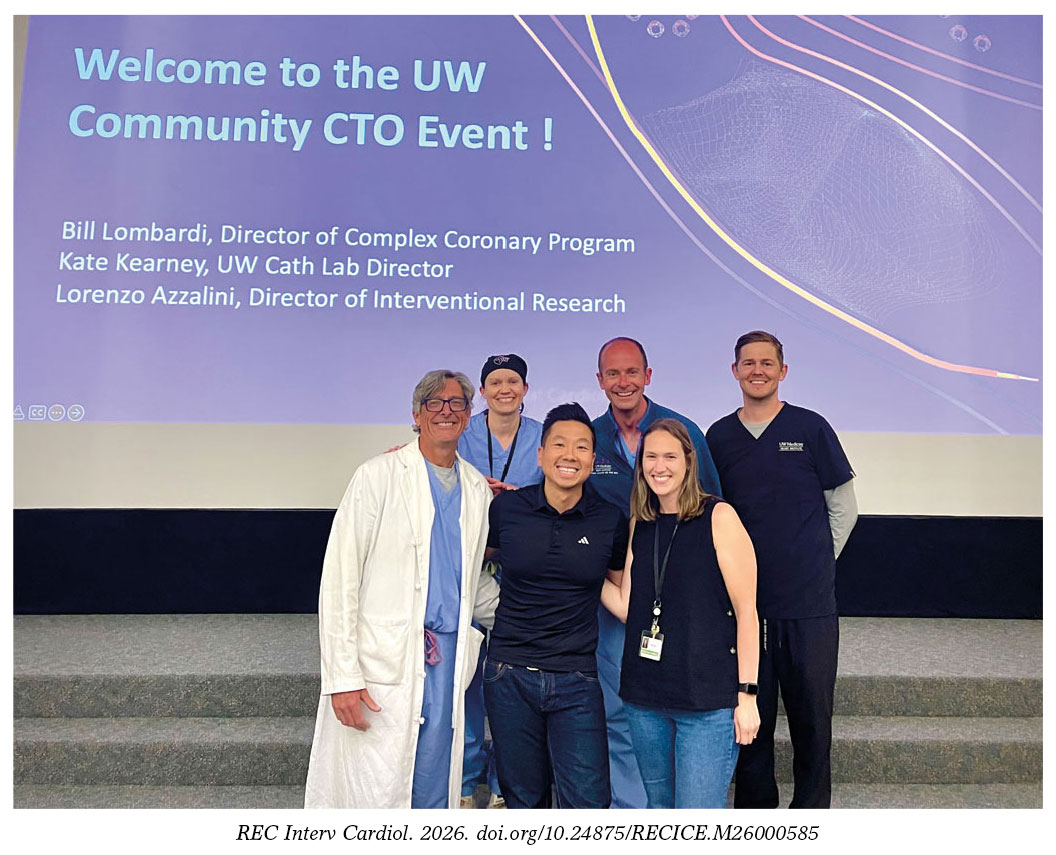
Organizers of the University of Washington Community CTO Event (July 2025). Left to right: William Lombardi, Kathleen Kearney, Primero Ng, Lorenzo Azzalini, Rachel MacDonald, and John Michael Maier.
From your perspective, which innovations are most likely to transform the way we approach CTO PCI in the coming years (e.g., new devices, imaging, robotics, or AI-based planning)?
Over the past two decades, we’ve seen many dedicated CTO crossing devices appear… and disappear. CTO PCI is simply too complex for a single tool to “solve” most cases. I don’t think the next big leap will come from one single breakthrough tool.
Rather, I believe the real transformation will come from 3 areas.
First, education and training. Proctoring alone hasn’t always been enough, but we’re now seeing the impact of dedicated CTO fellowships and hands-on workshops. As we continue to invest in formal education, high-quality CTO PCI will become accessible to more operators, and therefore to more patients.
Second, imaging. Although intravascular imaging is already improving patient outcomes and the durability of recanalization, the real revolution is happening in procedural planning. Coronary computed tomography angiography (CCTA)-guided planning is changing the way we approach cases before we even scrub in. Understanding the anatomy in detail ahead of time can simplify strategy and reduce unnecessary escalation.
Finally, I think AI-assisted planning will play an important role. Rather than replacing operator judgment, AI can become a partner. If AI-based analysis of angiography and CCTA can identify key complexity features and suggest the most promising crossing and plaque modification strategies, it could make decision-making more consistent and help democratize CTO PCI.
Although AI won’t think for us, it can sharpen our thinking. And that, in a field as nuanced as CTO PCI, could be truly transformative.
Interventional cardiology is both physically and emotionally demanding. How do you maintain balance outside the hospital?
The absolute pillar of my life, both inside and outside the hospital, is my family. My wife, Luz Maria, and my daughter, Lisa, are my grounding force. No matter how intense a day in the cath lab may be, coming home to them resets everything. Sharing life with them—the good moments and the difficult ones—gives me perspective and strength. It reminds me that medicine is what I do, not who I am. I find balance in the simple, everyday things: spending unhurried time together, traveling, hiking, sailing, and exploring new places as a family.
Those moments recharge me emotionally and physically, and they allow me to return to work focused, grateful, and ready to give my best to my patients.
Finally, what message would you offer to young interventional cardiologists aspiring to work in complex PCI?
First, know yourself. Understand who you truly are, what drives you, and what kind of physician you aspire to become. When you are grounded in that, decisions become clearer.
Don’t build your career around impressing others or reacting to the noise around you. There will always be opinions—about what you should do, what is realistic, what is “possible.” When I listened too closely to that noise, I sometimes drifted away from my own path.
Don’t let anyone convince you that you are not good enough, or that something is impossible. Ambitious goals often live in that space between doubt and determination. If I had listened to the naysayers, I would not be where I am today, and where I will be tomorrow.
Whatever direction you choose, commit to it fully. Strive to be excellent. In the end, the only person you truly answer to is yourself. If you can look back and know you gave your best—intellectually, technically, and ethically—that is what defines a meaningful career.
FUNDING
None declared.
STATEMENT ON THE USE OF ARTIFICIAL INTELLIGENCE
None used.
CONFLICTS OF INTEREST
None declared.
ABOUT THE AUTHOR
Soledad Ojeda is associate editor of REC: Interventional Cardiology. Her clinical and research interests include complex coronary intervention, particularly CTO PCI. She has collaborated with Lorenzo Azzalini on multiple research projects and peer-reviewed publications in this field.
REFERENCES
1. Azzalini L, Dautov R, Ojeda S, et al. Procedural and Long-Term Outcomes of Percutaneous Coronary Intervention for In-Stent Chronic Total Occlusion. JACC Cardiovasc Interv. 2017;10:892-902.
2. Azzalini L, Agostoni P, Benincasa S, et al. Retrograde Chronic Total Occlusion Percutaneous Coronary Intervention Through Ipsilateral Collateral Channels:A Multicenter Registry. JACC Cardiovasc Interv. 2017;10:1489-1497.
3. Azzalini L, Kearney K, Salisbury AC, et al. Early vs Late Staged PCI After Subintimal Tracking and Re-Entry for Chronic Total Occlusions:A Randomized Trial. J Am Coll Cardiol. 2026;87:286-293.