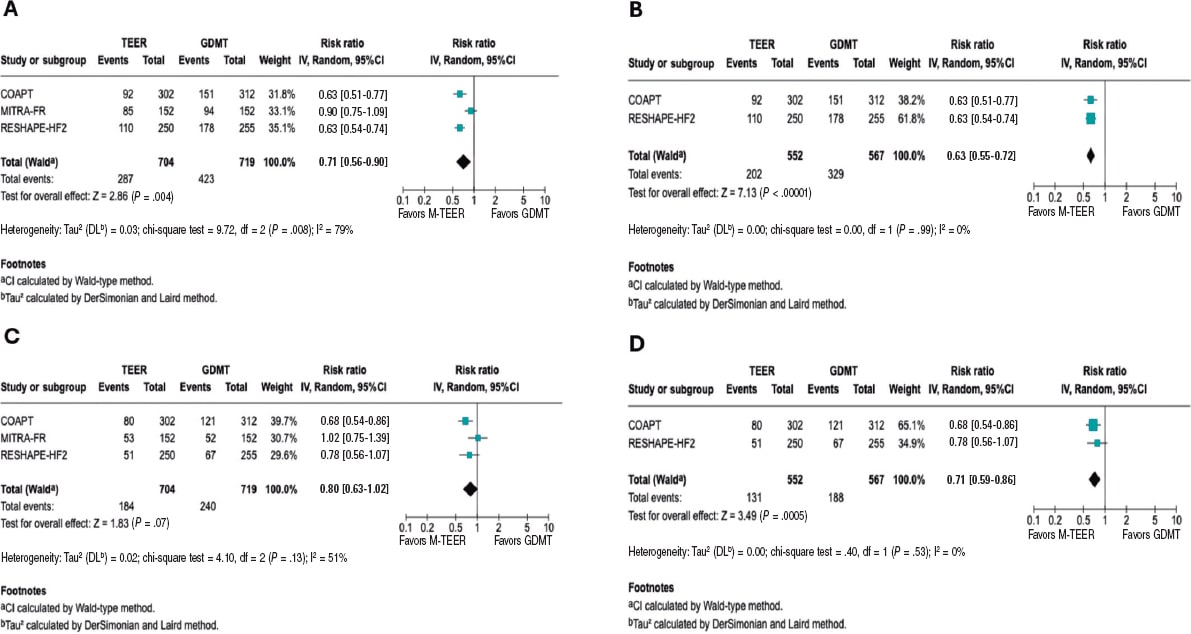

Secondary ventricular mitral regurgitation (MR) is a common valvular disorder resulting from ventricular dilation or dysfunction rather than primary leaflet abnormalities.1 Progressive left ventricular (LV) dilation and spherical reshaping displace the papillary muscles laterally and apically, increasing leaflet tethering forces and restricting systolic closure. Moreover, annular dilation and flattening reduce leaflet coaptation, while impaired LV contractility diminishes closing forces across the valve. This imbalance between tethering and closing forces leads to incomplete leaflet apposition and regurgitant flow into the left atrium during systole. Thus, the regurgitation reflects geometric distortion of the mitral apparatus secondary to LV remodeling rather than intrinsic leaflet pathology.
Moderate-to-severe regurgitation is present in approximately one-quarter to one-third of patients with chronic systolic dysfunction, depending on the population studied and the echocardiographic definitions applied.2 Its prevalence increases with progressive LV dilation, prior myocardial infarction, longer duration of heart failure, and inadequate reverse remodeling despite guideline- directed medical therapy (GDMT). Beyond its prevalence, secondary MR carries substantial prognostic implications. Numerous observational analyses have demonstrated that moderate-to-severe secondary MR is independently associated with increased all-cause and cardiovascular mortality, even after adjustment for LV ejection fraction and clinical markers of disease severity.3 The hemodynamic burden imposed by regurgitant volume increases left atrial and pulmonary venous pressures, promoting congestion, recurrent heart failure hospitalizations, and progressive right ventricular dysfunction. Patients with significant secondary ventricular MR also exhibit reduced functional capacity and poorer quality of life.
Historically, mitral valve surgery has been considered the main interventional approach for patients with significant secondary MR. Over the past few decades, several studies, including randomized clinical trials and meta-analyses, have evaluated the role of mitral valve surgery in this setting. These investigations showed that although surgery can reduce MR severity and, in some cases, promote reverse ventricular remodeling, evidence supporting a survival benefit vs optimal medical therapy alone remained limited.4 On the other hand, transcatheter interventions offer a less invasive alternative to open-heart surgery. Among these, percutaneous procedures, particularly transcatheter edge-to-edge repair (TEER), have been increasingly adopted. As supporting evidence grew accumulated, mitral TEER has been widely implemented in contemporary interventional practice worldwide. In recent years, 3 randomized clinical trials have compared GDMT plus mitral TEER with GDMT alone in patients with secondary significant MR. In a recent study published in REC: Interventional Cardiology, Paulino-González et al.5 conducted a systematic review and meta-analysis of the main clinical endpoints evaluated in randomized clinical trials comparing mitral TEER and optimal medical therapy thus far. They conducted a systematic search of electronic databases and identified 3 randomized clinical trials including more than 1400 patients overall. The primary endpoints were all-cause mortality and heart failure hospitalization. An exploratory analysis excluding patients from the MITRA-FR study6 was also performed to reduce heterogeneity between study populations. Overall, there was a trend towards lower all-cause mortality which did not meet statistical significance (risk ratio [RR], 0.80; 95% confidence interval [95%CI], 0.63–1.02; P = .07). Heart failure-related hospitalization rates were signifi- cantly lower among patients who underwent mitral TEER (RR, 0.71; 95%CI, 0.56-0.90; P = .004). In the exploratory analysis excluding MITRA-FR patients, both all-cause mortality (RR, 0.71; 95%CI, 0.59–0.86; P = .0005) and heart failure hospitalization (RR, 0.63; 95%CI, 0.55-0.72; P < .00001) were significantly reduced with the percutaneous approach, with minimal heterogeneity between studies. The reduction in the composite endpoint of heart failure-related hospitalization or death with mitral TEER was consistent among patients presenting grade 3+ and grade 4+ MR at baseline. There were no significant differences between mitral TEER and optimal medical treatment in terms of safety endpoints, including stroke and myocardial infarction.
Several aspects of this meta-analysis merit further consideration:
- – Differences in baseline clinical features across the included studies. When the COAPT trial7 was published in 2018, it provided compelling evidence that TEER reduced both heart failure-related hospitalizations and mortality in carefully selected patients with symptomatic heart failure and moderate-to-severe or severe secondary MR. Importantly, COAPT required rigorous optimization of GDMT before enrollment and objective confirmation of persistent, significant MR. In contrast, the MITRA-FR trial, reported in the same year, failed to demonstrate a reduction in death or heart failure-related hospitalization.6 At first glance, the results seemed contradictory to those of COAPT. However, closer examination reveals fundamental differences in trial design and patient phenotype. MITRA-FR applied broader MR severity thresholds and enrolled patients with substantially larger LV volumes. In these patients, MR severity was more proportionate to the degree of ventricular remodeling, suggesting that regurgitation was primarily a consequence, rather than a cause, of advanced myocardial disease.8 The RESHAPE-HF2 trial9 aimed to evaluate this comparison in a contemporary therapeutic landscape. Conducted in the era of more comprehensive GDMT, including greater uptake of sacubitril/valsartan, mineralocorticoid receptor antagonists, and SGLT2 inhibitors, its findings, showing reduction in heart failure events and symptomatic improvement, with a less pronounced mortality effect than COAPT), suggest that TEER may confer benefit across a broader spectrum of MR severity than that represented in COAPT, albeit with a smaller effect size.
- – Grades of residual MR after percutaneous intervention. As the authors stated in the discussion,5 MR reduction was less effective in the MITRA-FR trial. In conclusion, MR reduction to ≤ 2+ in MITRA FR (75.6% MR ≤ 2+ at discharge) was markedly lower than that obtained in COAPT (94.8% MR ≤ 2+ at 12 months) and the RESHAPE HF2 (90.4% MR ≤ 2+ at 12 months). In MITRA-FR the degree of MR reduction was modest relative to what has been observed in other studies, with many patients remaining with moderate residual regurgitation. Because baseline regurgitation in MITRA-FR tended to be less severe, based on effective regurgitant orifice area and regurgitant volume thresholds, and proportionate to LV dilation, the capacity of TEER to achieve a large absolute reduction in regurgitant volume was inherently limited. Analyses of residual MR in RESHAPE-HF2 suggest that the degree and durability of regurgitation correction remained an important determinant of clinical response: patients with sustained mild or lesser degrees of MR demonstrated the most favorable clinical outcomes, whereas those with persistent moderate regurgitation derived attenuated benefit.10 Additional factors may also have influenced trial outcomes, including increasing operator experience and advances in device technology over time. For example, the G4 generation of the MitraClip system (Abbott, United States) utilized in the RESHAPE-HF2 trial enables independent leaflet grasping and provides a wider range of device sizes, ultimately enabling tailored device selection potentially improving treatment of complex mitral valve anatomies.
Overall, Paulino-González et al.5 should be commended for their work and contribution to the field. Consistent with the findings of the abovementioned trials, this meta-analysis supports the fact that secondary ventricular MR is not merely an epiphenomenon of LV dysfunction but a modifiable contributor to adverse outcomes. Moreover, mitral TEER in combination to GDMT clearly constitute the best therapeutic strategy for improving clinical prognosis.
FUNDING
None declared.
CONFLICTS OF INTEREST
None declared.
REFERENCES
1. Huang AL, Dal-Bianco JP, Levine RA, Hung JW. Secondary Mitral Regurgitation:Cardiac Remodeling, Diagnosis, and Management. Struct Heart. 2022;7:100129.
2. Zhao C, Jin C, Shen Y, Lin X, Yu Y, Xiang M. The Prevalence and Characteristics of Mitral Regurgitation in Heart Failure:A Chart Review Study. Rev Cardiovasc Med. 2022;23:235.
3. Sannino A, Smith RL, Schiattarella GG, Trimarco B, Esposito G, Grayburn PA. Survival and Cardiovascular Outcomes of Patients With Secondary Mitral Regurgitation:A Systematic Review and Meta-analysis. JAMA Cardiol. 2017;2:1130.
4. Eapen SR, Zaky MH, Kostibas MP, Robich MP. Secondary mitral regurgitation surgical management:a narrative review. Cardiovasc Diagn Ther. 2024;14:958-973.
5. Paulino-González D, Pardiño-Vega MA, García-Loera AL, Zúñiga-Montaño KP, Navarro-Martínez DA. Transcatheter mitral edge-to-edge repair vs optimal medical therapy in secondary mitral regurgitation:a meta-analysis. REC Interv Cardiol. 2025. https://doi.org/10.24875/RECICE.M25000558.
6. Obadia JF, Messika-Zeitoun D, Leurent G, et al. Percutaneous repair or medical treatment for secondary mitral regurgitation. N Engl J Med. 2018;379:2297-2306.
7. Stone GW, Lindenfeld JA, Abraham WT, et al. Transcatheter mitral-valve repair in patients with heart failure. N Engl J Med. 2018;379:2307-2318.
8. Grayburn PA, Sannino A, Packer M. Proportionate and Disproportionate Functional Mitral Regurgitation:A New Conceptual Framework That Reconciles the Results of the MITRA-FR and COAPT Trials. JACC Cardiovasc Imaging. 2019;12:353-362.
9. Anker SD, Friede T, von Bardeleben RS, et al. Transcatheter Valve Repair in Heart Failure with Moderate to Severe Mitral Regurgitation. N Engl J Med. 2024;391:1799-1809.
10. Ponikowski P, Friede T, von Bardeleben RS, et al. Hospitalization of Symptomatic Patients With Heart Failure and Moderate to Severe Functional Mitral Regurgitation Treated With MitraClip:Insights From RESHAPE-HF2. J Am Coll Cardiol. 2024;84:2347-2363.