
ABSTRACT
Introduction and objectives: The Alex Plus stent is a cobalt-chromium sirolimus-eluting stent with a biodegradable polymer for which postmarketing clinical data remain limited. This study aimed to evaluate the 1-year safety and clinical efficacy of this Alex Plus stent in routine clinical practice.
Methods: This prospective, multicenter, observational registry was conducted in Spain. Eligible patients were referred for percutaneous coronary intervention (PCI) due to stable angina, acute coronary syndrome with or without ST-segment elevation, or silent ischemia. Implantation of at least 1 Alex Plus stent was required, although the use of additional devices was permitted according to routine clinical practice. The primary endpoints were target lesion revascularization (TLR) of of lesions treated with the study stent and target vessel failure (TVF) at 1 year. Secondary endpoints included major adverse cardiovascular and cerebrovascular events (MACCE).
Results: 589 patients were enrolled; 547 (92.9%) were analyzed. Mean age was 65.7 ± 11.1 years. 22.5% were women. Overall, 1006 stents were implanted, including 722 Alex Plus (71.8%). Acute coronary syndrome was the indication in 67%. In-hospital MACCE was 1.65%. At one-year, target lesion revascularization and target vessel failure were 3.1% and 3.5%, respectively; stent thrombosis occurred in 0.7%. Mortality was 4%, myocardial infarction 2%, stroke 1.5%, and overall MACCE 12.1%. Renal dysfunction strongly predicted mortality and MACCE, while disease extent and number of treated vessels and stents were associated with adverse events.
Conclusions: In real-world clinical practice, the Alex Plus stent demonstrated low rates of revascularization and thrombosis at one-year, with a safety and efficacy profile comparable to that of other contemporary DES.
Keywords: Percutaneous coronary intervention. Drug-eluting stent. Biodegradable drug-eluting polymer. Alex Plus. Balton.
RESUMEN
Introducción y objetivos: El stent coronario Alex Plus de cromo-cobalto con polímero biodegradable liberador de sirolimus dispone de limitada evidencia clínica tras su comercialización. El objetivo de este estudio es evaluar su seguridad y eficacia clínica a 1 año en condiciones de práctica clínica habitual.
Métodos: Estudio observacional prospectivo multicéntrico realizado en España. Incluye pacientes con indicación de intervención coronaria percutánea por angina estable, síndrome coronario agudo con o sin elevación del segmento ST, o isquemia silente, a los que se implantó al menos un stent Alex Plus, permitiendo el uso de otros dispositivos a criterio del operador. El objetivo primario fue la revascularización de la lesión diana y el fallo del vaso tratado con el stent en estudio a 1 año. Los objetivos secundarios incluyeron eventos cardiovasculares y cerebrovasculares adversos mayores (MACCE).
Resultados: Se incluyeron 589 pacientes, de los cuales fueron analizables 547 (92,9%). La edad media fue de 65,7 ± 11,1 años y el 22,5% eran mujeres. Se implantaron 1.006 stents, incluyendo 722 Alex Plus (71,8%), el 67% en síndrome coronario agudo. Ocurrieron MACCE hospitalarios en el 1,65%. A 1 año, la revascularización de la lesión diana y el fallo del vaso tratado fueron del 3,1% y el 3,5%, respectivamente; trombosis del stent 0,7%; mortalidad 4%; infarto 2%; ictus 1,5%; y MACCE globales 12,1%. La insuficiencia renal predijo mortalidad y MACCE. La extensión de la enfermedad y del tratamiento se asociaron a eventos adversos.
Conclusiones: El stent Alex Plus mostró bajas tasas de revascularización y trombosis a 1 año, con unos perfiles de seguridad y eficacia comparables a los de otros stents contemporáneos.
Palabras clave: Intervención coronaria percutánea. Stent farmacoactivo. Polímero biodegradable liberador de fármaco. Alex Plus. Balton.
Abbreviations
DES: drug-eluting stent. MACCE: major adverse cardiovascular and cerebrovascular events. TLR: target lesion revascularization. TVF: target vessel failure. TVR: target vessel revascularization.
INTRODUCTION
Drug-eluting stents (DES) are currently the most widely used devices in percutaneous coronary intervention. Technological advances have enabled the manufacture of low-profile DES using alloys that maintain radial strength with thinner stent struts, together with the use of very thin polymers or even polymer-free platforms. These advances improve deliverability, make it possible to increase the length of treated coronary segments while avoiding stent overlap, and contribute to better outcomes.1-5
Although many approved brands currently meet the required standards, not all have the same level of supporting scientific evidence. Therefore, postmarketing safety and efficacy studies, as well as comparative studies including large numbers of patients, remain relevant.
Alex Plus (Balton, Poland) is a third-generation cobalt-chromium (L605) stent with 71-μm struts and an open-cell design, coated with a 5-μm biodegradable polyglycolic-co-lactic acid polymer that releases sirolimus at a concentration of 1 μg/mm2. It allows access to side branches and cell dilation up to 3 mm in diameter. It is available in diameters ranging from 2 mm to 4.5 mm and lengths ranging from 8 mm to 40 mm. Unlike other stents from the same manufacturer with a similar design,6-9 extensive postmarketing studies are not yet available. In a study using optical coherence tomography, late lumen loss at 12 months was 0.14 mm (95%CI, 0.07-0.31).10
The aim of our study was to assess 1-year clinical outcomes with the Alex Plus DES in a series of patients treated in routine clinical practice.
METHODS
The Alex Plus stent efficacy and safety registry (RESALP [r-EPIC-01]) is a prospective, multicenter, observational Spanish study conducted at 8 hospitals experienced in the use of the Alex Plus stent for the treatment of coronary artery disease by percutaneous coronary intervention, following a real-world strategy. Patient enrollment began in March 2021 and ended in June 2023. Follow-up was 1 year.
The registry included patients who underwent implantation of an Alex Plus device during a percutaneous coronary intervention indicated for stable angina, acute coronary syndrome with or without ST-segment elevation, or silent ischemia demonstrated by diagnostic testing. Patients meeting any of the following criteria were excluded: age younger than 18 years or older than 88 years; concomitant disease associated with a life expectancy of less than 1 year; cardiogenic shock or out-of-hospital cardiac arrest; refractory heart failure or multiple hospital admissions for heart failure; anticipated inability to maintain antiplatelet therapy for at least 6 months; pregnancy or suspected pregnancy; or anticipated difficulty completing 1 year of clinical follow-up.
Although study inclusion required implantation of at least 1 Alex Plus stent, it did not preclude the use of other DES in other lesions or the use of drug-coated or non-drug-coated balloons in other segments, according to the routine practice of participant centers.
The study was approved by the clinical research ethics committees of the participating hospitals. Patients signed informed consent and agreed to inclusion in the registry. Good clinical practice standards governing patient care and management of personal data were followed in full compliance with the principles outlined in the Declaration of Helsinki.
Patients were followed at 1 month and 1 year by medical record review and telephone contact. All baseline, procedural, and follow-up information was collected in a dedicated database. Events were adjudicated directly by the investigators who reviewed the cases and completed the in-hospital, 1-month, and 1-year forms, which included descriptive guidance for event adjudication at all visits. Post-revascularization troponin monitoring was not mandated by protocol. No external event review and adjudication committee was established.
Endpoints of the study
The primary endpoints of the study were the rate of target lesion revascularization (TLR) involving the study stent and target vessel failure (TVF), defined as TLR plus acute myocardial infarction involving the vessel treated with the study stent at 1 year, analyzed on a per-patient basis.
Secondary endpoints were the rate of major adverse cardiovascular and cerebrovascular events (MACCE) and their individual components at 1 year, analyzed on a per-patient basis: TLR, definite thrombosis, myocardial infarction, stroke, cardiac or noncardiac death, and revascularization for de novo lesions. Furthermore, the per-patient analysis included the composite endpoint of target lesion failure (TLF; TLR, target vessel myocardial infarction, or cardiac death) involving the study stent, as defined in the definitions established by the Academic Research Consortium-2 Consensus Document.11
When other stents were used in the same vessel treated with Alex Plus, events were attributed to one device, the other, or both, depending on whether the device responsible for the event could be distinguished.
Statistical analysis
Sample size was calculated to estimate the rate of stent thrombosis during follow-up, using the 1.3% rate observed in the XIENCE V registry as a reference.12 Cochran’s formula for estimating a population proportion was used, assuming an absolute precision of 1% and a 95% confidence level, yielding a minimum sample size of 392 patients. Assuming a 20% loss to follow-up, the required sample size was 490 patients; however, a minimum target of 500 patients was ultimately established.
Qualitative variables are expressed as absolute (n) and relative (%) frequencies. For quantitative variables, normality of the distribution was initially assessed using the Kolmogorov-Smirnov test. Normally distributed variables are described using mean and SD, and nonnormally distributed variables using median and 25th-75th percentiles. Baseline clinical and procedural factors associated with death, cardiac death, thrombosis, TLR, and MACCE during follow-up were analyzed using binary logistic regression, with calculation of OR and 95%CI. Similarly, time to occurrence of these events was assessed using Kaplan-Meier curves and Cox proportional hazards regression models, with estimation of HR and 95%CI. Variables with P < .1 in univariate analysis were included in the multivariate analyses using a stepwise forward selection procedure with an entry probability of 0.10 and an exit probability of 0.15. A 95% confidence level was assumed for all analyses, and P values < .05 were considered statistically significant. Analyses were performed using SPSS version 28.0 (IBM Corp., United States).
RESULTS
Forty-two of the 589 patients enrolled in the study were excluded because of lack of clinical follow-up by the investigators at the study closing date, leaving a total of 547 patients available for analysis (92.9%). Mean age was 65.7 ± 11.1 years (22.5% women). A total of 1006 stents were implanted, of which 722 were study stents (71.8%) in 848 lesions (656 with Alex Plus, 77.4%). A total of 716 vessels were treated (602 with Alex Plus, 84.1%). Overall, 177 patients received 284 DES of other brands in addition to Alex Plus in 192 lesions, 131 of which were located in a vessel treated with Alex Plus and 61 in a different vessel. The mean diameter of the Alex Plus stents was 2.95 ± 1.45 mm and the mean length, 19.91 ± 6.53 mm, with no significant differences compared with the dimensions of the other stents used. The treated vessels, lesion characteristics, and treatment methods are shown in table S1.
Table 1 illustrates the baseline characteristics of the patients. Notably, 29% had diabetes; 6%, creatinine levels ≥ 1.5 mg/dL; 13.7%, hemoglobin ≤ 12 g/dL; 13.5%, vascular disease; 19.4% had undergone previous percutaneous coronary intervention, 2.4% had undergone previous coronary artery bypass grafting; and 6.3% had a past medical history of stroke. A total of 67% of patients were treated for myocardial infarction, with ST-segment elevation in 180 patients (32.9%) and non-ST-segment elevation in 188 (34.4%).
Table 1. Baseline characteristics of the patients
| Baseline characteristics | 547 patients |
|---|---|
| Demographic variables | |
| Age (years) | 65.7 ± 11.1 |
| Sex (female) | 123 (22.5) |
| Body mass index (kg/m2) | 28.2 ± 4.0 |
| Smoking | 269 (49.3) |
| Hyperlipidemia | 327 (59.9) |
| Diabetes mellitus | 160 (29.4) |
| Hypertension | 343 (62.7) |
| Hemoglobin (g/dL) | 13.9 ± 2.1 |
| Creatinine levels ≥ 1.5 mg/dL | 33 (6.1) |
| Cardiovascular risk factors | |
| Vascular disease | 74 (13.6) |
| Previous stroke | 34 (6.3) |
| Previous percutaneous coronary intervention | 104 (19.4) |
| Previous coronary artery bypass grafting | 13 (2.4) |
| Family history of coronary artery disease | 110 (21.1) |
| Clinical indication for cardiac catheterization | |
| ST-segment elevation myocardial infarction | 180 (32.9) |
| Non-ST-segment elevation myocardial infarction | 188 (34.4) |
| Unstable angina | 52 (9.5) |
| Stable angina | 81 (14.8) |
| Silent ischemia | 14 (2.6) |
| Other indications* | 32 (5.8) |
| Extent of disease | |
| Ejection fraction (%) | 60 (51/65) |
| Complete revascularization | 445 (81.4) |
| No. of major vessels with a percent diameter stenosis > 50% | 1.59 ± 0.79 |
| No. of lesions with a percent diameter stenosis > 50% | 1.85 ± 1.07 |
| No. of vessels treated with or without Alex Plus | 1.31 ± 0.59 |
| No. of lesions treated with or without Alex Plus | 1.55 ± 0.81 |
| No. of vessels treated with Alex Plus | 1.10 ± 0.31 |
| No. of lesions treated with Alex Plus | 1.20 ± 0.45 |
| No. of Alex Plus stents implanted | 1.32 ± 0.57 |
| No. of non-Alex Plus stents implanted | 0.52 ± 0.93 |
|
Qualitative variables are expressed as n (%) and the quantitative ones as mean and SD or as median (25th-75th percentiles), according to their distribution. * Indication for cardiomyopathy, planned staged procedure, etc. |
|
Antiplatelet and anticoagulant treatment used during the in-hospital phase included aspirin (99.5%), clopidogrel (30%), ticagrelor (65%), prasugrel (5%), and concomitant anticoagulation (6.9%). The duration of initial dual antiplatelet therapy in patients on anticoagulation was left to the discretion of participant centers. At the 1-month visit, 2 patients had discontinued dual antiplatelet therapy (1 due to gastrointestinal surgery and 1 due to nonadherence). At the 1-year visit, 5 patients had experienced temporary interruption for medical reasons and 14 had switched to monotherapy before 1 year (3 on their own initiative).
During the in-hospital phase, there were 2 periprocedural myocardial infarctions (0.37%); 7 patients died (1.28%), 6 of cardiac causes (1.10%); 1 acute thrombosis occurred in an Alex Plus stent which was treated with percutaneous coronary intervention (0.18%); and the rate of cumulative MACCE reached 1.65%.
Table 2 and figure S1 illustrate events at 1 month and 1 year. Figure 1 illustrates Kaplan-Meier plots for the main events related to the study stent. The results are summarized in figure 2.
Table 2. Events during follow-up at 1 month and 1 year
| Event | Follow-up | 95%CI | |
|---|---|---|---|
| 1 month | 12 months | 12 months | |
| Acute myocardial infarction | 4 (0.7) | 11 (2.0) | 0.8-3.2 |
| Stroke | 1 (0.2) | 8 (1.5) | 0.5-2.5 |
| Death | 11 (2.0) | 22 (4.0) | 2.4-5.6 |
| Cardiac death | 7 (1.3) | 10 (1.8) | 0.7-2.9 |
| TVF, study stent | 4 (0.7) | 19 (3.5) | 2.0-5.0 |
| Total TVF* | 5 (0.9) | 23 (4.2) | 2.5-5.9 |
| TLR, study stent | 3 (0.5) | 17 (3.1) | 1.6-4.6 |
| Total TLR* | 3 (0.5) | 20 (3.7) | 2.1-5.3 |
| Thrombosis, study stent | 2 (0.4) | 4 (0.7) | 0.0-1.4 |
| Total thrombosis* | 3 (0.5) | 4 (0.7) | 0.0-1.4 |
| TLF, study stent | 11 (2.0) | 29 (5.3) | 3.4-7.2 |
| De novo revascularization | 7 (1.3) | 18 (3.3) | 1.8-4.8 |
| Overall MACCE* | 25 (4.6) | 66 (12.1) | 9.4-14.8 |
|
MACCE, major adverse cardiovascular and cerebrovascular events; TLF, target lesion failure; TLR, target lesion revascularization; TVF, target vessel failure; 95%CI, 95% confidence interval. Data are expressed as n (%). * Sum of events involving the study stent or a nonstudy stent. TLF was defined as the composite of TLR, acute myocardial infarction of the treated vessel, or cardiac death. |
|||
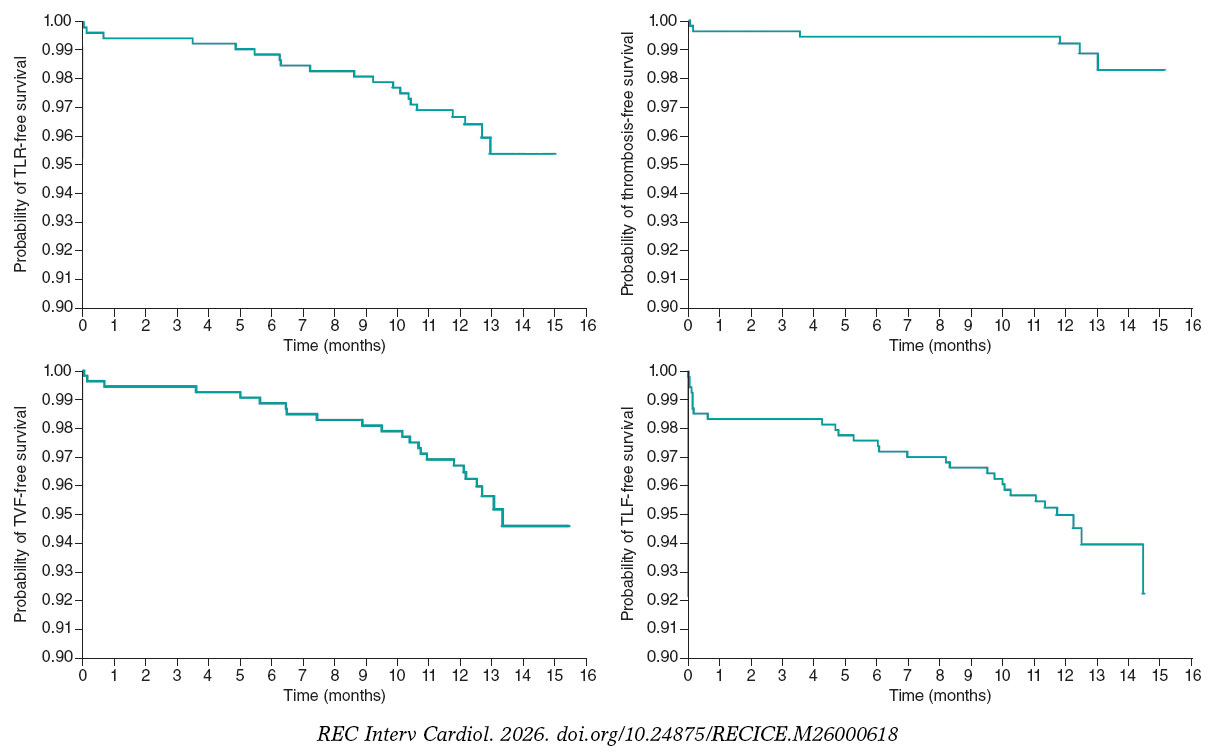
Figure 1. Kaplan-Meier curves for events related to the Alex Plus stent. TLF, target lesion failure; TLR, target lesion revascularization; TVF, target vessel failure.
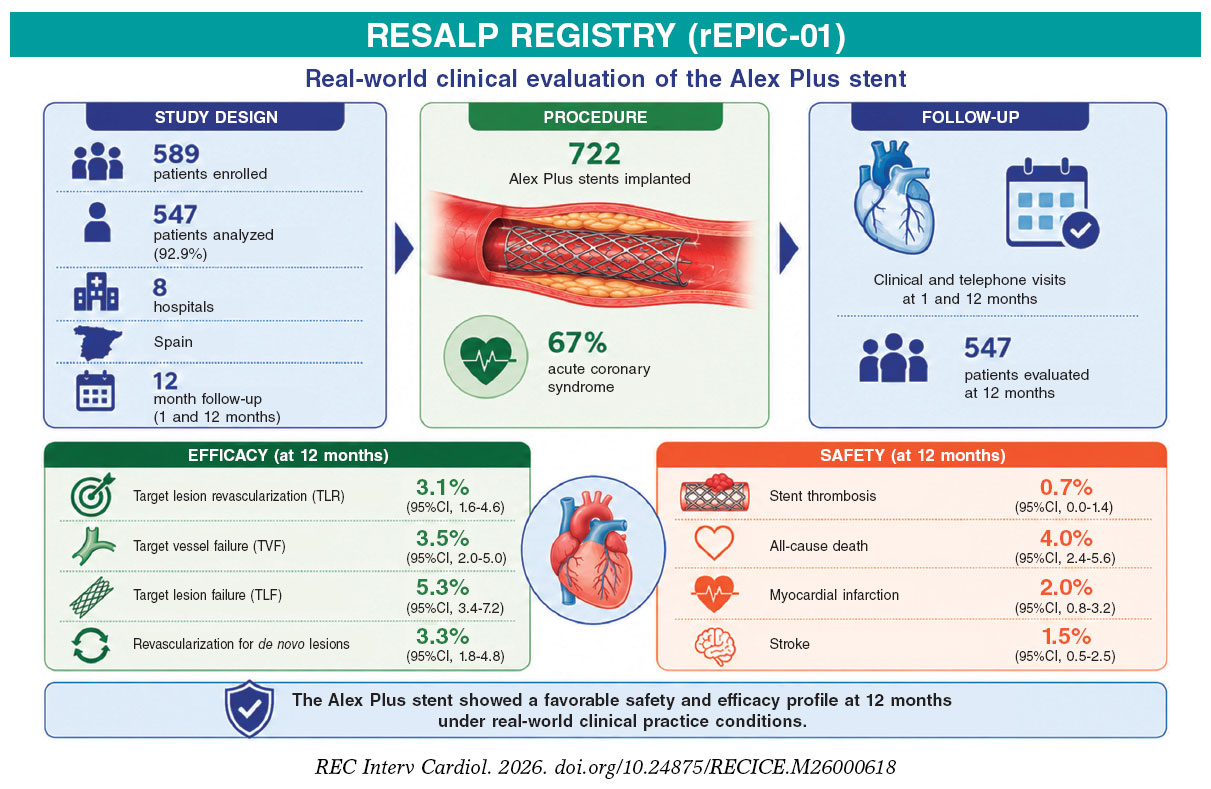
Figure 2. Central illustration. Summary of the study design, procedural characteristics, and main 1-year clinical outcomes of the RESALP registry (r-EPIC-01).
The 1-year TLR rate involving the study stent was 3.1% (95%CI, 1.6-4.6) and the TVF rate, 3.5% (95%CI, 2.0-5.0). The rate of TLR attributed to other stents was 1.7%, and the rate of TVF was 4.0% among the 177 patients who received them. Study-stent thrombosis occurred in 4 patients (0.7%; 95%CI, 0.0-1.4). Moreover, 2 thromboses were recorded in other stents (1.1%). The composite TLF endpoint occurred in 29 patients (5.3%; 95%CI, 3.4-7.2). At the 1-year follow-up, a total of 22 patients had died (4%), 10 of cardiac causes (1.8%); there were 11 myocardial infarctions (2.0%) and 8 strokes (1.5%); and 18 patients underwent revascularization for a de novo lesion (3.3%). Overall, 66 patients (12.1%; 95%CI, 9.4-14.8) experienced MACCE.
Analytical statistical testing was performed to investigate baseline clinical and procedural factors associated with the occurrence of events. All data from this analysis are shown in tables S2-S9. Renal failure (creatinine levels ≥ 1.5 mg/dL) was identified as a predictor of death (OR, 8.87; 95%CI, 3.33-23.63; P < .001), cardiac death (OR, 18; 95%CI, 4.92-65.83; P < .001), and MACCE (OR, 3.52; 95%CI, 1.59-7.77; P < .001).
Similarly, an association was detected between the extent of coronary artery disease and MACCE, both in terms of the number of vessels with a percent diameter stenosis > 50% stenosis (OR, 1.419; 95%CI, 1.05-1.91; P = .022) and the number of lesions with a percent diameter stenosis > 50% (OR, 1.263; 95%CI, 1.02-1.56; P = .031), as well as treatment extent based on the number of lesions treated with stents (OR, 1.648; 95%CI, 1.00-2.71; P = .05), the number of stents implanted per patient (OR, 1.90; 95%CI, 1.29-2.78; P = .001), and female sex (OR, 1.88; 95%CI, 1.04-3.39; P = .036). Regarding thrombosis, the only factor that reached statistical significance was the number of vessels treated per patient (OR, 2.588; 95%CI, 1.03-6.49; P = .049).
DISCUSSION
This study demonstrates low 1-year rates of TLR (3.1%), TVF (3.5%), and thrombosis (0.7%) with the Alex Plus stent. These figures are comparable to those reported for other biodegradable- polymer stents, such as the Orsiro (Biotronik AG, Switzerland), with a 3% TLR rate and a 0.2% thrombosis rate,13 or the BioMatrix (Biosensors, United States), with TLR rates of 2.2%-3.3% and a thrombosis rate of 0.7%.14,15 The BIOFLOW-V study, which included a total of 1335 patients randomized on a 2:1 ratio to receive the Orsiro or the Xience (Abbott, United States), found significant differences at 1 year in TLF (a composite of cardiac death, target vessel myocardial infarction, and TLR), with rates of 5.9% and 9.6%, respectively, driven by target vessel myocardial infarction (4.7% vs 8.3%), while TLR was 2% vs 2.4%, respectively.16
In the EVOLVE II study, which compared the biodegradable-polymer Synergy stent with the permanent-polymer Promus Element stent (both Boston Scientific, United States) at 1 year, The rate of TLF was 6.7% with the Synergy and 6.5% with the Promus Element, while the corresponding rates of TLR were 2.6% and 1.7%, and those of stent thrombosis were 0.4% and 0.6%, respectively.17
In the present study, a TLF rate of 5.3% was recorded with the Alex Plus stent, which can be considered a favorable result for this endpoint.
The 1-year MACCE rate was 12.1%. Although this is a high figure, it can be explained by the high proportion of patients with ST- segment elevation myocardial infarction (32.9%) in this series and by the fact that, according to protocol, all-cause mortality, revascularization for de novo lesions (18 patients, 3.3%), and strokes (8 patients, 1.5%) were included, whereas these events were not included in other studies.
In a propensity score-matched comparison involving 1649 patients in each group between the Alex stent (Balton), the predecessor of Alex Plus, which is also made of cobalt-chromium with a biodegradable polymer and has a closed-cell design allowing dilation up to 1.5 mm, and the Xience stent (Abbott), the 1-year TVR was 5.9% vs 4.6% (P = .45), with comparable safety outcomes in terms of all-cause mortality, myocardial infarction, and definite/probable thrombosis.18
A comparative study of Alex Plus in patients with and without diabetes, with 4-year outcomes, showed no differences in TLR, but did show differences in MACCE (HR, 1.85; 95%CI, 1.01-3.41; P = .046), cardiac death (HR, 4.46; 95%CI, 1.44-13.8; P = .010), and acute myocardial infarction (HR, 3.17; 95%CI, 1.10-9.12; P = .033).19 In the present study, no differences in TLR were found between patients with and without diabetes (P = .434).
Limitations
The main limitation of the study is its observational design, with no control group and freedom for operators to implant other stents at their discretion, which introduces potential patient- and lesion-selection biases. Furthermore, the absence of an external event review committee is a limitation. The protocol predefined the events to be analyzed, and the forms included guidance with definitions for stent-related events as well as for the diagnosis of periprocedural and follow-up myocardial infarction, using current definitions.11
The decision to allow implantation of other stents may be questioned. This was done to facilitate patient inclusion, achieve a larger sample, and avoid patient-selection bias. This could be considered to complicate analysis of the results, particularly when other stents are implanted in the same vessel. Nevertheless, the way in which information was recorded and analyzed, together with event adjudication, was designed to distinguish events related to the study stent and to unequivocally establish the TLR and TVF rates of the Alex Plus stent. Although the results are consistent with those reported in the literature for other contemporary DES, the comparison is indirect and limited by the observational design of the registry and the absence of a control group.
Comparison between stents was not among the endpoints of the study. Nevertheless, a comparative analysis of outcomes between Alex Plus and the other stents used was performed in this sample, and no statistically significant differences were found in the primary endpoint. Analysis of potential selection biases did reveal differences in the type of lesions selected for implantation of other stents, with greater complexity among lesions receiving other stents: a higher proportion of calcification, a higher percentage of bifurcations, and more lesions classified as B2 (table S10). This may have favored the Alex Plus results for the primary endpoint.
The study sample included a high proportion of patients with acute coronary syndrome, making it representative of routine clinical practice. It could be argued that the predefined exclusion criteria reduce its value as a true unrestricted all-comers sample. However, patient selection was more restrictive in most of the studies analyzed in the Discussion section. In addition, we consider that including cases with high expected mortality, such as patients with cardiogenic shock or those resuscitated after out-of-hospital sudden cardiac death, would have confounded the MACCE results without providing substantial information on the primary endpoint of the study, which was fundamentally to establish the safety and efficacy profile of the Alex Plus stent, which is better assessed by TLR and definite thrombosis, which are objective efficacy and safety criteria.
CONCLUSIONS
In a large patient sample, the Alex Plus sirolimus-eluting, biodegradable-polymer cobalt-chromium coronary stent showed low 1-year rates of TLR, TVF, and thrombosis, demonstrating its safety and efficacy profile in a routine clinical practice setting.
FUNDING
The study was funded by Fundación EPIC, with donations provided by the distributor of the study stent in Spain (LOGSA).
ETHICAL CONSIDERATIONS
The study was approved by the ethics committees of the Basque Country and León (Spain), and participant centers adhered to these approvals. Patients signed informed consent and agreed to inclusion in the registry. Good clinical practice standards governing patient care and processing of personal data were followed in full compliance with the principles outlined in the Declaration of Helsinki. The SAGER guidelines were taken into consideration to avoid sex- and gender-related bias in patient enrollment and data analysis.
STATEMENT ON THE USE OF ARTIFICIAL INTELLIGENCE
Artificial intelligence was not used in the drafting of the manuscript or in the analysis of the data.
AUTHORS’ CONTRIBUTIONS
A.M. Torres Bosco: principal investigator, study design, patient enrollment and review, and drafting. T. García-Camarero: patient enrollment, patient review, and drafting. J.J. de la Cruz Troca: data custody, statistical analysis, and drafting. L.A. Íñigo-García, J.R. Rumoroso Cuevas, E. Bosch Peligero, R. Sáez Moreno, P. Luengo- Mondéjar, N. Bolívar Herrera, O. Sanz Vázquez, M. Pombo Jiménez, J.F. Muñoz Bellido, M.M. Sanz Sánchez, F. Sáinz Laso, and A. Sánchez-Espino: patient enrollment and review. All authors reviewed and approved the final version of the article.
CONFLICTS OF INTEREST
A.M. Torres Bosco, first author, received financial compensation for study preparation, follow-up, and publication, which was not contingent on eventual publication of the article. The remaining authors declared no conflicts of interest whatsoever.
PRINCIPAL INVESTIGATORS AND PARTICIPANT CENTERS
The authors guarantee that the following investigators are responsible for the data contained in this study: Hospital Universitario de Álava, Vitoria-Gasteiz (A.M. Torres Bosco); Hospital Costa del Sol, Marbella, Málaga (L.A. Íñigo-García); Hospital Universitario Marqués de Valdecilla, Santander (T. García-Camarero); Hospital Universitario Galdakao, Vizcaya (J.R. Rumoroso Cuevas); Hospital Universitario Parc Taulí, Sabadell, Barcelona (E. Bosch Peligero); Hospital Universitario Basurto, Bilbao, Vizcaya (R. Sáez Moreno); Hospital Universitario de Burgos (P. Luengo-Mondéjar); Departamento de Medicina Preventiva, Salud Pública y Microbiología, Universidad Autónoma de Madrid, Instituto de Investigación Sanitaria del Hospital Universitario La Paz, Madrid, and Consorcio para la Investigación Biomédica, Epidemiología y Salud Pública (CIBERESP), Instituto Carlos III, Madrid (J.J. de la Cruz Troca, data custody and statistical analysis); Hospital Universitario Torrecárdenas, Almería (N. Bolívar Herrera).
¿WHAT IS KNOWN ABOUT THE TOPIC?
- Few studies have yet been published on Balton sirolimuseluting cobalt-chromium stents with biodegradable polymer.
- For the Alex stent, the predecessor of the Alex Plus, a favorable comparison with the Xience stent has been reported.
- With the modification introduced in Alex Plus (larger cell size), outcomes could potentially be improved.
¿WHAT DOES THIS STUDY ADD?
- At the 1-year follow-up, Alex Plus showed TLR and TVF rates comparable to those of other DES in a large patient sample with a high proportion of acute coronary syndrome.
MATERIAL ADICIONAL

REFERENCES
1. Neumann FJ, Sousa-va M, Ahlsson A, et al. 2018 ESC/EACTS Guidelines on myocardial revascularization. Eur Heart J. 2019;40:87-165.
2. Bonaa KH, Mannsverk J, Wiseth R, et al. NORSTENT Investigators. Drug-eluting or bare-metal stents for coronary artery disease. N Engl J Med. 2016;375:1242-1252.
3. Palmerini T, Benedetto U, Biondi-Zoccai G, et al. Long-term safety of drug-eluting and baremetal stents: Evidence from a comprehensive network meta-analysis. J Am Coll Cardiol. 2015;65:2496-2507.
4. Kang SH, Park KW, Kang DY, et al. Biodegradable-polymer drug-eluting stents vs. bare metal stents vs. durable-polymer drug-eluting stents: A systematic review and Bayesian approach network meta-analysis. Eur Heart J. 2014;35:1147-1158.
5. Buszman PP, Orlik B, Trela B, et al. Comparable clinical safety and efficacy of biodegradable versus durable polimer paclitaxel eluting stents despite shorter dual antiplatelet therapy: Insights from a multicentre, propensity score-matched registry. Cath Cardiovasc Interv. 2013;82:E155-162
6. Bil J, Gil RJ, Vassilev D, Rzezak J, Kulawik T, Pawlowski T. Dedicated bifurcation paclitaxel-eluting stent BiOSS Expert® in the treatment of distal left main stem stenosis. J Interv Cardiol. 2014;27:242-251.
7. Gil RJ, Bil J, Vassiliev D, Iñigo Garcia LA. First-in-man study of dedicated bifurcation sirolimus-eluting stent: 12-month results of BiOSS LIM® Registry. J Interv Cardiol. 2015;28:51-60.
8. Gil RJ, Bil J, Grundeken MJ, et al. Regular drug-eluting stents versus the dedicated coronary bifurcation sirolimus-eluting BiOSS LIM® stent: The randomised, multicentre, open-label, controlled POLBOS II trial. EuroIntervention.2016;12:e1404-e1412.
9. Bil J, Gil RJ, Kern A, Pawłowski T, Seweryniak P, S´liwin´ski Z. Novel sirolimus-eluting stent Prolim® with a biodegradable polymer in the all-comers population: one year clinical results with quantitative coronary angiography and optical coherence tomography analysis. BMC Cardiovasc Disord.2015;15:150.
10. Legutko J, Gil RJ, Buszman PE, et al. TCT 565. OCT evaluation of the time of vessel healing following implantation of new generation on biodegradable polimer coated and sirolimus-eluting cobalt-chromium coronary stent system (ALEX OCT Study). J Am Coll Cardiol. 2013;62(Suppl 1):B170.
11. Garcia-Garcia HM, McFadden EP, Farb A, et al. Academic Research Consortium. Standardized End Point Definitions for Coronary Intervention Trials: The Academic Research Consortium-2 Consensus Document. Eur Heart J. 2018;39:2192-2207.
12. Naidu SS, Krucoff MW, Rutledge DR, et al. Contemporary incidence and predictors of stent thrombosis and other major adverse cardiac events in the year after XIENCE V implantation: results from the 8,061-patient XIENCE V United States study. JACC Cardiovasc Interv. 2012;5:626-635.
13. Waltenberger J, Brachmann J, van der Heyden J, et al. BIOFLOW-III Investigators. Real-world experience with a novel biodegradable polymer sirolimus-eluting stent: twelve-month results of the BIOFLOW-III registry. EuroIntervention. 2016;11:1106-1110.
14. Smits PC, Hofma S, Togni M, et al. Abluminal biodegradable polymer biolimus-eluting stent versus durable polymer everolimus-eluting stent (COMPARE II): a randomised, controlled, non-inferiority trial. Lancet. 2013;381:651-660.
15. Christiansen EH, Jensen LO, Thayssen P, et al. Scandinavian Organization for Randomized Trials with Clinical Outcome (SORT OUT) V investigators. Biolimus-eluting biodegradable polymer-coated stent versus durable polymer-coated sirolimus-eluting stent in unselected patients receiving percutaneous coronary intervention (SORT OUT V): a randomised non-inferiority trial. Lancet. 2013;381:661-669.
16. Kandzari DE, Mauri J, Koolen JJ, et al. Ultrathin, bioresorbable polymer sirolimus-eluting stents versus thin, durable polymer everolimus-eluting stents in patients undergoing coronary revascularisation (BIOFLOW V): a randomised trial. Lancet. 2017;390:1843-1852.
17. Kereiakes DJ, Meredith IT, Windecker S, et al. Efficacy and Safety of a Novel Bioabsorbable Polymer-Coated, Everolimus-Eluting Coronary Stent. The EVOLVE II Randomized Trial. Circ Cardiovasc Interv. 2015;8:e002372.
18. Gasior P, Gierlotka M, Szczurek-Katanski K, et al. Bioresorbable polymer-coated thin strut sirolimus-eluting stent vs durable polymer-coated everolimus-eluting stent in daily clinical practice: Propensity matched one-year results from interventional cardiology network registry. Catheter Cardiovasc Interv. 2019;93:E362-E368.
19. Bil J, Tyczynski M, Kern A, Bojko K, Gil RJ. Percutaneous Coronary Interventions with Sirolimus-Eluting Alex Plus Stents in Patients with or without Diabetes: 4-Year Results. J Cardiovasc Dev Dis. 2024;11:160.