
Since the launch of REC: Interventional Cardiology, the editorial team has pursued the goal of establishing and consolidating the journal, the official publication of the Interventional Cardiology Association of the Spanish Society of Cardiology (ACI-SEC), as one of the leading international journals in the field of interventional cardiology. Its bilingual nature and fully open access to its content are consistent with this objective. However, achieving this goal required attracting high-quality content and ensuring its appropriate visibility in editorial databases and information systems.
Throughout the years, the journal has progressively achieved indexing in several publicly accessible databases, culminating in its inclusion in the most significant of these, PubMed Central (PMC), developed by the US National Library of Medicine and the National Institutes of Health. This milestone has significantly increased the visibility and accessibility of the journal’s content worldwide, allowing interested readers to access and cite its articles in their own publications.
As a result of this process, the journal received its first impact factor (IF) in 2024 (2023 IF: 1.2), which increased slightly the following year (2024 IF: 1.3) and rose further in the 2026 edition (2025 IF: 1.5), as shown in figure 1.1 Despite its well-known limitations, this editorial metric is intended to reflect the impact of a publication.
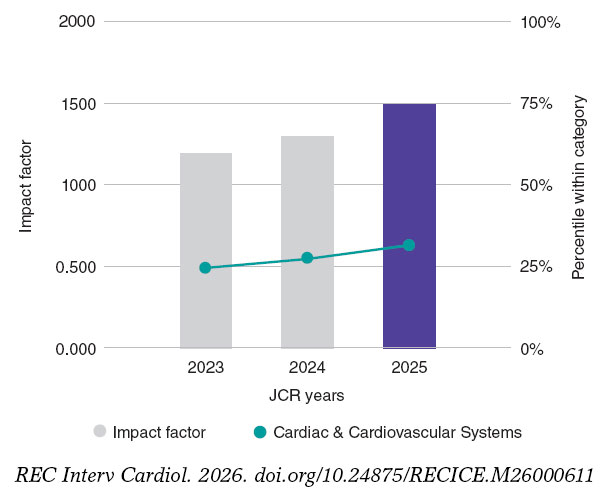
Figure 1. Trends in the impact factor of REC: Interventional Cardiology.
Although the impact factor is an important metric, increasing it should not be an end per se for a scientific journal. Its primary and essential mission is to publish high-quality scientific research and disseminate relevant review and consensus documents. This is where the journal’s true impact lies.
Nevertheless, a higher impact factor can attract higher-quality submissions to the journal, which are more likely to be cited and thus further increase the journal’s real impact. Furthermore, authors publishing in REC: Interventional Cardiology may benefit from the greater visibility and impact of their article, which has considerable implications for their academic and professional credentials. Indeed, readers and authors are already citing articles from the journal in their own publications, helping to increase its visibility and influence. We expect this trend to continue, supported by the recognition associated with PMC indexing and the journal’s current impact factor. Among the articles that have contributed most to the latest impact factor are the ACI-SEC position statement on plaque modification in calcified lesions,2 the registry by Real et al.3 on reperfusion therapies in patients with intermediate- high-risk pulmonary embolism, and the ROLLERCOASTR study design published by Jurado-Román et al.4
EDITORIAL ACTIVITY
Figure 2 illustrates the content published since the journal’s launch. The annual number of published articles has declined slightly in recent years, largely due to the discontinuation of case reports in 2024, which had previously been counted as 3 separate items (Case presentation, How would I approach it?, and Case resolution), and the shift to publishing scientific letters and images in cardiology on an as-needed basis.
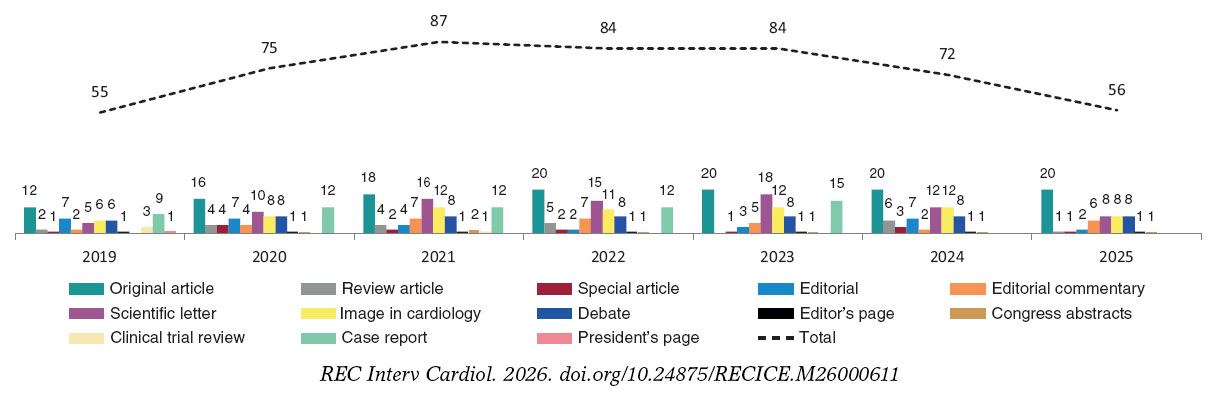
Figure 2. Content published in REC: Interventional Cardiology, 2019-2025.
Over the past year, the journal’s quarterly issues have featured original articles, thematic reviews, scientific letters, images, debates, editorial commentaries, and, occasionally, consensus documents endorsed by the ACI-SEC, as well as the abstracts presented at its annual congress.
In 2026, alongside the Debate section, we have interspersed interviews with prominent national and international figures in interventional cardiology. This series began with an interview with Camino Bañuelos conducted by Pilar Jiménez Quevedo and Ana Belén Cid Álvarez (figure 3).5
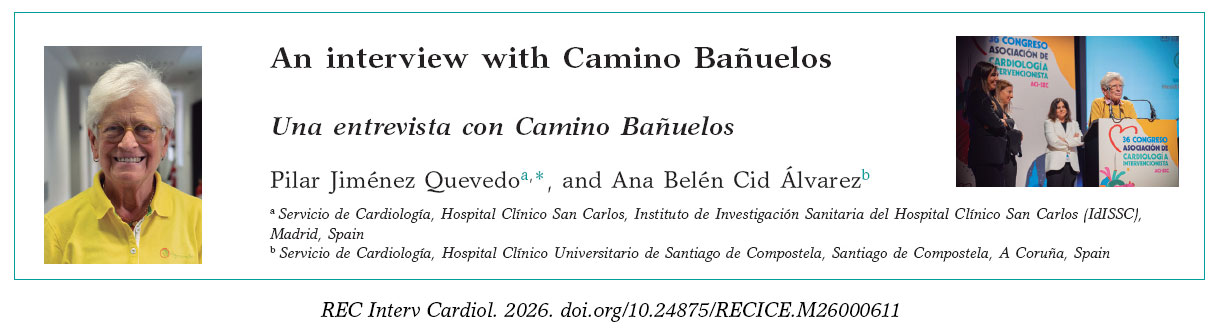
Figure 3. First article in the interview section of REC: Interventional Cardiology (2026).
The following sections and figures provide statistical data on the different article categories. Information for 2026 refers exclusively to the activity of the first half of the year, reflecting the data available at the time of writing.
Original articles
Original articles are the cornerstone of any scientific publication, and their quality largely determines the journal’s overall standing. It is particularly encouraging to see that submissions of original articles have increased steadily since the journal’s launch, with a marked rise in 2025 that is likely to be surpassed in 2026. Indeed, submissions received during the first 6 months of 2026 already account for 78% of the total received in 2025 (figure 4). We believe that the journal’s inclusion in PCM in 2025 has played an important role in attracting more submissions.
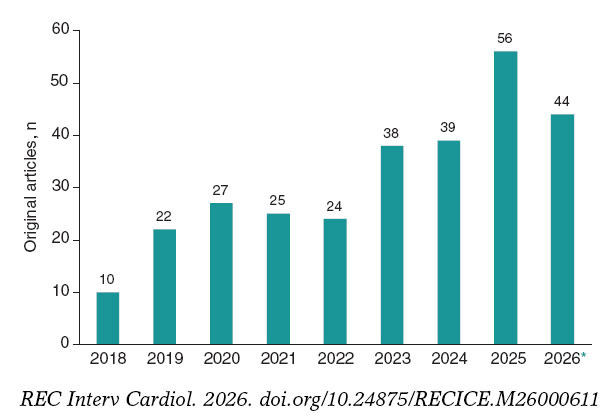
Figure 4. Submission of original articles to REC: Interventional Cardiology. *Data through June 30.
Since 2022, English has become by far the predominant language of original article submissions (figure 5). This trend reflects 2 developments: the journal’s growing appeal to international authors, particularly from the Asia-Pacific region, Europe, and Latin America, and an increase in English-language manuscripts submitted by Spanish authors after previous submission to international journals. Both trends suggest that the journal is attracting higher-quality manuscripts, likely encouraged by its PMC indexing and impact factor.
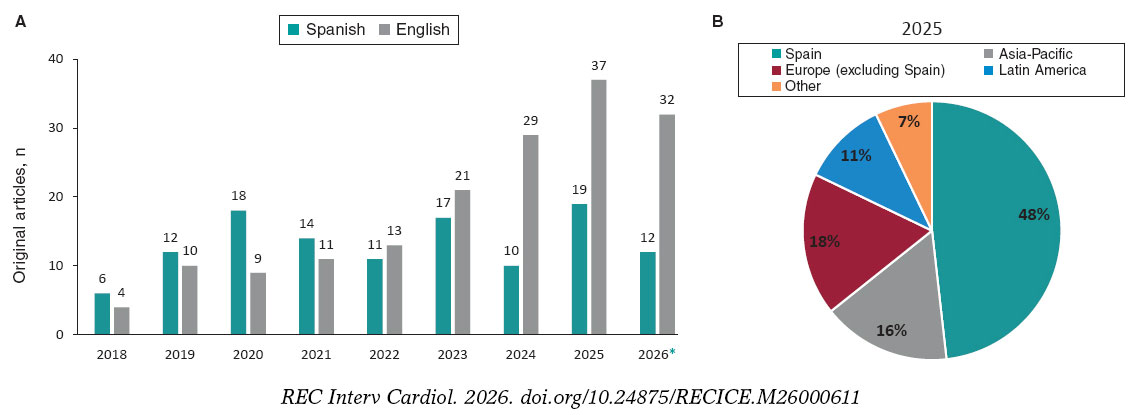
Figure 5. A: language of original articles submitted to REC: Interventional Cardiology, 2018–2026. B: geographic origin of original articles submitted in 2025. *Data through June 30.
Another important consideration for authors is the speed of editorial decision-making, which reflects the efficiency of the journal’s editorial processes. Although the mean time to decision has increased slightly in recent years, probably because of the growing volume of submissions, our editorial turnaround times remain highly competitive compared with those of other prestigious journals (figure 6).
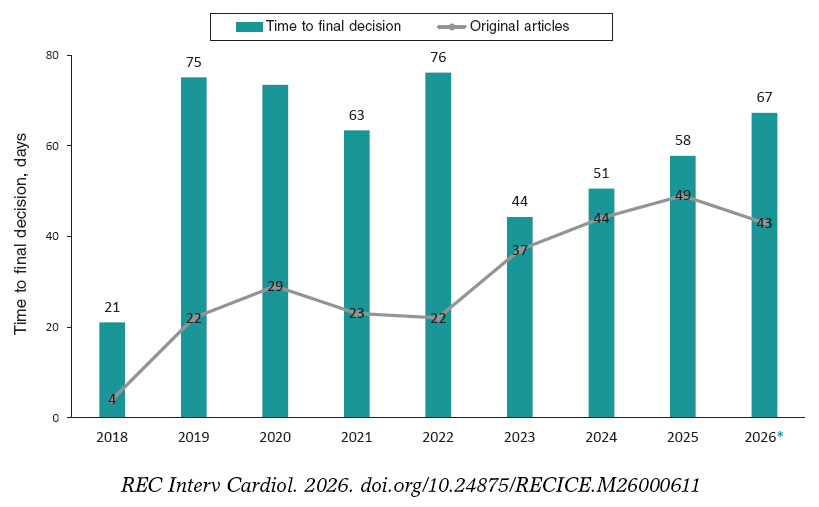
Figure 6. Mean time to final decision on original articles, 2018–2026. The bars represent the mean time to final decision. The gray line indicates the number of articles on which a decision was made each year. *Data through June 30.
As is customary in this Editor’s page, we encourage readers to submit their original articles to our journal, where they can expect a prompt and efficient editorial review process.
Scientific letters
This section includes both original studies presented in a shorter format and small case report series of particular interest. Small case series (1-2 cases) are considered only when they are particularly noteworthy for their originality and novelty. Moreover, scientific letters provide a valuable publication option for original articles that, although not given sufficient priority for publication as full-length articles, remain of interest to the journal.
Figure 7 indicates a recovery in submissions in this category in 2026, with the number of scientific letters received during the first half of the year already exceeding the total for 2025.
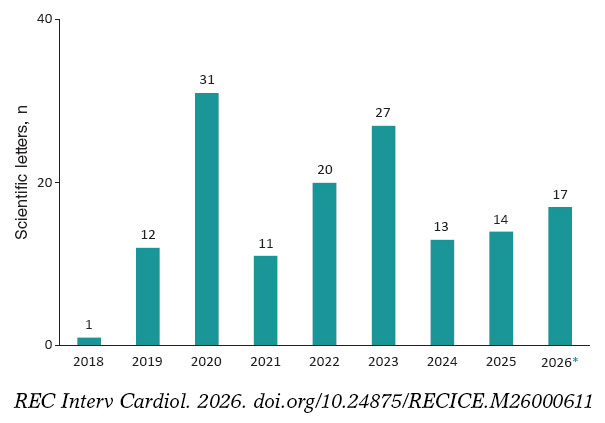
Figure 7. Submission of scientific letters to REC: Interventional Cardiology. *Data through June 30.
Images in cardiology
This section is particularly popular, reflecting the central role of multiple imaging modalities in our specialty (figure 8). The substantial backlog of images awaiting publication prompted us to temporarily suspend submissions in this category for several months in 2026, as we had previously done in 2024. The high volume of submissions also means that only a small proportion can be accepted because of space limitations.
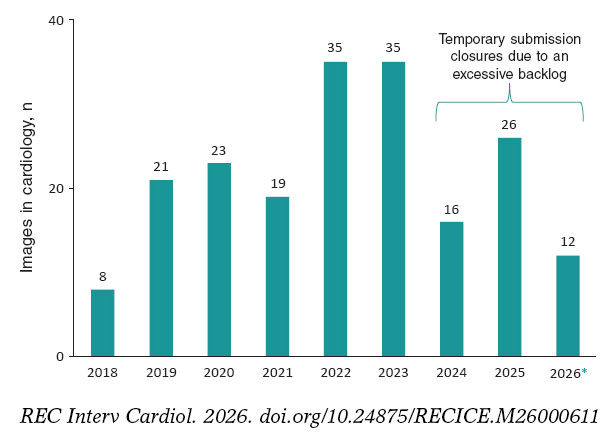
Figure 8. Submission of images in cardiology to REC: Interventional Cardiology. *Data through June 30.
Article transfers from Revista Española de Cardiología
The established international reputation and high impact factor of Revista Española de Cardiología attract a large volume of submissions, resulting in a high rejection rate. Furthermore, as a general cardiology journal, it can devote only a limited proportion of its published content to interventional cardiology.
REC: Interventional Cardiology continues to offer authors the opportunity to transfer original articles and other manuscripts rejected by Revista Española de Cardiología (figure 9). Until 2025, the number of transfer offers had increased steadily, although relatively few were accepted. This is understandable, as transferring a manuscript from a higher-impact journal to one with a lower impact factor may lead some authors to pursue other publication options. In 2026, however, transfer activity has declined noticeably (figure 9). We attribute this to 2 factors: more authors are submitting their manuscripts directly to REC: Interventional Cardiology, and the growing volume of direct submissions has prompted us to limit transfer offers and adopt a more selective approach.
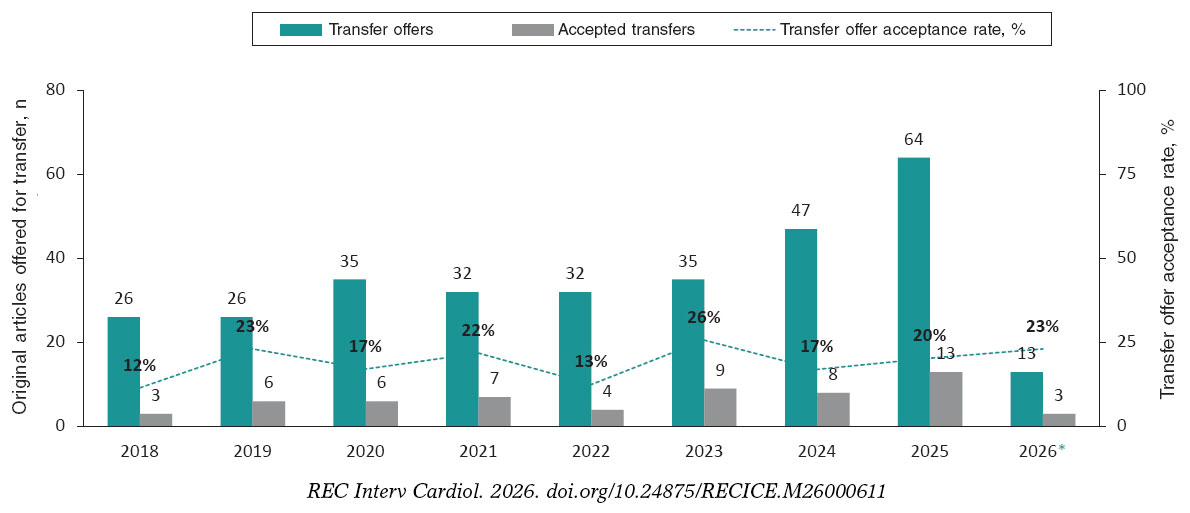
Figure 9. Proposed transfers of original articles from Revista Española de Cardiología to REC: Interventional Cardiology (2018-2026) and transfer offers accepted during the same period. *Data through June 30.
Special content
As the official journal of the ACI-SEC, REC: Interventional Cardiology plays an important role in publishing the association’s review articles, position statements, and consensus documents, sometimes developed in collaboration with other scientific societies. As in previous years, issue 3 included the abstracts of presentations delivered at the ACI-SEC annual congress, held in Pamplona (Navarre, Spain) in June 2026. These abstracts were published online ahead of print several days before the congress began.6
The studies presented were of high quality, and many are expected to lead to excellent original articles. We therefore encourage their authors to submit their work to the journal, either as original articles or scientific letters.
REVIEWER ACTIVITY: QUALITY, EFFICIENCY, AND COMMITMENT
Peer review is essential to scientific publishing and contributes substantially to the rigor and quality of scientific journals. Nevertheless, we recognize the growing burden placed on reviewers, who are increasingly called upon by numerous journals, particularly those known for their reliability and responsiveness. Peer review is generally performed anonymously and voluntarily, without financial compensation, requiring reviewers to devote valuable time that could otherwise be spent on activities offering greater personal or professional benefits. Recruiting new reviewers and combining different areas of expertise in the assessment of individual manuscripts are therefore essential. Against this backdrop, we are particularly grateful for the commitment of our reviewers, whose excellent turnaround times continue to enable prompt editorial decisions.
As in previous years, we wish to thank everyone who has contributed to the peer-review process (table 1), with special recognition of our 2025 elite reviewers (table 2), selected on the basis of the number of manuscripts reviewed, their responsiveness, and the quality of their evaluations.
Table 1. Reviewers of REC: Interventional Cardiology who completed peer reviews from 1 July 2025 through 30 June 2026
| Omar Abdul-Jawad | Francisco Hidalgo |
| César Abelleira | Víctor A. Jiménez-Díaz |
| Guillermo Aldama | Pilar Jiménez-Quevedo |
| Joaquín Alonso | Santiago Jiménez-Valero |
| Juan H. Alonso-Briales | Alfonso Jurado |
| María Álvarez-Fuente | José A. Linares |
| Ignacio Amat | Ramón López-Palop |
| Albert Ariza | Íñigo Lozano |
| Xavier Armario | Antonela Lukic |
| Eduardo Arroyo | Gerard Martí |
| Lluís Asmarats | Javier Martín-Moreiras |
| Pablo Avanzas | Dolores Mesa |
| Teresa Bastante | Guillem Muntané |
| José A. Baz | Felipe Navarro |
| Neus Bellera | Iván Núñez-Gil |
| Salvatore Brugaletta | Raymundo Ocaranza |
| Santiago Camacho | Jorge Palazuelos |
| Berenice Caneiro | Manuel Pan |
| Pilar Carrillo | Isaac Pascual |
| Xavier Carrillo | Luis Pérez-Pino |
| Alberto Cecconi | Javier Portales |
| Belén Cid | Eduardo Pozo |
| Juan G. Córdoba | Sergio Raposeiras-Roubín |
| Carlos Cortés | Ander Regueiro |
| Ignacio Cruz | Borja Rivero |
| Javier Cuesta | Fernando Rivero |
| José A. de Agustín | Jessica Roa |
| David del Val | Oriol Rodríguez |
| Raquel del Valle | Sandra Rosillo |
| José F. Díaz | Gerard Roura |
| Alejandro Diego-Nieto | Juan M. Ruiz-Nodar |
| Felipe Díez-Delhoyo | Valeriano Ruiz-Quevedo |
| José L. Díez-Gil | Eva Rumiz |
| Agustín Fernández-Cisnal | José R. Rumoroso |
| Luis Fernández-González | Manel Sabaté |
| Estefanía Fernández-Peregrina | Luisa Salido |
| José L. Ferreiro | Pablo Salinas |
| Xavier Freixa | Ángel Sánchez-Recalde |
| Guillermo Galeote | Marcelo Sanmartín |
| Eladio Galindo | Jorge Sanz-Sánchez |
| Tamara García-Camarero | Ana Serrador |
| Carmen Garrote | Daniel Tébar |
| Joan A. Gómez-Hospital | Luis Teruel |
| Josep Gómez-Lara | Helena Tizón-Marcos |
| Rafael González-Manzanares | Ramiro Trillo |
| Alejandro Gutiérrez-Barrios | Cristóbal Urbano |
| Enrique Gutiérrez-Ibañes | Maite Velázquez-Martín |
| Federico Gutiérrez-Larraya | David Vivas |
| Gabriela Guzmán | José L. Zunzunegui |
Table 2. Elite reviewers in 2025
| Raquel del Valle | Pablo Salinas |
|---|---|
| Alfonso Jurado | Jorge Sanz-Sánchez |
| Juan M. Ruiz-Nodar | Ramiro Trillo |
DISSEMINATION
The annual presentation of awards for the best articles published in REC: Interventional Cardiology is always a highlight of the ACI-SEC annual meeting. The awards carry a total prize fund of €2500 (€1500 for first prize and €1000 for second prize). This year, first prize went to Cortés et al.7 for their study on the prognostic value of plaque volume assessed by three-dimensional reconstruction of the coronary tree in patients without significant coronary artery disease. Second prize was awarded to Barreiro et al.8 for their research on infective endocarditis in surgical vs transcatheter aortic valve implantation (figure 10).
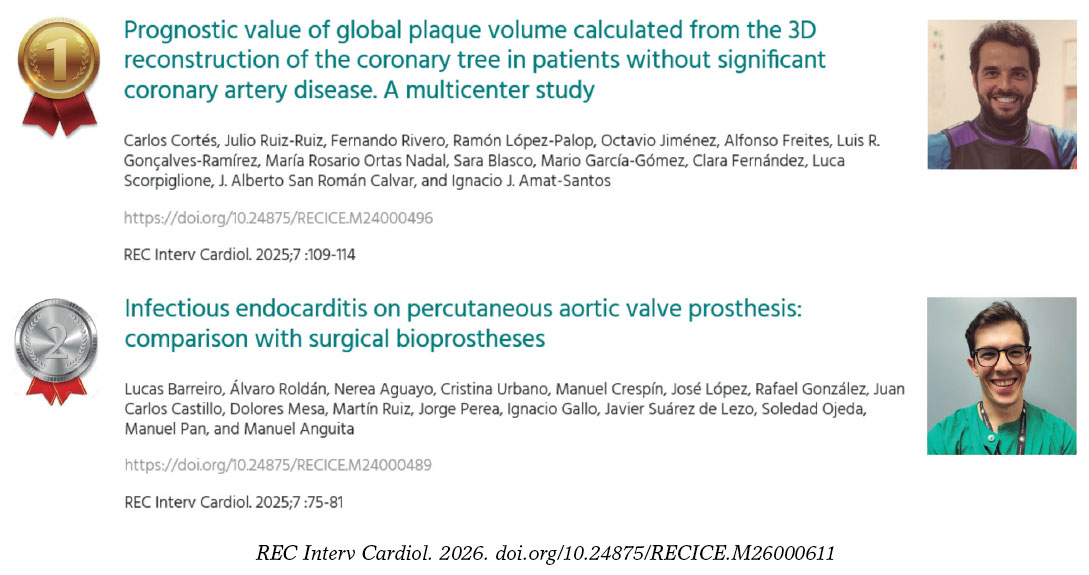
Figure 10. Original articles published in REC: Interventional Cardiology that received awards at the 2026 annual meeting of the Interventional Cardiology Association of the Spanish Society of Cardiology.
Among the most widely read articles over the past year were the thematic review by Zubiaur et al.9 examining the implications of the European Medical Device Regulation for research and the study by Martín-Arena et al.10 on embolization of left atrial appendage occluders.
Among original articles, readers showed particular interest in “Access to transcatheter aortic valve implantation: interregional variability and expert evaluation,” by de la Torre-Hernández et al.,11 the meta-analysis by Sorolla Romero et al.12 comparing drug-coated balloons vs drug-eluting stents for the treatment of large native coronary artery disease, and “Clinical utility of thrombus aspiration with the Hunter catheter in patients with acute myocardial infarction: the HUNTED registry,” by Borraz-Noriega et al.13
Moreover, during 2026, we have progressively introduced a requirement for original articles and reviews to include a central illustration. We believe this feature, which many authors already provided voluntarily, will help capture readers’ attention and improve communication of the articles’ key messages.
Beyond our social media activities through the REC Publications accounts on X, Facebook, and Bluesky, using the hashtag #recintervcardiol, the editorial team actively promotes the journal at national and international scientific meetings.14-16 This year, these have included EuroPCR in Paris, CITIC in Mexico City, the New York Valves congress, and the course on the prevention and management of complications in percutaneous interventional cardiology organized by Hospital Universitario de Bellvitge in L’Hospitalet de Llobregat (Barcelona, Spain).
Readers, authors, and reviewers of REC: Interventional Cardiology all have a role to play in promoting the journal. Greater visibility helps attract high-quality manuscripts, creates more opportunities for citation, and ultimately strengthens the journal’s scientific and editorial impact.
ACKNOWLEDGMENTS
Acknowledgments are a recurring feature of our annual Editor’s page, and rightly so. The continued success of this journal, its high standards, and its promising future would not be possible without the outstanding dedication of our associate editors: Fernando Alfonso, Raúl Moreno, Soledad Ojeda, Armando Pérez de Prado, and Rafael Romaguera (figure 11).
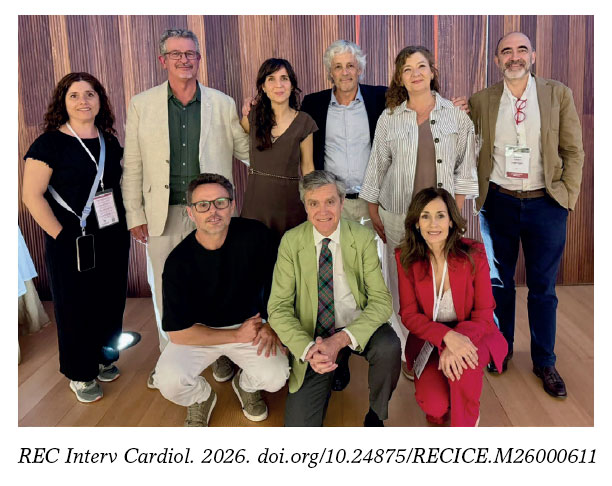
Figure 11. The editorial team of REC: Interventional Cardiology, together with members of the REC Publications editorial office who attended the 2026 annual meeting of the Interventional Cardiology Association of the Spanish Society of Cardiology in Pamplona. From left to right and top to bottom: Eva M. Cardenal, Armando Pérez de Prado, Iria del Río, José M. de la Torre-Hernández, Belén Juan, Raúl Moreno, Rafael Romaguera, Fernando Alfonso, and Soledad Ojeda.
But equally essential is the exceptional operational support that underpins the work of the editorial team and makes this journal, like all REC Publications journals, possible. We wish to express our sincere appreciation for the professionalism and dedication of the REC Publications editorial office staff (Iria del Río, Eva M. Cardenal, Belén Juan, and María González-Nogal) (figure 11), our information and communication technology consultant (Juan Quiles), the other departments of Casa del Corazón, and the entire Permanyer Publications team.
A defining feature of REC: Interventional Cardiology, and one that largely explains its remarkable progress since its foundation, is its role as the official journal of the ACI-SEC. This is a unique strength. Every ACI-SEC board, from the one that established the journal to the most recently elected, has given this project its unwavering support, sustaining it financially with unrestricted contributions from companies in the interventional cardiology sector, to whom we remain deeply grateful. The SEC, meanwhile, covers the operating costs of the editorial office.
We traditionally conclude this Editor’s page with a quotation. This year, we have chosen the words of John Ruskin: “Quality is never an accident; it is always the result of intelligent effort.”
FUNDING
None declared.
CONFLICTS OF INTEREST
None declared.
REFERENCES
1. Clarivate Analytics. 2025 Journal Impact Factor. Journal Citation Reports (Clarivate 2026).
2. Jurado-Román A, Gómez-Menchero A, Gonzalo N, et al. Plaque modification techniques to treat calcified coronary lesions. Position paper from the ACI-SEC. REC Interv Cardiol. 2023;5:46-61.
3. Real C, Ferrera C, Vázquez-Álvarez ME, et al. Reperfusion therapies in patients with intermediate- and high-risk pulmonary embolism: insights from a multicenter registry. REC Interv Cardiol. 2024;6:172-181.
4. Jurado-Román A, Gómez-Menchero A, Amat-Santos IJ, et al. Design of the ROLLERCOASTR trial: rotational atherectomy, lithotripsy or laser for the management of calcified coronary stenosis. REC Interv Cardiol. 2023;5:279-286.
5. Jiménez Quevedo P, Cid Álvarez AB. An interview with Camino Bañuelos. REC Interv Cardiol. 2026;8:65-66.
6. Resúmenes presentados al 37 Congreso de la Asociación de Cardiología Intervencionista de la Sociedad Española de Cardiología. Pamplona, 10-12 de junio de 2026. REC Interv Cardiol. 2026;8:C1-C19.
7. Cortés C, Ruiz-Ruiz J, Rivero F, et al. Prognostic value of global plaque volume calculated from the 3D reconstruction of the coronary tree in patients without significant coronary artery disease. A multicenter study. REC Interv Cardiol. 2025;7:109-114.
8. Barreiro L, Roldán A, Aguayo N, et al. Infectious endocarditis on percutaneous aortic valve prosthesis: comparison with surgical bioprostheses. REC Interv Cardiol. 2025;7:75-81.
9. Zubiaur J, Rumoroso Cuevas JR, Rodríguez Mateos MC, et al. Medical device research update after the adoption of the EU legislation (MDR). REC Interv Cardiol. 2025;7:255-263.
10. Martín-Arena MA, Galeote-García G, Lara-García A, et al. Embolization of left atrial appendage occluders: review of the current evidence. REC Interv Cardiol. 2025;8:46-54.
11. de la Torre-Hernández JM, Íñiguez Romo A, Morán-Aja A, Martínez-Pérez Ó, Cerezales M, Cuervo J. Access to transcatheter aortic valve implantation: interregional variability and expert evaluation. REC Interv Cardiol. 2026;8:38-45.
12. Sorolla Romero JA, Novelli L, Llau García J, et al. Drug-coated balloons vs drug-eluting stents for the treatment of large native coronary artery disease. Meta-analysis of randomized controlled trials. REC Interv Cardiol. 2026;8:8-16.
13. Borraz-Noriega DG, Andrés-Cordón JF, Cañedo E, et al. Clinical utility of thrombus aspiration using the Hunter catheter in patients with acute myocardial infarction: the Hunted registry. REC Interv Cardiol. 2026;8:161-167.
14. REC Publications [@RevEspCardiol]. X. Available at: https://x.com/revespcardiol. Accessed 14 Jun 2026.
15. Revista Española de Cardiología Publications. Facebook. Available at: https://www.facebook.com/revespcardiol. Accessed 9 Jun 2026.
16. REC Publications [@revespcardiol.bsky.social]. BlueSky. Available at: https://bsky.app/profile/revespcardiol.bsky.social. Accessed 11 Jun 2026.
* Corresponding author.
E-mail address: (J.M. de la Torre-Hernández).