
Since 16 September 1977, when Andreas Grüntzig performed the first percutaneous transluminal angioplasty in an awake patient,1 coronary interventional procedures have expanded exponentially. Performing a complex procedure in a conscious patient entails a number of challenges in terms of patient comfort. In addition to the discomfort inherent to a transcatheter intervention, patients must contend with the anxiety associated with illness, uncertainty, vulnerability, and an unfamiliar environment such as the cath lab, which can resemble an operating room.
Treatment of chronic total coronary occlusions involves technically demanding procedures that are often lengthy, require prolonged immobility, and may be accompanied by ischemic chest discomfort. Overall, these factors can place patients under considerable psychological stress and may, beyond simple discomfort, influence procedural outcomes.2
The ReViCTO study conducted by Fernández-Cisnal et al.3 evaluated whether virtual reality (VR) headsets could reduce anxiety in patients undergoing percutaneous coronary intervention for chronic total coronary occlusions. Furthermore, the investigators assessed the need for analgesia, including both the amount and type of analgesic drugs administered. The VR content consisted of a documentary about the planet available on Netflix. Contrary to what the investigators likely anticipated, patients exposed to VR distraction did not differ from those receiving usual care regarding either anxiety levels or analgesic requirements.
The relentless technological advances facing society—in computing, VR, artificial intelligence, and other fields—inevitably prompt us to consider strategies through which these technologies might help health care professionals improve the care of patients undergoing complex procedures, particularly when such procedures are minimally invasive and patients remain awake and exposed to all the stimuli arising from the environment in which the procedure is performed.
Numerous initiatives have explored the use of technology to improve the patient experience during medical procedures that may trigger discomfort or pain. In this regard, the results of a meta-analysis have been published evaluating the effectiveness of exposing patients to an immersive experience using VR headsets to improve how they cope with and perceive pain associated with different medical procedures.4 Although the procedures included were highly heterogeneous, VR distraction was consistently associated with lower perceived pain.4 Even so, the effectiveness of VR in patient care depends heavily on the clinical setting, the content selected, and the ability of health care professionals to integrate the technology into the care pathway rather than use it as a stand-alone procedure.5
The advanced tools currently available for medical image interpretation, the development of algorithms based on data analysis, and increasing medical subspecialization, among other factors, risk shifting the focus of care away from the patient as a person. Although the benefits of incorporating new technologies into medical practice are unquestionable, particularly in terms of greater diagnostic precision and improved therapeutic interventions, there is a risk of overlooking the physician-patient relationship as the cornerstone of the healing profession.6 When patients are asked which quality best defines a “good physician,” beyond clinical skill in achieving accurate diagnoses and technical expertise in performing therapeutic procedures, the qualities they value most are empathy and the ability to communicate with the patient.7
The ReViCTO study shows that the use of new technologies such as VR as an immersive experience to distract patients from the anxiety and discomfort associated with a complex coronary interventional procedure, does not improve the patient experience compared with usual care. Most likely, as the authors point out, baseline anxiety levels were not high, leaving little room for improvement with VR. Baseline anxiety may already have been reduced through appropriate information and care provided by the health care staff attending the patient. However, other studies have shown that these technologies can reduce periprocedural anxiety levels during complex procedures such as transcatheter aortic valve implantation.8 In this regard, both preprocedural anxiety levels and the content selected for the VR experience are likely to be important.
In routine clinical practice, health care professionals play an important role in the information provided to patients, as well as in the empathy shown toward those who are about to undergo a complex medical procedure. Nothing can replace the reassurance that comes from trusting the team caring for the patient or the warmth and rapport conveyed by health care professionals. There is no doubt that new technologies such as artificial intelligence can enhance patient care, provided they complement rather than replace the human elements of care. In his book Deep medicine: how artificial intelligence can make healthcare human again,9 Eric Topol argues that no algorithm, however advanced, can empathize with a patient, and that the true opportunity offered by artificial intelligence lies in giving time back to the clinical relationship rather than taking it over (figure 1).
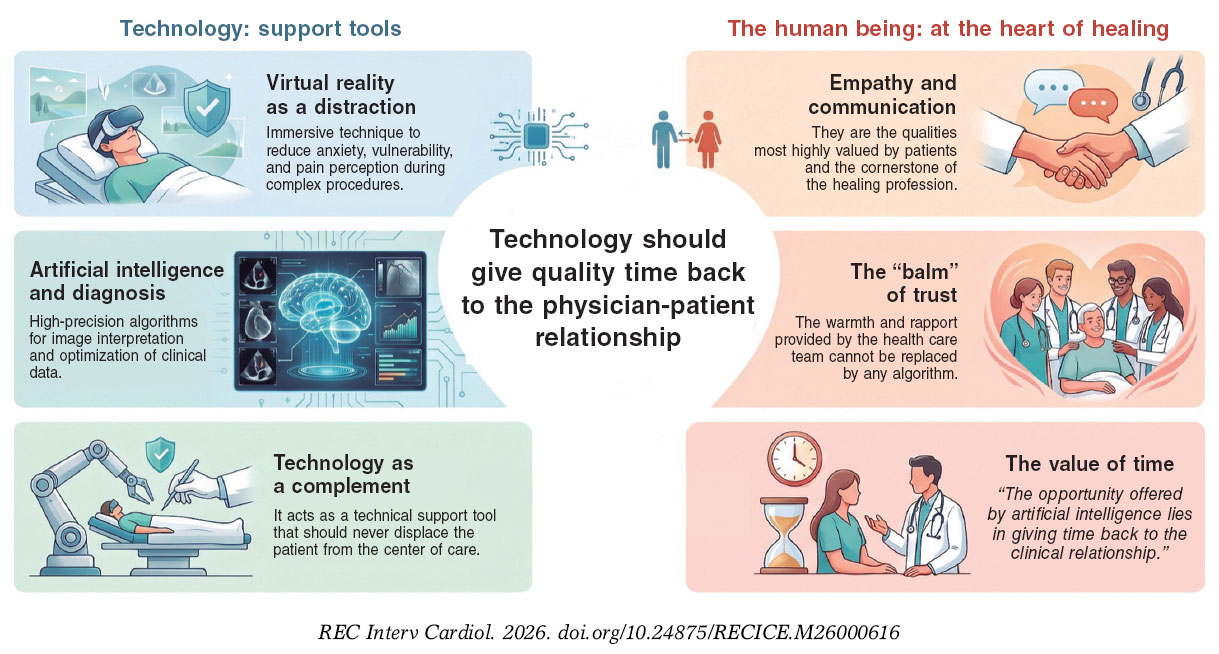
Figure 1. Technology should give quality time back to the physician-patient relationship. (Image created using Google Gemini Notebook AI software.)
Technological progress and advanced tools such as VR and artificial intelligence should therefore be embraced for their ability to improve medical care, but never at the expense of the physician-patient relationship, which must remain at the heart of clinical practice.
FUNDING
None declared.
STATEMENT ON THE USE OF ARTIFICIAL INTELLIGENCE
Google Gemini Notebook AI software was used to create the figure included in this article.
CONFLICTS OF INTEREST
R. Trillo Nouche has a contract with and has received honoraria as a proctor for transcatheter aortic valve implantation from Medtronic and Abbott Vascular. G. Flores Vergara declared no conflicts of interest whatsoever.
REFERENCES
1. Gruntzig A. Transluminal dilatation of coronary-artery stenosis.
2. Shibeshi WA, Young-Xu Y, Blatt CM. Anxiety worsens prognosis in patients with coronary artery disease.
3. Fernández-Cisnal A, Silla B, Vergara-Uzcategui CE, et al. Audiovisual distraction with virtual reality goggles for chronic total occlusion procedures: the ReViCTO trial.
4. Teh JJ, Pascoe DJ, Hafeji S, et al. Efficacy of virtual reality for pain relief in medical procedures: a systematic review and meta-analysis.
5. Kouijzer MMTE, Kip H, Bouman YHA, Kelders SM. Implementation of virtual reality in healthcare: a scoping review on the implementation process of virtual reality in various healthcare settings.
6. Trainini JC. Humanización en la práctica médica.
7. Lambert H. The good doctor around the world.
8. Romano Bruno R, Lin Y, Wolff G, et al. Virtual reality-assisted conscious sedation during transcatheter aortic valve implantation: a randomised pilot study.
9. Topol E. Deep Medicine: How Artificial Intelligence Can Make Healthcare Human Again. New York: Basic Books; 2019.