
ABSTRACT
Introduction and objectives: To explore potential differences by drug class and device among contemporary coronary drug-coated balloons (DCBs).
Methods: We conducted a national, 4-center, observational, retrospective study including all-comer patients undergoing DCB-based percutaneous coronary intervention between January 2023 and December 2024. Patients treated with more than 1 DCB brand were excluded. Patients were followed up for 1 year. The primary endpoint was target lesion failure (TLF), defined as a composite of cardiac death, target vessel-related myocardial infarction (TVMI), and clinically driven target lesion revascularization (TLR). To assess drug- and device-level effects, inverse probability of treatment weighting based on propensity scores was applied, and outcomes were analyzed using Cox proportional hazards models with clustering at the patient level.
Results: A total of 1018 patients (1359 lesions) were included. At 1 year, TLF rates were similar between paclitaxel- and sirolimus-coated balloons (6.2% vs 4.6%; P = .204), with no significant difference after adjustment (HR, 1.22; 95%CI, 0.71–2.10; P = .474). Among paclitaxel-coated balloons, no significant differences in TLF were observed across the 3 devices. In contrast, among sirolimus-coated balloons, treatment with a microreservoir-based balloon was associated with a lower observed risk of TLF compared with a nanoparticle-based balloon (HR, 0.17; 95%CI, 0.05–0.58; P = .004).
Conclusions: In this real-world multicenter study, paclitaxel- and sirolimus-coated balloons showed comparable 1-year outcomes. While paclitaxel devices demonstrated consistent performance across platforms, outcomes differed among sirolimus-coated balloons. The device-level findings should be considered exploratory and hypothesis-generating because of the limited number of events and the residual risk of confounding.
Keywords: Drug-coated balloons. Sirolimus. Paclitaxel. Coronary artery disease. Percutaneous coronary intervention.
RESUMEN
Introducción y objetivos: Evaluar las posibles diferencias por clase de fármaco y de dispositivo entre los balones farmacoactivos (BFA) coronarios actuales.
Métodos: Estudio retrospectivo, observacional y multicéntrico (4 centros) nacional que incluyó pacientes consecutivos no seleccionados sometidos a intervención coronaria percutánea con BFA entre enero de 2023 y diciembre de 2024. Se excluyeron los pacientes tratados con más de una marca de BFA. El seguimiento fue de 1 año. El objetivo principal fue el fracaso de la lesión diana (FLD), definido como un compuesto de muerte cardiaca, infarto de miocardio del vaso diana y revascularización de la lesión diana por motivos clínicos. Para evaluar los efectos por fármaco y dispositivo, se aplicó la ponderación por el inverso de la probabilidad de recibir el tratamiento basada en puntuaciones de propensión, y los resultados se analizaron mediante modelos de riesgos proporcionales de Cox agrupados por paciente.
Resultados: Se incluyeron 1.018 pacientes (1.359 lesiones). A 1 año, las tasas de FLD fueron similares para los balones liberadores de paclitaxel y los de sirolimus (6,2 frente al 4,6%; p = 0,204), sin diferencias significativas tras el ajuste (HR = 1,22; IC95%: 0,71-2,10; p = 0,474). Entre los balones liberadores de paclitaxel no se observaron diferencias significativas en el FLD en los 3 dispositivos evaluados. Por el contrario, entre los balones liberadores de sirolimus, el tratamiento con un balón basado en microrreservorios se asoció con un menor riesgo observado de FLD en comparación con un balón basado en nanopartículas (HR = 0,17; IC95%: 0,05-0,58; p = 0,004).
Conclusiones: En este estudio multicéntrico de la práctica clínica real, los balones liberadores de paclitaxel y de sirolimus mostraron resultados comparables a 1 año. Mientras que los dispositivos con paclitaxel demostraron un rendimiento constante en las distintas plataformas, los resultados con los de sirolimus difirieron. Los hallazgos por dispositivo deben considerarse exploratorios y generadores de hipótesis, debido al número limitado de eventos y al riesgo residual de factores de confusión.
Palabras clave: Balón farmacoactivo. Sirolimus. Paclitaxel. Enfermedad arterial coronaria. Intervención coronaria percutánea.
INTRODUCTION
Drug-coated balloons (DCBs) have emerged as an established therapeutic option for the treatment of coronary artery disease.1 DCBs deliver antiproliferative drugs to the vessel wall without leaving a permanent scaffold, aiming to reduce the arterial healing response that occurs following barotrauma caused by lesion preparation while preserving native vessel anatomy and vasomotion.
Among currently available coronary DCBs, different antiproliferative agents are used, most commonly paclitaxel and, more recently, sirolimus. Paclitaxel-coated balloons (PCBs) were the first to demonstrate clinical efficacy, supported by robust randomized evidence and long-term follow-up data.2,3 However, concerns related to late safety signals and growing interest in alternative antiproliferative agents and delivery systems have driven the development of sirolimus-coated balloon (SCB) technologies.4
Sirolimus, a cytostatic agent with a wider therapeutic window, offers theoretical advantages over paclitaxel.5,6 Advances in drug-delivery platforms have enabled the development of SCBs capable of achieving adequate tissue penetration and retention.7 Early clinical studies and registries have suggested comparable efficacy between SCBs and PCBs, and although comparative data are increasing, direct head-to-head evidence remains an unmet need.8
From a clinical and regulatory perspective, understanding whether outcomes differ at the drug-class or device level has direct implications for DCB selection, guideline recommendations, and future trial design. Therefore, this study aimed to determine whether outcomes after DCB-based percutaneous coronary intervention (PCI) are primarily driven by drug class or device-specific factors. We hypothesized that PCBs would demonstrate similar outcomes across devices, whereas SCBs would show device-dependent variability because of differences in drug-delivery technology.
METHODS
Study population
This national, 4-center observational study included all-comer patients who underwent DCB-based PCI between January 2023 and December 2024. Patients were eligible if at least 1 lesion was treated with a DCB. Selection of the specific DCB platform was left to the operator’s discretion. Patients presenting with cardiac arrest or cardiogenic shock were excluded. In patients presenting with ST-segment elevation myocardial infarction, the culprit lesion was treated with drug-eluting stent implantation. DCB treatment, when performed in these patients, was directed toward a separate nonculprit lesion unless the culprit lesion represented in-stent restenosis. Patients in whom more than 1 DCB brand was used were excluded. All patients were followed for 1 year or until death. The primary endpoints recorded during follow-up included cardiac death, target vessel-related myocardial infarction (TVMI), and clinically driven target lesion revascularization. Target lesion failure (TLF) was defined as the composite of these events, in accordance with the DCB Academic Research Consortium recommendations.1 The study protocol was reviewed and approved by the respective local ethics committees.
Procedural guidelines
All types of coronary lesions were eligible for treatment, including chronic total occlusions and in-stent restenosis. Lesion preparation was left to the operator’s discretion. For inclusion in the final analysis, lesions had to meet the following criteria before DCB application: residual percent diameter stenosis < 30%, TIMI grade-3 flow, and absence of severe flow-limiting dissections (types C-F according to the National Heart, Lung, and Blood Institute [NHLBI] classification).9 Lesions in which bailout stenting was necessary were excluded from the final analysis to ensure that clinical outcomes reflected the performance of the DCB rather than the effects of adjunctive stent implantation. At the 4 participating centers, procedural protocols included DCB selection according to a 1:1 ratio with the target vessel reference diameter and an inflation time of at least 60 seconds. According to these protocols, only 1 inflation per DCB was performed.
Statistical analysis
Continuous variables with a normal distribution were expressed as mean ± SD, and categorical variables were expressed as absolute counts and percentages. The Student t test and Mann-Whitney U test were used to compare variables with normal and nonnormal distributions, respectively, whereas the chi-square test was used to compare proportions across groups. To assess the presence of a potential class effect among DCBs, analyses were performed separately according to drug type (paclitaxel or sirolimus). Lesions treated with more than 1 DCB drug or more than 1 DCB brand were excluded. Brands used to treat fewer than 20 lesions were also excluded to ensure adequate statistical power.
To account for potential confounding related to treatment allocation, inverse probability of treatment weighting (IPTW) based on propensity scores was applied. A multinomial logistic regression model was used to estimate the probability of receiving each DCB brand. The propensity score model included the following covariates: age, sex, diabetes mellitus, hypertension, dyslipidemia, previous myocardial infarction (MI), previous PCI, chronic total coronary occlusion, in-stent restenosis, acute clinical presentation (MI or unstable angina), target vessel, reference lumen diameter (by quantitative coronary angiography), and severe calcification according to the angiographic grading system.10 Extreme weights were truncated at the first and 99th percentiles. Covariate balance after weighting was assessed using standardized mean differences, with values < 0.1 indicating adequate balance. Balance diagnostics were visualized using love plots. The primary endpoint was TLF at 1 year. Time-to-event analysis was performed using Cox proportional hazards models weighted by IPTW. To account for the presence of multiple lesions within the same patient, robust variance estimation with clustering at the patient level was applied. Results were reported as hazard ratios (HRs) with 95%CIs. The proportional hazards assumption was tested using Schoenfeld residuals. A 2-sided P value <. 05 was considered statistically significant. All analyses were performed using R (R Foundation for Statistical Computing, Austria).
RESULTS
Study population
A total of 1018 patients were included in the final analysis (patient flowchart shown in figure 1). Baseline demographic and clinical characteristics are summarized in table 1. Apart from a slightly older age in the paclitaxel group (68.0 ± 11.0 years vs 66.3 ± 12.6 years; P = .020) and a higher prevalence of active smoking in the sirolimus group (19.9% vs 27.3%; P = .007), baseline demographic and clinical characteristics were well balanced between the 2 treatment groups.
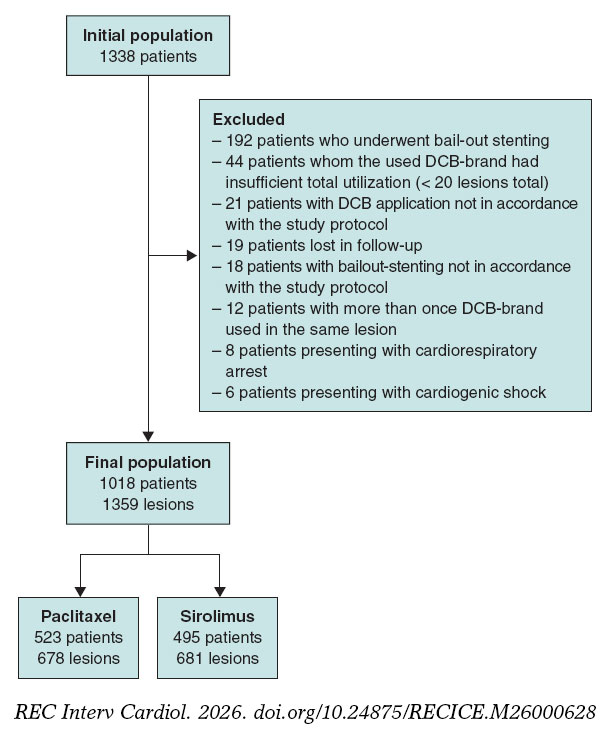
Figure 1. Patient population flowchart. DCB, drug-coated balloon.
Table 1. Baseline population characteristics, per patient
| Characteristics | Population (n = 1018) | Paclitaxel (n = 523) | Sirolimus (n = 495) | P |
|---|---|---|---|---|
| Baseline demographics | ||||
| Age, y | 67.1 ± 11.3 | 68.0 ± 11.0 | 66.3 ± 12.6 | .020 |
| Male sex | 842 (82.7) | 437 (83.6) | 405 (81.8) | .609 |
| BMI, kg/m2 | 27.7 ± 8.5 | 28.2 ± 11.2 | 27.2 ± 3.8 | .065 |
| Past medical history | ||||
| Prior MI | 456 (44.7) | 244 (46.7) | 212 (42.8) | .268 |
| Prior PCI | 545 (53.5) | 296 (56.6) | 249 (50.3) | .051 |
| Prior CABG | 59 (5.8) | 30 (5.7) | 29 (5.9) | 1.000 |
| Hypertension | 800 (78.6) | 408 (78.0) | 392 (79.2) | .702 |
| Dyslipidemia | 797 (78.3) | 417 (79.7) | 380 (76.8) | .284 |
| Smoker | 239 (23.5) | 104 (19.9) | 135 (27.3) | .007 |
| Congestive heart failure | 165 (16.2) | 89 (17.0) | 76 (15.4) | .750 |
| Diabetes mellitus | 402 (39.5) | 211 (40.3) | 191 (38.6) | .610 |
| Renal dysfunction | 169 (16.6) | 86 (16.4) | 83 (16.8) | .993 |
| Peripheral artery disease | 88 (8.6) | 50 (9.7) | 38 (7.7) | .339 |
| Atrial fibrillation/flutter | 65 (6.4) | 38 (7.3) | 27 (5.5) | .285 |
| Family history of CAD | 83 (8.2) | 45 (8.6) | 38 (7.8) | .686 |
| Clinical presentation | ||||
| STEMI | 192 (18.9) | 103 (19.7) | 89 (18.0) | .536 |
| NSTEMI | 232 (22.8) | 121 (23.1) | 111 (22.4) | .845 |
| Unstable angina | 33 (3.2) | 16 (3.1) | 17 (3.4) | .872 |
| CCS | 561 (55.1) | 283 (54.1) | 278 (56.2) | .871 |
| Procedural characteristics | ||||
| Multivessel/segment disease | 827 (81.2) | 412 (78.8) | 415 (83.8) | .064 |
| > 1 lesion treated | 585 (57.5) | 299 (57.2) | 286 (57.8) | .561 |
|
BMI, body mass index; CABG, coronary artery bypass grafting; CAD, coronary artery disease; CCS, chronic coronary syndrome; MI, myocardial infarction; NSTEMI, non-ST segment elevation myocardial infarction; PCI, percutaneous coronary intervention; STEMI, ST segment elevation myocardial infarction. Continuous variables are expressed as means with standard deviation. Categorical variables as absolute count and respective percentages. |
||||
Procedural characteristics
A total of 1359 lesions were treated in the study population, including 678 lesions treated with PCBs and 681 treated with SCBs (table 2). The left anterior descending coronary artery was the most frequently treated vessel (44.7%). De novo lesions accounted for most cases (80.4%) and were more frequent in the sirolimus group (86.9% vs 75.1%; P < .001). Dissection after DCB application occurred in 12.3% of procedures and perforation in 1.0%, with no between-group differences. No-reflow after DCB application was more frequent in the paclitaxel group (5.2% vs 0.1%; P < .001; table S1).
Table 2. Baseline procedural characteristics, per lesion
| Characteristics | Population (n = 1359) | Paclitaxel (n = 678) | Sirolimus (n = 681) | P |
|---|---|---|---|---|
| Target vessel | ||||
| LMCA | 18 (1.3) | 12 (1.8) | 6 (0.9) | .156 |
| LAD | 607 (44.7) | 303 (44.7) | 304 (44.6) | .938 |
| LCx | 362 (26.5) | 166 (24.5) | 196 (28.8) | .073 |
| RCA | 329 (24.2) | 173 (25.5) | 156 (22.9) | .270 |
| IB | 45 (3.3) | 29 (4.3) | 16 (2.3) | .065 |
| CABG | 5 (0.4) | 3 (0.4) | 2 (0.3) | .683 |
| Lesion characteristics | ||||
| AHA type A | 404 (29.7) | 193 (28.5) | 211 (31.0) | .287 |
| AHA type B1/B2 | 823 (60.6) | 417 (61.5) | 406 (59.7) | .323 |
| AHA type C | 132 (9.7) | 68 (10.0) | 64 (9.4) | .703 |
| Percent diameter stenosis | 82.0 ± 23.8 | 82.1 ± 24.9 | 81.9 ± 22.4 | .875 |
| De novo lesion | 1100 (80.4) | 509 (75.1) | 591 (86.7) | < .001 |
| ISR | 259 (19.1) | 169 (24.9) | 90 (13.2) | < .001 |
| CTO | 103 (7.5) | 56 (8.3) | 47 (6.9) | .339 |
| Bifurcation lesion | 381 (28.0) | 190 (28.0) | 191 (28.0) | 1.000 |
| Procedural characteristics | ||||
| SC balloon | 195 (14.3) | 97 (14.3) | 98 (14.4) | 1.000 |
| NC balloon | 1204 (88.6) | 604 (89.1) | 600 (88.1) | .494 |
| Scoring balloon | 152 (11.2) | 73 (10.8) | 79 (11.6) | .296 |
| Cutting balloon | 217 (16.0) | 94 (13.9) | 123 (18.1) | .086 |
| IVL balloon | 76 (5.6) | 33 (4.9) | 43 (6.3) | .226 |
| Rotational atherectomy | 28 (2.1) | 9 (1.3) | 19 (2.8) | .088 |
| Orbital atherectomy | 29 (2.1) | 12 (1.8) | 17 (2.5) | .460 |
| No. of DCBs used | 1.15 ± 0.42 | 1.14 ± 0.41 | 1.16 ± 0.43 | .368 |
| Mean DCB diameter | 2.84 ± 0.54 | 2.85 ± 0.56 | 2.83 ± 0.52 | .542 |
| Mean DCB length | 23.7 ± 7.9 | 23.9 ± 8.1 | 23.5 ± 7.7 | .417 |
| Procedural results | ||||
| Dissection | 169 (12.4) | 83 (12.2) | 86 (12.6) | .849 |
| Perforation | 14 (1.0) | 7 (1.0) | 7 (1.0) | 1.000 |
| No-reflow | 36 (2.7) | 35 (5.2) | 1 (0.1) | < .001 |
|
AHA, American Heart Association; CABG, coronary artery bypass grafting; CTO, chronic total coronary occlusion; DCB, drug-coated balloon; DES, drug eluting stent; LAD, left anterior descending coronary artery; IB, intermediate branch; ISR, in-stent restenosis; IVL, intravascular lithotripsy; LCx, left circumflex artery; LMCA, left main coronary artery; NC, non-compliant; RCA, right coronary artery; SC, semi-compliant. Continuous variables are expressed as means with standard deviation. Categorical variables as absolute count and respective percentages. |
||||
One-year outcomes
At the 1-year follow-up, clinical outcomes were comparable between the paclitaxel and sirolimus groups (table 3). In the overall population (n = 1018), there were no significant differences in cardiac death (2.9% vs 2.4%; P = .711), TVMI (4.6% vs 3.6%; P = .559), target lesion revascularization (4.0% vs 2.2%; P = .133), or TLF (6.1% vs 4.4%; P = .300). Similarly, in the lesion-level analysis (n = 1359), TLF rates were not significantly different between groups (6.2% vs 4.6%; P = .204).
Table 3. One-year outcomes
| Per patient | Population (n = 1018) | Paclitaxel (n = 523) | Sirolimus (n = 495) | P |
|---|---|---|---|---|
| Outcomes | ||||
| All-cause mortality | 48 (4.7) | 28 (5.4) | 20 (4.0) | .205 |
| Cardiac death | 27 (2.7) | 15 (2.9) | 12 (2.4) | .711 |
| TVMI | 42 (4.1) | 24 (4.6) | 18 (3.6) | .559 |
| TLR | 32 (3.1) | 21 (4.0) | 11 (2.2) | .133 |
| TLF | 54 (5.3) | 32 (6.1) | 22 (4.4) | .300 |
| Per lesion | Population (n = 1359) | Paclitaxel (n = 678) | Sirolimus (n = 681) | P |
| TLF | 73 (5.4) | 42 (6.2) | 31 (4.6) | .204 |
|
TLF, target lesion failure; TLR, target lesion revascularization; TVMI, target vessel-related myocardial infarction. Categorical variables are expressed as absolute counts and percentages. |
||||
In a multivariable Cox proportional hazards model adjusted for clinical, anatomical, and procedural variables and accounting for clustering at the patient level, PCB use was not independently associated with all-cause mortality (HR, 0.89; 95%CI, 0.46–1.71; P = .722), cardiac death (HR, 0.98; 95%CI, 0.39–2.45; P = .965), TVMI (HR, 1.09; 95%CI, 0.56–2.12; P = .783), target lesion revascularization (HR, 1.10; 95%CI, 0.59–2.06; P = .772), or TLF at 1 year (HR, 1.22; 95%CI, 0.71–2.10; P = .474; tables S2-S6.)
Exploratory comparison between paclitaxel-coated balloon platforms
A total of 678 lesions treated with PCBs were included in the analysis. These lesions were treated with 3 different PCB brands: Agent (Boston Scientific, United States) in 135 lesions, Pantera Lux (Teleflex, United States) in 382 lesions, and SeQuent Please (B. Braun, Germany) in 161 lesion (table 4). At the 1-year follow-up, a total of 42 TLF events were recorded (figure 2).
Table 4. Baseline characteristics before and after IPTW weighting for paclitaxel-coated balloons
| Before IPTW | Agent | Pantera Lux | SeQuent Please | SMD |
|---|---|---|---|---|
| Per patient | (n = 104) | (n = 295) | (n = 124) | — |
| Age | 68.0 ± 10.0 | 68.6 ± 10.5 | 67.1 ± 12.2 | 0.143 |
| Male sex | 82 (78.8) | 255 (86.4) | 100 (80.6) | 0.076 |
| Diabetes mellitus | 56 (53.8) | 113 (38.3) | 42 (33.9) | 0.215 |
| Dyslipidemia | 85 (81.7) | 235 (79.6) | 99 (79.8) | 0.061 |
| Hypertension | 83 (79.8) | 228 (77.2) | 97 (78.2) | 0.036 |
| Previous MI | 48 (46.1) | 142 (48.1) | 54 (43.5) | 0.051 |
| Previous PCI | 60 (57.7) | 174 (59.0) | 62 (50.0) | 0.093 |
| Stable presentation | 62 (59.6) | 156 (52.9) | 60 (48.4) | 0.144 |
| Per lesion | (n = 135) | (n = 382) | (n = 161) | — |
| Target lesion CTO | 14 (10.4) | 31 (8.1) | 11 (6.8) | 0.096 |
| Target lesion ISR | 22 (16.3) | 104 (27.2) | 43 (34.7) | 0.172 |
| Target vessel LAD | 72 (53.3) | 163 (42.7) | 61 (37.8) | 0.208 |
| Severe calcification | 15 (11.1) | 31 (8.1) | 8 (5.0) | 0.145 |
| Reference lumen diameter | 3.35 ± 0.39 | 3.04 ± 0.28 | 2.63 ± 0.48 | 0.239 |
| After IPTW | Agent (weighted n = 645.2) | Pantera Lux (weighted n = 657.8) | SeQuent Please (weighted n = 658.4) | SMD |
| Age | 68.2 ± 10.3 | 68.3 ± 10.5 | 69.2 ± 11.8 | 0.099 |
| Male sex | 84.5 | 85.1 | 83.9 | 0.018 |
| Diabetes mellitus | 42.4 | 41.2 | 44.3 | 0.043 |
| Dyslipidemia | 79.8 | 81.4 | 82.0 | 0.040 |
| Hypertension | 75.9 | 77.2 | 79.1 | 0.074 |
| Previous MI | 46.8 | 48.3 | 45.8 | 0.031 |
| Previous PCI | 57.4 | 48.9 | 58.1 | 0.039 |
| Target lesion CTO | 9.2 | 8.8 | 10.1 | 0.026 |
| Target lesion ISR | 19.4 | 22.4 | 21.6 | 0.067 |
| Stable presentation | 55.5 | 56.4 | 57.6 | 0.022 |
| Target vessel LAD | 47.2 | 44.5 | 49.1 | 0.044 |
| Severe calcification | 11.1 | 8.7 | 5.7 | 0.115 |
| Reference lumen diameter | 3.09 ± 0.39 | 3.02 ± 0.27 | 2.98 ± 0.48 | 0.087 |
|
CTO, chronic total coronary occlusion; DCB, drug-coated balloon; IPTW, inverse probability of treatment weighting; ISR, in-stent restenosis; LAD, left anterior descending coronary artery; MI, myocardial infarction; PCI, percutaneous coronary intervention; SD, standard deviation; SMD, standardized mean difference. Continuous variables are presented as mean ± SD. Categorical variables are presented as absolute counts and percentages. After IPTW, categorical variables are presented as percentages. IPTW was applied at the lesion level. Weighted sample sizes represent pseudo-populations of lesions. Patient-level variables are summarized using lesion-level weights. |
||||
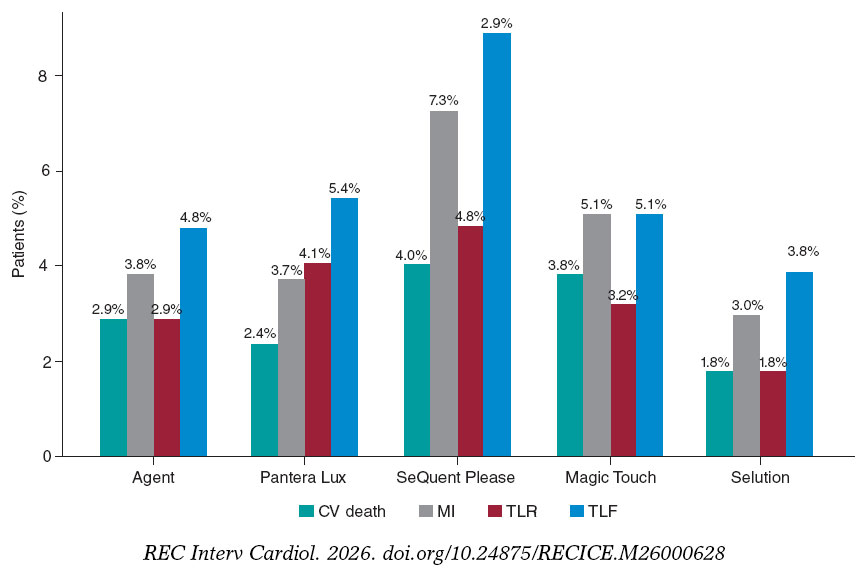
Figure 2. Cardiovascular events at 1-year follow-up for each DCB brand. CV, cardiovascular; MI, myocardial infarction; TLF, target lesion failure; TLR, target lesion revascularization.
Propensity score weighting achieved adequate balance across treatment groups (figure S1). After weighting, all standardized mean differences were low, indicating good covariate balance among the DCB brands (table 4; table S7). In the IPTW-weighted Cox proportional hazards model with clustering at the patient level, no significant differences in the risk of TLF were observed among PCB brands. Compared with Agent, Pantera Lux was associated with an HR of 0.94 (95%CI, 0.37–2.41; P = .904), whereas SeQuent Please was associated with an HR of 1.74 (95%CI, 0.56–5.44; P = .342; figure 3).
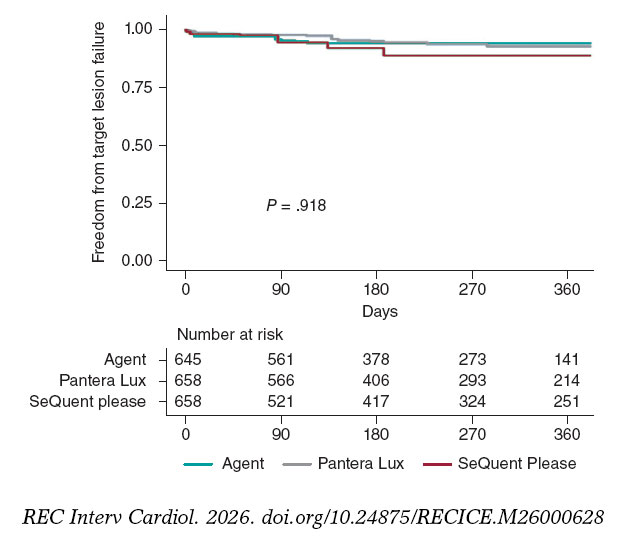
Figure 3. Kaplan–Meier curves for freedom from target lesion failure up to 1 year according to paclitaxel drug-coated balloon brand after inverse probability of treatment weighting.
Exploratory comparison between sirolimus-coated balloon platforms
A total of 681 lesions treated with SCBs were included in the analysis. Two SCB brands were used: Magic Touch (Concept Medical, United States) in 189 lesions and Selution (Cordis, United States) in 492 lesions. During follow-up, 31 TLF events occurred (figure 2).
Before propensity score weighting, several baseline differences were observed between treatment groups, including higher rates of diabetes and hypertension in the Selution group and a higher prevalence of in-stent restenosis in the Magic Touch group (table 5). After IPTW, adequate covariate balance was achieved between groups, with standardized mean differences below conventional thresholds for most variables (figure S2).
Table 5. Baseline characteristics before and after IPTW weighting for sirolimus-coated balloons
| Before IPTW | Magic Touch | Selution | SMD |
|---|---|---|---|
| Per patient | (n = 157) | (n = 338) | — |
| Age | 63.9 ± 11.0 | 66.7 ± 12.4 | 0.240 |
| Male sex | 124 (78.9) | 281 (83.1) | 0.157 |
| Diabetes mellitus | 54 (34.4) | 137 (40.5) | 0.285 |
| Dyslipidemia | 117 (74.5) | 263 (77.8) | 0.137 |
| Hypertension | 118 (75.1) | 274 (81.1) | 0.218 |
| Previous MI | 66 (42.0) | 146 (43.2) | 0.037 |
| Previous PCI | 78 (49.7) | 171 (50.6) | 0.026 |
| Stable presentation | 82 (52.2) | 183 (54.1) | 0.114 |
| Per lesion | (n = 189) | (n = 492) | — |
| Target lesion CTO | 16 (8.5) | 31 (6.3) | 0.118 |
| Target lesion ISR | 37 (19.6) | 63 (12.8) | 0.316 |
| Target vessel LAD | 75 (39.6) | 229 (46.5) | 0.216 |
| Severe calcification | 32 (16.9) | 47 (9.6) | 0.414 |
| Reference lumen diameter | 3.04 ± 0.49 | 3.02 ± 0.38 | 0.006 |
| After IPTW | Magic Touch (weighted n = 691.6) | Selution (weighted n = 661.6) | SMD |
| Age | 68.2 ± 11.7 | 67.7 ± 13.6 | 0.109 |
| Male sex | 88.3 | 85.4 | 0.062 |
| Diabetes mellitus | 46.3 | 42.5 | 0.084 |
| Dyslipidemia | 78.4 | 77.4 | 0.029 |
| Hypertension | 80.8 | 78.9 | 0.047 |
| Previous MI | 48.2 | 45.9 | 0.064 |
| Previous PCI | 53.1 | 53.7 | 0.012 |
| Target lesion CTO | 4.2 | 7.1 | 0.111 |
| Target lesion ISR | 12.3 | 13.3 | 0.039 |
| Stable presentation | 52.5 | 56.2 | 0.092 |
| Target vessel LAD | 47.4 | 45.2 | 0.107 |
| Severe calcification | 13.2 | 10.4 | 0.113 |
| Reference lumen diameter | 2.89 ± 0.58 | 3.02 ± 0.47 | 0.058 |
|
CTO, chronic total coronary occlusion; DCB, drug-coated balloon; IPTW, inverse probability of treatment weighting; ISR, in-stent restenosis; LAD, left anterior descending coronary artery; MI, myocardial infarction; PCI, percutaneous coronary intervention; SD, standard deviation; SMD, standardized mean difference. Continuous variables are expressed as mean ± SD. Categorical variables are expressed as absolute counts and percentages. After IPTW, categorical variables are expressed as percentages. IPTW was applied at the lesion level. Weighted sample sizes represent pseudo-populations of lesions. Patient-level variables are summarized using lesion-level weights. |
|||
In the IPTW-weighted Cox proportional hazards model with clustering at the patient level, an association between device platform and TLF was observed, with a significantly lower observed risk of TLF with the Selution platform (HR, 0.17; 95%CI, 0.05–0.58; P = .004). Kaplan-Meier analysis demonstrated a lower cumulative incidence of TLF in the Selution group during follow-up (figure 4).
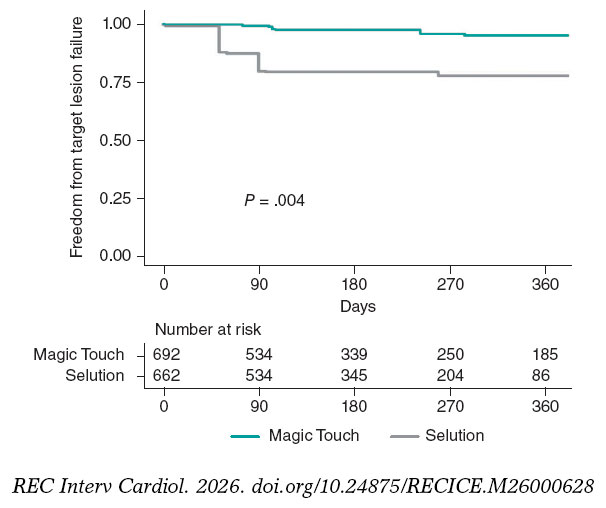
Figure 4. Kaplan–Meier curves for freedom from target lesion failure up to 1 year according to sirolimus drug-coated balloon brand after inverse probability of treatment weighting.
DISCUSSION
In this large, real-world multicenter cohort, the principal finding was that overall clinical outcomes were comparable between PCBs and SCBs at 1 year. A difference in TLF was observed between sirolimus platforms, suggesting that these devices might not behave as a uniform therapeutic class. By contrast, the absence of significant differences across the PCBs evaluated suggests comparable outcomes among these devices in our cohort (figure 5). However, these findings should not be interpreted as evidence of a class effect across PCBs in general because our analysis was limited to 3 platforms. Overall, these results may indicate that the efficacy of SCBs is more dependent on device-specific drug-delivery technologies.
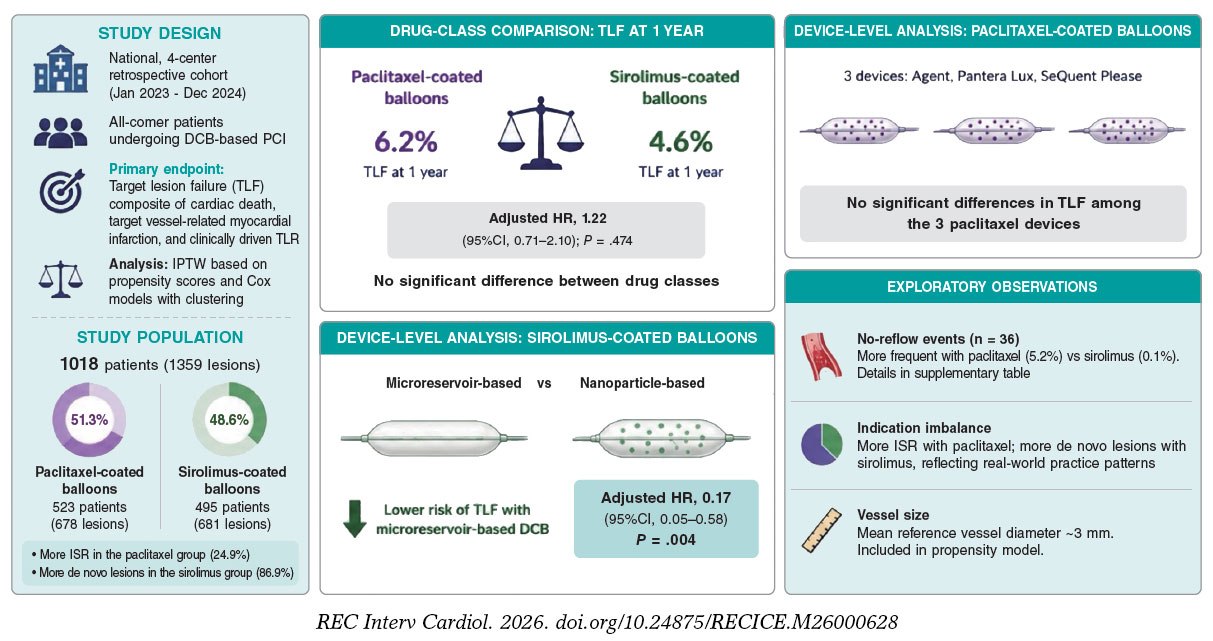
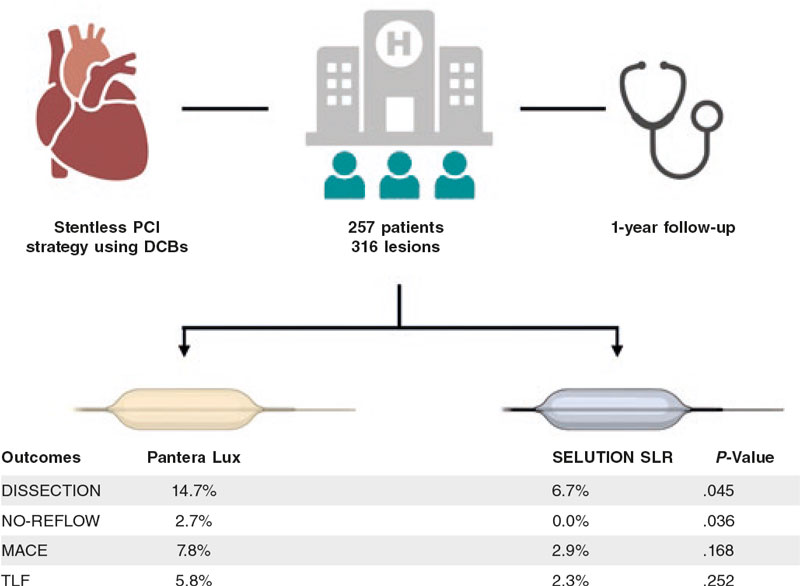
Figure 5. Central illustration. Multicenter cohort of 1018 patients (1359 lesions) treated with paclitaxel-coated balloons (n = 523) or SCBs (n = 495). At 1 year, TLF did not differ significantly by drug class (6.2% vs 4.6%; adjusted HR, 1.22; 95%CI, 0.71–2.10; P = .474), nor across paclitaxel platforms. Among sirolimus- coated balloons, the microreservoir-based device had a lower risk of TLF than the nanoparticle-based device (adjusted HR, 0.17; 95%CI, 0.05–0.58; P = .004). 95%CI, 95% confidence interval; DES, drug-eluting stent; HR, hazard ratio; IPTW, inverse probability of treatment weighting; ISR, in-stent restenosis; MI, myocardial infarction; PCI, percutaneous coronary intervention; STEMI, ST-segment elevation myocardial infarction; TLR, target lesion revascularization.
Furthermore, PCBs were used more frequently for in-stent restenosis, whereas SCBs were used more commonly for de novo lesions. This distribution likely reflects differences in clinical experience and contemporary practice patterns. Therefore, the observed differences between drug classes should be interpreted in the context of these differences in clinical indication.
From a mechanistic standpoint, paclitaxel and sirolimus act through distinct but complementary pathways. Paclitaxel stabilizes microtubules and exerts a cytotoxic effect on proliferating smooth muscle cells, with rapid and durable tissue uptake even with brief balloon contact.2,11 Sirolimus, by contrast, inhibits the mTOR pathway in a cytostatic manner, suppressing cell-cycle progression without direct cytotoxicity.12
Despite these pharmacological differences, both agents appear capable of achieving clinically meaningful reductions in neointimal proliferation and TLF when delivered via a coated-balloon platform, provided that adequate drug transfer is achieved.13 This was demonstrated in the TRANSFORM I trial (NCT06182397), which compared the SeQuent Please Neo PCB with the Magic Touch SCB in 121 patients. The primary endpoint was noninferiority for 6-month angiographic net lumen gain, which the Magic Touch DCB failed to demonstrate (0.25 ± 0.40 mm vs 0.48 ± 0.37 mm; P = .173).14 A subsequently published meta-analysis also showed consistent trends toward a larger minimal lumen diameter with PCB treatment in both de novo and in-stent restenosis lesions, although the risk of TLF was similar over 9 to 12 months of follow-up.15
Our study found no statistically significant differences in 1-year TLF across paclitaxel devices. This finding is noteworthy given the substantial differences in excipient formulations and coating technologies among these platforms. For example, SeQuent Please uses the well-characterized PACCOCATH technology with iopromide,2 whereas Pantera Lux employs a shellac-based matrix and Agent uses a proprietary crystalline coating.16 Despite these differences, comparable clinical outcomes were observed across brands. This may reflect the relatively forgiving pharmacokinetic profile of paclitaxel, because its high lipophilicity and rapid cellular uptake may render clinical outcomes less sensitive to interdevice variability in drug-release kinetics.
In contrast, a difference in TLF was observed between the 2 SCBs evaluated in this study. This finding raises the possibility of device-level heterogeneity within the sirolimus class and highlights the potential importance of delivery technology in determining clinical performance when sirolimus is the active drug. However, these results should be interpreted with caution. Given the observational design of the study, baseline imbalances between groups, and the relatively low number of TLF events, these results may be due to chance and should be considered exploratory and hypothesis-generating rather than confirmatory.
One possible explanation is that the SCB efficacy profile is highly dependent on the drug formulation, coating matrix, and delivery technology used to maximize tissue uptake and retention during the brief inflation period. Selution SLR employs a proprietary biodegradable polymer matrix (MicroReservoir technology) designed to facilitate controlled and sustained drug release.17,18 Magic Touch, conversely, uses a phospholipid-based coating that, although designed to facilitate drug-tissue interaction, may result in different pharmacokinetic behavior in vivo.8 However, the SIROMILANO study retrospectively compared these 2 SCB platforms in 668 patients with coronary artery disease undergoing PCI and found no significant differences in clinical outcomes at 12 months,19 further supporting the need for prospective randomized studies to clarify whether differences in drug retention translate into differences in clinical outcomes.
LIMITATIONS
Several limitations of this study must be acknowledged. First, despite the use of IPTW to account for baseline imbalances, the observational design precludes definitive causal conclusions and cannot fully exclude residual confounding. In particular, the device-level sirolimus analysis was based on a limited number of events relative to model complexity, increasing the possibility of model instability and imprecise effect estimates. The choice of DCB platform was left to the operator’s discretion, introducing selection bias that may not have been entirely captured by the propensity model. Second, the study was conducted across 4 centers in a single country and included a limited number of brands, which may limit generalizability to other health care systems and devices. Third, angiographic follow-up was not systematically performed, precluding assessment of late lumen loss as a mechanistic endpoint. In addition, the use of clinical TLF as the primary outcome may underestimate the true rate of restenosis. Fourth, the number of events in some subgroups, particularly in the sirolimus analysis, was limited, and the confidence intervals around device-level comparisons were wide, warranting cautious interpretation of the point estimates. Fifth, the 1-year follow-up period may be insufficient to capture late events, particularly in a population with substantial proportions of complex lesions and in-stent restenosis. Longer-term data are needed to confirm the durability of the observed findings. Between-brand differences in lesion selection, even after weighting, may reflect unmeasured operator preferences or institutional protocols that could influence outcomes independently of device performance. Finally, although reference vessel diameter was included in the propensity score model to account for differences in vessel size between treatment groups, this study was not specifically designed or powered to investigate an interaction between vessel diameter and DCB efficacy.
CONCLUSIONS
In this real-world multicenter study, PCBs and SCBs were associated with comparable 1-year clinical outcomes following PCI. No significant differences were observed among the paclitaxel platforms evaluated, whereas outcomes differed between the sirolimus platforms. These exploratory findings require confirmation in larger randomized studies.
FUNDING
None declared.
ETHICAL CONSIDERATIONS
This study followed international recommendations for clinical investigation (Declaration of Helsinki). The study was approved by the local ethics committees. Because of the retrospective observational design of the study, the requirement for written informed consent was waived. The SAGER guidelines were followed.
STATEMENT ON THE USE OF ARTIFICIAL INTELLIGENCE
A large language model (ChatGPT 5.0) was used for grammar correction and to improve readability. The authors are fully responsible for the content of this manuscript.
AUTHORS’ CONTRIBUTIONS
D. Faria: study design, data collection, data analysis, manuscript writing, and revision. A. Esteves and D. Neves: data collection and manuscript revision. L. Hamann: data collection. F. Soares and H. Vinhas: manuscript revision. All authors have read and approved the final version of the manuscript.
CONFLICTS OF INTEREST
D. Faria and H. Vinhas have received speaker fees from Cordis. The remaining authors declared no conflicts of interest whatsoever.
WHAT IS KNOWN ABOUT THE TOPIC?
- DCBs are an established treatment option for coronary artery disease.
- PCBs and SCBs differ in drug characteristics and device technologies, but comparative clinical data among individual platforms remain limited.
WHAT DOES THIS STUDY ADD?
- In this study, PCBs and SCBs showed comparable 1-year outcomes after adjustment for baseline differences.
- No significant differences were observed among the 3 paclitaxel platforms, whereas outcomes differed between the 2 sirolimus platforms.
SUPPLEMENTARY DATA

REFERENCES
1. Fezzi S, Serruys PW, Cortese B, et al. Indications for Use of Drug-Coated Balloons in Coronary Intervention: Academic Research Consortium Position Statement. J Am Coll Cardiol. 2025;86:1170-1202.
2. Scheller B, Hehrlein C, Bocksch W, et al. Treatment of Coronary In-Stent Restenosis with a Paclitaxel-Coated Balloon Catheter. N Eng J Med. 2006;355:2113-2124.
3. Scheller B, Ohlow MA, Ewen S, et al. Bare metal or drug-eluting stent versus drug-coated balloon in non-ST-elevation myocardial infarction: The randomised PEPCAD NSTEMI trial. EuroIntervention. 2020;15:1527-1533.
4. Katsanos K, Spiliopoulos S, Kitrou P, Krokidis M, Karnabatidis D. Risk of death following application of paclitaxel-coated balloons and stents in the femoropopliteal artery of the leg: A systematic review and meta-analysis of randomized controlled trials. J Am Heart Assoc. 2018;7:e011245.
5. Stone GW, Moses JW, Ellis SG, et al. Safety and Efficacy of Sirolimus- and Paclitaxel-Eluting Coronary Stents. N Eng J Med. 2007;356:998-1008.
6. Morice MC, Serruys PW, Sousa JE, et al. A Randomized Comparison of a Sirolimus-Eluting Stent with a Standard Stent for Coronary Revascularization. N Eng J Med. 2002;346:1773-1780.
7. Joner M, Wild L. Comparative preclinical assessment of drug-coated balloons: a blessing and a curse for clinical translation. EuroIntervention. 2024;20:e338-e340.
8. Laricchia A, Bossi I, Latini RA, et al. Sirolimus-coated balloon in acute and chronic coronary syndromes: the PEACE study, a subanalysis of the EASTBOURNE registry. Rev Esp Cardiol. 2024;77:527-536.
9. Shigeyama J, Ito S, Kondo H, et al. Angiographic classification of coronary dissections after plain old balloon angioplasty for prediction of regression at follow-up. Jpn Heart J. 2001;42:393-408.
10. Hennessey B, Pareek N, Macaya F, et al. Contemporary percutaneous management of coronary calcification: current status and future directions. Open Heart. 2023;10:e002182.
11. Scheller B, Speck U, Abramjuk C, Bernhardt U, Böhm M, Nickenig G. Paclitaxel balloon coating, a novel method for prevention and therapy of restenosis. Circulation. 2004;110:810-814.
12. Korjian S, McCarthy KJ, Larnard EA, et al. Drug-coated balloons in the management of coronary artery disease. Circ Cardiovasc Interv. 2024;17:e013302.
13. Scheller B, Mangner N, Jeger RV, et al. A randomised trial of sirolimus- versus paclitaxel-coated balloons for de novo coronary lesions. EuroIntervention. 2024;20:e1322-e1329.
14. Ninomiya K, Serruys PW, Colombo A, et al. A Prospective Randomized Trial Comparing Sirolimus-Coated Balloon With Paclitaxel-Coated Balloon in De Novo Small Vessels. JACC Cardiovasc Interv. 2023;16:2884-2896.
15. Shin D, Singh M, Shlofmitz E, et al. Paclitaxel-coated versus sirolimus-coated balloon angioplasty for coronary artery disease: A systematic review and meta-analysis. Catheter Cardiovasc Interv. 2024;104:425-436.
16. Yeh RW, Shlofmitz R, Moses J, et al. Paclitaxel-Coated Balloon vs Uncoated Balloon for Coronary In-Stent Restenosis: The AGENT IDE Randomized Clinical Trial. JAMA. 2024;331:1015-1024.
17. Cutlip DE, Mehran R, Doros G, et al. Prospective randomized single-blind multicenter study to assess the safety and effectiveness of the SELUTION SLR 014 drug eluting balloon in the treatment of subjects with in-stent restenosis: Rationale and design. Am Heart J. 2025;284:11-19.
18. Spaulding C, Krackhardt F, Bogaerts K, et al. Comparing a strategy of sirolimus-eluting balloon treatment to drug-eluting stent implantation in de novo coronary lesions in all-comers: Design and rationale of the SELUTION DeNovo Trial. Am Heart J. 2023;258:77-84.
19. Leone PP, Gitto M, Regazzoli D, et al. Sirolimus-Coated Balloon With Phospholipid Nanocarriers or Biodegradable Polymer Microspheres for Treatment of Coronary Artery Disease. Am J Cardiol. 2026;269:19-28.