
ABSTRACT
Introduction and objectives: Rotational atherectomy (RA) has become an important tool in the management of severely calcified coronary lesions. However, no recent comprehensive meta-analysis of contemporary randomized clinical trials (RCTs) has been conducted.
Methods: This systematic review and meta-analysis was conducted in accordance with the PRISMA guidelines and registered in PROSPERO. The primary endpoint was procedural success. Secondary endpoints included strategy success, intracoronary imaging outcomes, procedural complications, and clinical events (major adverse cardiovascular events, all-cause mortality, cardiac death, myocardial infarction, target lesion revascularization [TLR], target vessel revascularization [TVR], and stent thrombosis).
Results: A total of 5 RCTs including 668 patients were analyzed. One RCT compared RA with noncompliant balloons, 1 compared RA with modified balloons, and 3 compared RA with intravascular lithotripsy. RA was associated with a higher strategy success rate (RR, 1.11; 95%CI, 1.02-1.21; I2 = 54.8%) and a lower crossover rate (RR, 0.26; 95%CI, 0.09-0.94; I2 = 44.5%), with no differences in procedural success or complication rates. During follow-up (minimum, 6 months; maximum, 60 months), RA was associated with lower rates of TLR (incidence rate ratio [IRR], 0.31; 95%CI, 0.19-0.51; I2 = 0.0%) and TVR. There were no differences in imaging outcomes, major adverse cardiovascular events, all-cause mortality, cardiac death, or myocardial infarction.
Conclusions: RA may be associated with higher strategy success and lower crossover rates than balloon-based strategies, although these procedural differences may partly reflect trial design. A potential reduction in TLR was also observed, but this finding should be considered exploratory.
PROSPERO ID: CRD420251121703.
Keywords: Rotational atherectomy. Calcified coronary lesions. Percutaneous coronary intervention.
RESUMEN
Introducción y objetivos: La aterectomía rotacional (AR) se ha convertido en una herramienta importante en el tratamiento de las lesiones coronarias gravemente calcificadas. No se ha realizado recientemente un metanálisis actualizado de los ensayos clínicos aleatorizados (ECA) contemporáneos.
Métodos: Esta revisión sistemática y metanálisis se realizó de acuerdo con las guías PRISMA y se registró en PROSPERO. El objetivo primario fue el éxito del procedimiento. Los objetivos secundarios incluyeron el éxito de la estrategia, el resultado basado en imagen intracoronaria, las complicaciones y los episodios clínicos: eventos cardiovasculares adversos mayores, muerte, mortalidad cardiovascular, infarto de miocardio, revascularización de la lesión diana (RLD), revascularización del vaso diana y trombosis del stent.
Resultados: Se incluyeron 5 ECA en el análisis, con un total de 668 pacientes. Un ECA comparó la AR frente a balones no distensibles, un ECA comparó la AR frente a balones modificados y 3 ECA compararon la AR frente a la litotricia intravascular. La AR mostró una mayor tasa de éxito de la estrategia (RR = 1,11; IC95%, 1,02-1,21; I2 = 54,8%) y una menor tasa de cruce a otra estrategia (RR = 0,26; IC95%, 0,09-0,94; I2 = 44,5%), sin diferencias en el éxito procedimental ni en la tasa de complicaciones. Durante el seguimiento —mínimo de 6 meses y máximo de 60 meses—, la AR mostró menores tasas de RLD (razón de tasas de incidencia: 0,31; IC95%, 0,19-0,51; I2 = 0,0%) y de revascularización del vaso diana. No hubo diferencias en los resultados de imagen, los eventos cardiovasculares adversos mayores, la mortalidad por cualquier causa, la muerte por causa cardiovascular ni el infarto de miocardio.
Conclusiones: La AR podría asociarse con una mayor tasa de éxito de la estrategia y un menor cruce a otra estrategia que los procedimientos basados en balón, aunque estas diferencias podrían reflejar parcialmente el diseño de los estudios. También se observó una posible reducción de la RLD, lo cual debe interpretarse como exploratorio.
(PROSPERO ID: CRD420251121703).
Palabras clave: Aterectomía rotacional. Lesión coronaria calcificada. Intervención coronaria percutánea.
Abbreviations
IVL: intravascular lithotripsy. PCI: percutaneous coronary intervention. RA: rotational atherectomy. RCT: randomized clinical trial. TLR: target lesion revascularization.
INTRODUCTION
Rotational atherectomy (RA) has demonstrated clinical utility across multiple registries and randomized clinical trials (RCTs). Since its first use in 1988,1 RA has become one of the most widely adopted plaque-modification techniques for percutaneous coronary intervention (PCI) in severely calcified coronary lesions.
The earliest RCTs evaluating RA either compared the technique with plain old balloon angioplasty or used bare-metal stents and first-generation drug-eluting stents.2,3 With the advent of second-generation drug-eluting stents, outcomes improved markedly, with substantial reductions in in-stent restenosis and thrombosis.4,5 This progress underscored the need for contemporary RCTs assessing the role of RA. In parallel, novel angioplasty balloons (eg, scoring, cutting, and super-high-pressure balloons) and modern plaque-modification devices (eg, intravascular lithotripsy [IVL]) emerged as viable options for the treatment of coronary artery calcification. Consequently, more recent clinical trials were conducted to compare RA with novel balloon-based techniques.6-10
Although these trials were appropriately designed, most lacked sufficient statistical power to detect clinical differences between the 2 strategies. Therefore, the objective of the present meta-analysis was to compare an RA-based PCI strategy with a balloon-based PCI strategy for the treatment of severe coronary artery calcification by pooling the results of contemporary RCTs.
METHODS
We conducted this systematic review and meta-analysis in accordance with the Cochrane Handbook for Systematic Reviews of Interventions and adhered to the Preferred Reporting Items for Systematic Reviews and Meta-Analyses (PRISMA) guidelines. The study protocol was registered in PROSPERO (ID: CRD420251121703).
Study selection and data extraction
The literature search strategy was developed according to the PICO framework: patients (P), adults (≥ 18 years) undergoing PCI for lesions with severe coronary artery calcification, as defined in each trial; intervention (I), RA before balloon angioplasty and/or second-generation stent implantation; comparator (C), balloon-based angioplasty and/or second-generation stent implantation; and outcomes (O), procedural success, strategy success, or final intracoronary imaging results. Secondary endpoints included procedural complications (perforation, dissection, and crossover) and clinical events during follow-up (major adverse cardiovascular events [MACE], all-cause mortality, cardiac death, myocardial infarction, target lesion revascularization [TLR], target vessel revascularization [TVR], and stent thrombosis).
We conducted a systematic search in PubMed, Scopus, and the Cochrane Library for studies published through May 2026. The detailed search strategy is provided in table S1. Two investigators (J. Zubiaur and M. Basile) independently screened titles and abstracts for eligibility and extracted data using a standardized form. Discrepancies were resolved by consultation with a third reviewer (A. Jurado-Román). Extracted data included study design, year, population characteristics, procedural outcomes, and clinical outcomes.
Risk of bias assessment
Because all included studies were RCTs, the Cochrane Risk of Bias tool was used to assess methodological quality and potential sources of bias. Certainty of evidence was assessed using the Grading of Recommendations Assessment, Development and Evaluation (GRADE) framework.
Study endpoints and data synthesis
The primary endpoint was procedural success according to the definition used in each RCT, generally including residual stenosis < 30%, Thrombolysis in Myocardial Infarction (TIMI) grade-3 flow, and the absence of severe complications, comparing RA with balloon-based techniques. Strategy success, according to the definition used in each RCT, was generally defined as procedural success without crossover to another plaque-modification technique (table 1). Intracoronary imaging outcomes included minimal stent area (MSA) and stent expansion.
Table 1. Characteristics of the included randomized clinical trials
| Study | PREPARE-CALC8 | ROTA-SHOCK7 | ROLLERCOASTR-EPIC229,* | CRATER6 | ICARE OFDI10 |
|---|---|---|---|---|---|
| Year of publication | 2018 | 2023 | 2025 | 2025 | 2026 |
| N | 200 | 61 | 114 | 124 | 169 |
| Follow-up (months) | 60 | 6 | 12 | 51 | 12 |
| Design (primary endpoint) | Superiority (strategy success) | Superiority (MSA) | Noninferiority (procedural success and MSA) | Superiority (total health care costs) | Noninferiority (MSA) |
| Procedural success definition | Not defined | Not defined | Angiographic success (final TIMI grade-3 flow and residual percent diameter stenosis < 30%, or < 20% on quantitative coronary angiography) without severe procedural complications | Strategy success and no severe complications | Not defined |
| Strategy success definition | Successful stent delivery and expansion with < 20% in-stent residual stenosis of the target lesion, TIMI grade-3 flow, and no crossover or stent failure | Not defined | Defined as “device success” when the initial device could cross the lesion and allow adequate subsequent balloon expansion without the need for a second advanced PMT | Residual percent diameter stenosis < 30%, TIMI grade-3 flow, and no need for another PMT | Not defined |
| Comparator | Modified balloon (90% scoring balloon, 10% cutting balloon) | IVL | IVL and ELCA | NC balloons | IVL |
| Main finding | Higher strategy success, lower crossover rate, and lower TLR with RA | Similar MSA and stent expansion | RA and IVL were noninferior | Similar total health care costs | Noninferior MSA and stent expansion |
|
ELCA, excimer laser coronary atherectomy; IVL, intravascular lithotripsy; MSA, minimal stent area; NC, noncompliant; PMT, plaque-modification technique; RA, rotational atherectomy; TIMI, Thrombolysis in Myocardial Infarction; TLR, target lesion revascularization. * Only patients in the RA and IVL groups were included. Patients treated with ELCA were excluded from the analysis. |
|||||
Secondary endpoints included procedure-related complications (perforation and dissection), crossover to another technique, and clinical outcomes during the longest available follow-up (MACE, all-cause mortality, cardiac death, myocardial infarction, TVR, TLR, and stent thrombosis).
Statistical analysis
Risk ratios (RRs), incidence rate ratios (IRRs), and standardized mean differences (SMDs), with their corresponding 95% confidence intervals (95%CIs), were used as effect measures, as appropriate. RRs were calculated for studies reporting event counts and total numbers of participants, whereas IRRs were estimated when event counts and person-time data were available. When person-time was not directly reported, it was approximated by multiplying the number of participants in each study arm by the corresponding reported follow-up duration. Incidence rates were expressed as events per 100 person-years.
Continuous outcomes, including MSA and stent expansion, were analyzed using SMDs. Meta-analyses were primarily performed using random-effects models (DerSimonian-Laird method), and heterogeneity was assessed using I2 and τ2 statistics. Prespecified subgroup and sensitivity analyses, including leave-one-out analyses, were performed when appropriate. Further details of the statistical methodology are provided in the Methods section of the supplementary data. All analyses were conducted using R Statistical Software, version 4.4.2 (R Foundation for Statistical Computing, Austria), with the meta and metafor packages.
RESULTS
The PRISMA flowchart is shown in figure 1, and the PRISMA checklist is provided in table S2. A total of 289 articles were initially identified. Duplicate records were automatically removed. After screening titles and abstracts, 33 full-text articles were assessed for eligibility. A total of 11 articles met the eligibility criteria.6-16 Although 11 articles met the inclusion criteria, they originated from 5 distinct RCTs, with some trials reported in more than 1 publication (eg, primary results and extended follow-up).
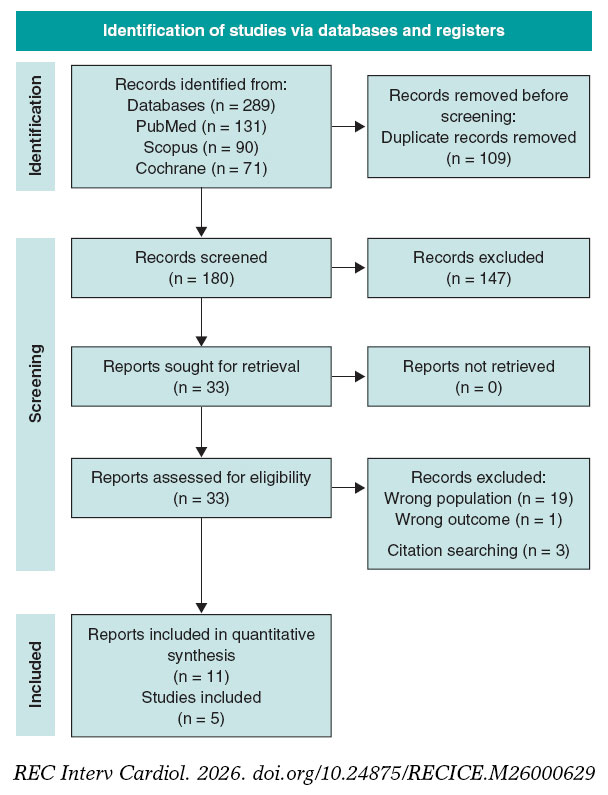
Figure 1. Flow diagram of the search for studies included in the meta-analysis according to the Preferred Reporting Items for Systematic Reviews and Meta-Analyses (PRISMA) statement.
The Comparison of Strategies to Prepare Severely Calcified Coronary Lesions (PREPARE-CALC) trial compared RA with modified balloons (90% scoring balloons and 10% cutting balloons);8 the Coronary Rotational Atherectomy Elective Versus Bailout in Patients With Severely Calcified Lesions and Chronic Renal Failure (CRATER) trial compared an elective RA strategy with a bailout RA strategy using noncompliant (NC) balloons;6,12 the ROTA.shock and ICARE OFDI trials compared RA with IVL;7,10 and the Rotational Atherectomy, Lithotripsy or Laser for the Treatment of Calcified Stenosis (ROLLERCOASTR-EPIC22) trial compared RA, IVL, and excimer laser coronary atherectomy (ELCA), although only the RA and IVL groups were considered in this meta-analysis.9,11,16 Study characteristics are summarized in table 1. Risk-of-bias assessment and the GRADE framework for outcomes are presented in tables S3 and S4.
Baseline and angiographic characteristics
A total of 668 patients were included (RA, n = 338; balloon-based strategies, n = 330). Baseline characteristics were generally well balanced between treatment groups across the included randomized clinical trials. Overall, patients were older than 70 years, predominantly male, and had cardiovascular risk factors (table 2). All included studies enrolled patients with moderate-to-severe coronary calcification according to trial-specific definitions. Lesions were predominantly located in the left anterior descending coronary artery. The use of intravascular imaging was frequent, ranging from 43.9% in the PREPARE-CALC trial to 100% in the ROTA.shock and ICARE OFDI trials (table 3). In the ICARE-OFDI trial,10 patients with lesions that could not be crossed with a 2.0-mm balloon were excluded. Conversely, in all other trials, randomization was performed before assessment of lesion crossability.
Table 2. Baseline and angiographic characteristics
| Characteristic | PREPARE-CALC8 (N = 200) | ROTA.shock7 (N = 61) | ROLLESCOATR-EPIC229,* (N = 114) | CRATER6 (N = 124) | ICARE-OFDI10 (N = 169) |
|---|---|---|---|---|---|
| Age, years | 74.9 | 73.3 | 70.8 | 77 | 71.8 |
| Male | 152 (76.0) | 46 (75.4) | 90 (79.0) | 86 (69.4) | 137 (81.1) |
| Hypertension | 186 (93.0) | 58 (95.1) | 88 (77.9) | 114 (91.9) | 110 (66.3) |
| DM | 67 (33.5) | 22 (36.1) | 53 (46.5) | 83 (66.9) | 61 (36.5) |
| Dyslipidemia | 137 (68.5) | 46 (75.4) | 80 (70.2) | 99 (80.5) | 111 (66.5) |
| CKD | 47 (23.5) | NA | NA | 124 (100) | 10 (6.0) |
| eGFR, mL/min/1.73 m2 | NA | NA | 61.2 | 34.4 | NA |
| Previous MI | 43 (21.5) | 23 (37.7) | NA | 25 (20.2) | NA |
| Previous PCI | 102 (51) | 41 (67.2) | 16 (28.1) | 32 (25.8) | 41 (24.3) |
| Previous CABG | 19 (9.5) | 9 (14.8) | 1 (1.8) | 5 (4) | 4 (2.4) |
| Current smokers | 24 (12) | 5 (8.2) | 32 (28.1) | NA | 26 (15.8) |
| Clinical presentation | |||||
| Unstable angina | 17 (8.5) | 2 (3.3) | 16 (14.0) | NA | NA |
| NSTEMI | NA | 6 (9.8) | 17 (14.9) | 56 (45.2) | NA |
| STEMI | NA | 1 (1.5) | 7 (6.1) | 2 (1.6) | NA |
| Stable CAD | NA | 50 (82) | 74 (64.9) | 45 (36.3) | NA |
| Atrial fibrillation | 29 (14.5) | NA | NA | NA | NA |
| LVEF, % | 56.9 | 55.5 | 55.4 | 51.2 | 58.6 |
|
CABG, coronary artery bypass grafting; CAC, coronary artery calcification; CAD, coronary artery disease; CKD, chronic kidney disease; DM, diabetes mellitus; eGFR, estimated glomerular filtration rate; LVEF, left ventricular ejection fraction; MI, myocardial infarction; NA, not available; NSTEMI, non-ST-segment elevation myocardial infarction; PCI, percutaneous coronary intervention; STEMI, ST-segment elevation myocardial infarction. Values are expressed as mean for quantitative variables and n (%) for qualitative variables. * Only patients in the RA and IVL groups were included. Patients treated with excimer laser coronary atherectomy were excluded from the analysis. |
|||||
Table 3. Angiographic characteristics
| Characteristic | PREPARE-CALC8 | ROTA-SHOCK7 | ROLLERCOASTR-EPIC229,* | CRATER6 | ICARE OFDI10 |
|---|---|---|---|---|---|
| No. of lesions | 278 | 61 | 114 | 158 | 169 |
| Lesions per patient | 1.39 | 1.0 | 1.0 | 1.27 | 1.0 |
| Location | |||||
| Left main | 35 (12.6) | 6 (9.8) | 5 (4.4) | 9 (5.7) | 0 (0) |
| Left anterior descending coronary artery | 139 (50) | 24 (39.3) | 80 (70.2) | 98 (62) | 118 (69.8) |
| Left circumflex artery | 32 (11.5) | 4 (6.6) | 4 (3.5) | 17 (10.8) | 10 (6.0) |
| Right coronary artery | 72 (25.9) | 28 (45.8) | 25 (21.9) | 32 (20.3) | 41 (24.3) |
| Lesion length, mm | 30.07 | 18.0 | NA | 27.1 | 26.4 |
| Coronary calcification | Moderate to severe | Moderate to severe | Moderate (18.4%) to severe (81.6%) | Severe | Moderate (28.4%) to severe (71.6%). |
| Bifurcation | 116 (41.7) | NA | 45 (39.5) | 62 (38.8) | 41 (24.3) |
| Tortuosity | 93 (33.5) | NA | NA | NA | NA |
| Chronic total coronary occlusion | 8 (2.9) | NA | NA | NA | NA |
| Multivessel disease | 144 (72) | NA | NA | 75 (60.5) | NA |
| Maximum burr size | 1.53 | 1.56 | 1.43 | 1.42 | 1.5 |
| Stents per lesion | 1.61 | NA | NA | 1.9 | 1.28 |
| Stent length per lesion, mm | 35.52 | 23.3 | 50.3 | NA | 29.4 |
| Intravascular imaging | 122 (43.9) | 61 (100) | 90 (78.9) | 94 (59.5) | 169 (100) |
|
NA, not available. Values are expressed as mean for quantitative variables and n (%) for qualitative variables. * Only patients in the RA and IVL groups were included. Patients treated with excimer laser coronary atherectomy were excluded from the analysis. |
|||||
Procedural outcomes
Procedural success was similar between groups (RR, 0.99; 95%CI, 0.91-1.07; I2 = 0%). RA was associated with a higher strategy success rate (RR, 1.11; 95%CI, 1.02-1.21; I2 = 54.8%) and a lower crossover rate (RR, 0.26; 95%CI, 0.09-0.94; I2 = 44.5%) (table 4 and figure 2). Although procedural complications did not differ significantly between groups, dissections were numerically more frequent with balloon-based strategies and perforations were numerically more frequent with RA (figure S1).
Table 4. Procedural and clinical outcomes
| Study | PREPARE-CALC8 | ROTA-SHOCK7 | ROLLERCOASTR-EPIC229,a | CRATER6 | ICARE OFDI10 | |||||
|---|---|---|---|---|---|---|---|---|---|---|
| RA (n = 100) | Modified balloons (n = 100) | RA (n = 33) | IVL (n = 28) | RA (n = 57) | IVL (n = 57) | RA (n = 62) | NC balloons (n = 62) | RA (n = 86) | IVL (n = 83) | |
| Procedural outcomes | ||||||||||
| Procedural success | NA | NA | NA | NA | 44 (77.2) | 43 (75.4) | 58 (93.6) | 59 (95.2) | NA | NA |
| Strategy successb | 98 (98) | 81 (81) | 33 (100) | 26 (92.8) | 51 (89.5) | 51 (89.5) | 58 (93.6) | 49 (79) | NA | NA |
| Perforation | 4 (4) | 2 (2) | 3 (9.1) | 1 (3.6) | 2 (3.5) | 0 (0) | 3 (4.8) | 1 (1.6) | 2 (2.4) | 0 (0) |
| Dissection | 3 (3) | 7 (7) | 3 (9.1) | 1 (3.6) | 1 (1.7) | 4 (7) | 3 (4.8) | 1 (1.6) | 4 (4.7) | 5 (6.0) |
| Crossover | 0 (0) | 16 (16) | 0 (0) | 2 (7.2) | 6 (10.5) | 6 (10.5) | 3 (4.8) | 13 (20.9) | 0 (0) | 1 (1.2) |
| Imaging outcomes | ||||||||||
| Imaging modality | OCT | OCT | OCT | IVUS | OCT | |||||
| n | 62 (62) | 60 (60) | 33 (100) | 28 (100) | 43 (75.4) | 47 (82.5) | 47 (75.8) | 36 (58.1) | 86 (100) | 83 (100) |
| MSA (mm2) | 6.2 ± 1.9 | 6.1 ± 1.7 | 6.6 ± 2.65 | 6.1 ± 1.99 | 5.53 ± 2.1 | 5.36 ± 1.78 | 7.7 ± 2.8 | 7.6 ± 4.0 | 5.9 ± 2.2 | 6.0 ± 2.3 |
| MSA < 4.5 mm2 | 11 (17.4) | 10 (16.7) | NA | NA | NA | NA | NA | NA | 18 (20.9) | 18 (21.7) |
| Stent expansion (%) | 73.1 ± 12.2 | 73.5 ± 13.3 | 83 ± 10 | 82 ± 11 | 86.4 ± 14 | 85.6 ± 13.3 | 78 ± 15 | 83 ± 11 | NA | NA |
| Stent expansion > 80% | 43 (69.4) | 47 (78.3) | NA | NA | NA | NA | NA | NA | 56 (65.1) | 54 (65.1) |
| Clinical outcomes at longest follow-up | ||||||||||
| Follow up, months | 60 | 6 | 12 | 51 | 12 | |||||
| MACEc | 35 (35) | 40 (40) | 0 (0) | 0 (0) | 3 (5.3) | 3 (5.3) | 13 (21.3) | 14 (23.3) | 2 (2.3) | 2 (2.4) |
| All-cause mortality | 24 (24) | 18 (18) | 2 (6.1) | 2 (7.2) | 3 (5.3) | 0 (0) | 25 (41.0) | 22 (36.7) | 2 (2.3) | 2 (2.4) |
| Cardiac death | 14 (14) | 9 (9) | 0 (0) | 0 (0) | 1 (1.7) | 0 (0) | 6 (9.8) | 5 (8.3) | 2 (2.3) | 2 (2.4) |
| MI | 4 (4) | 6 (6) | 0 (0) | 0 (0) | 1 (1.7) | 1 (1.7) | 8 (13.1) | 8 (13.3) | 0 (0) | 2 (2.4) |
| TLR | 3 (3) | 12 (12) | 0 (0) | 1 (3.6) | 1 (1.7) | 1 (1.7) | 3 (4.9) | 6 (10.0) | 0 (0) | 2 (2.4) |
| TVR | 9 (9) | 15 (15) | 0 (0) | 1 (3.6) | 2 (3.5) | 3 (5.3) | 4 (6.6) | 6 (10.0) | 2 (2.3) | 2 (2.4) |
| Thrombosis | NA | NA | 0 (0) | 0 (0) | 1 (1.7) | 0 (0) | 2 (3.2) | 1 (1.7) | 0 (0) | 0 (0) |
|
IVUS, intravascular ultrasound; IVL, intravascular lithotripsy; MACE, major adverse cardiovascular events; MI, myocardial infarction; MSA, minimal stent area; NA, not available; NC, noncompliant; OCT, optical coherence tomography; RA, rotational atherectomy; TLR, target lesion revascularization; TVR, target vessel revascularization. Values are expressed as median for quantitative variables and n (%) for qualitative variables. a Only patients in the RA and IVL groups were included. Patients treated with excimer laser coronary atherectomy were excluded from the analysis. b In the definition of strategy success, only crossover to IVL was considered in the RA group. Similarly, in the IVL group, only crossover to RA was considered. c For the PREPARE-CALC trial, major adverse cardiovascular and cerebrovascular events (MACCE) were considered. |
||||||||||
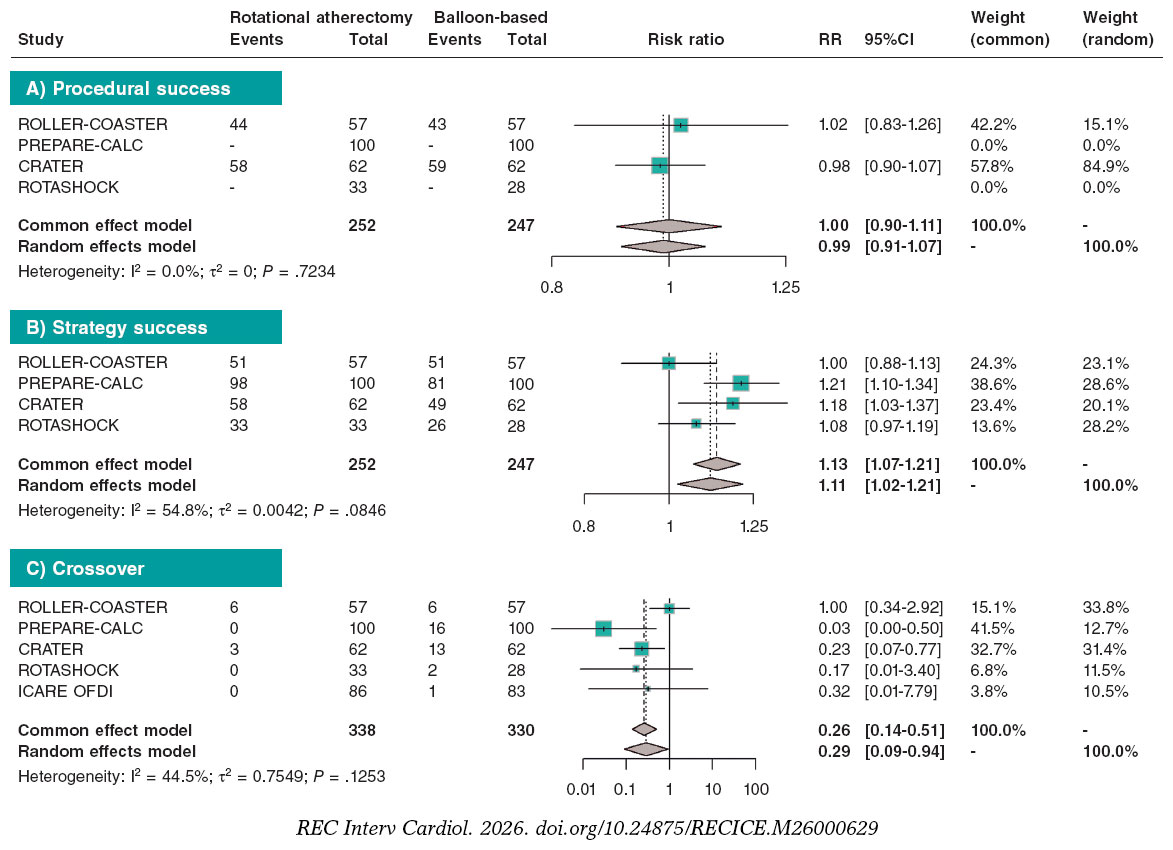
Figure 2. Forest plots for A) procedural success; B) strategy success; and C) crossover. 95%CI, 95% confidence interval; RR, risk ratio. The references cited in this figure correspond to the following studies: PREPARE-CALC8 (2018), ROTA-SHOCK7 (2023), ROLLERCOASTR-EPIC229 (2025), CRATER6 (2025), and ICARE-OFDI10 (2026).
Intracoronary imaging outcomes
Intracoronary imaging data were available for 475 lesions; optical coherence tomography (OCT) was used in 80% of the studies and intravascular ultrasound in 20%. MSA was reported in all studies and stent expansion in 4 of 5 studies, with no significant between-group differences (MSA: SMD, 0.04; 95%CI, −0.13 to 0.21; I2 = 0%; stent expansion: SMD, −0.04; 95%CI, −0.21 to 0.13; I2 = 0%) (figure 3). Clinically relevant thresholds were reported in only 2 OCT-based studies, using MSA < 4.5 mm2 and stent expansion < 80%. Rates of MSA < 4.5 mm2 ranged from 16.7% to 21.7%, whereas adequate stent expansion (≥ 80%) ranged from 65.1% to 78.3%, with no significant between-group differences (table 4).
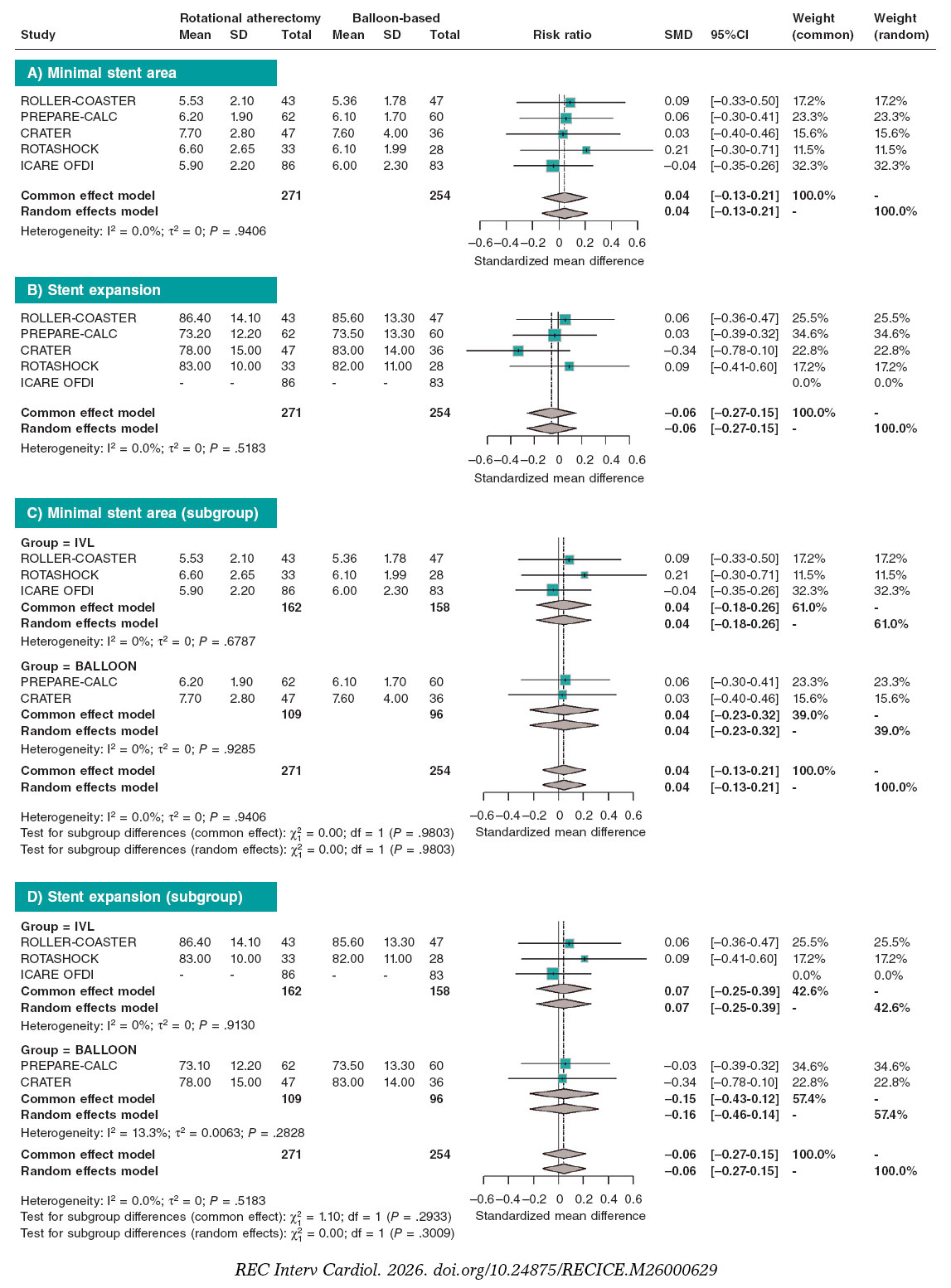
Figure 3. Forest plots for the imaging analysis of A) minimal stent area and B) stent expansion. Subgroup analyses are shown in panels C) for minimal stent area and D) for stent expansion. 95%CI, 95% confidence interval; IVL, intravascular lithotripsy; SD, standard deviation; SMD, standardized mean difference. The references cited in this figure correspond to the following studies: PREPARE-CALC8 (2018), ROTA-SHOCK7 (2023), ROLLERCOASTR-EPIC229 (2025), CRATER6 (2025), and ICARE-OFDI10 (2026).
Clinical outcomes
Median follow-up ranged from 6 months in the ROTA.shock trial7 to 60 months in the PREPARE-CALC trial.8 RA was associated with lower rates of TLR (IRR, 0.31; 95%CI, 0.19-0.51; I2 = 0%) and TVR (IRR, 0.58; 95%CI, 0.37-0.91; I2 = 0%) (table 4 and figure 4). No significant differences were observed in MACE (IRR, 0.85; 95%CI, 0.59-1.21; I2 = 0%), all-cause mortality (IRR, 1.20; 95%CI, 0.98-1.47; I2 = 0%), cardiac death, myocardial infarction, or stent thrombosis (figure 5 and figure S2). Sensitivity analyses using RRs yielded consistent results (figure S3). Corresponding incidence rates were 0.76 vs 2.40 events per 100 person-years for TLR and 1.84 vs 2.94 events per 100 person-years for TVR (table S5).
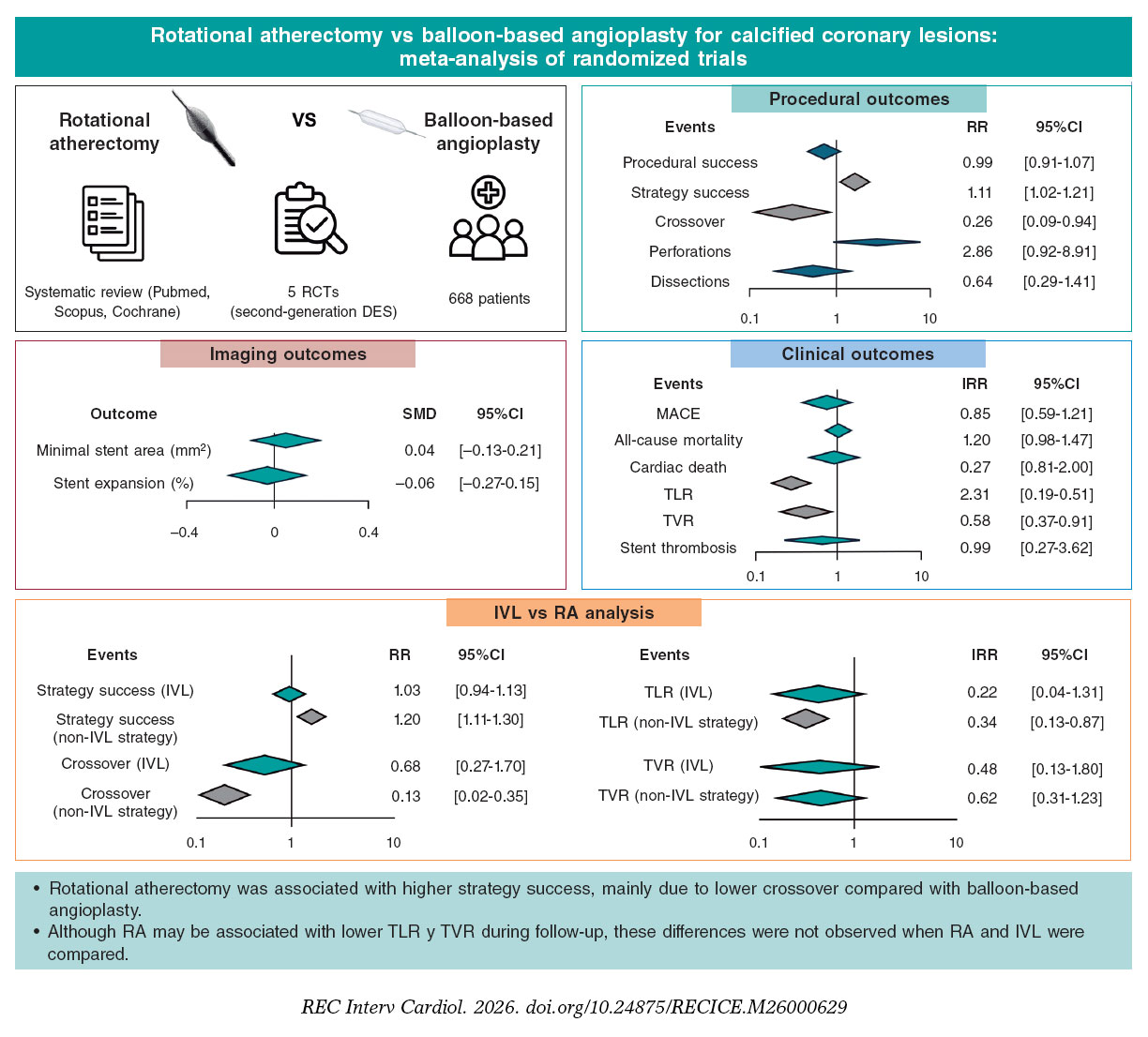
Figure 4. Central illustration. Rotational atherectomy vs balloon-based angioplasty in calcified coronary lesions. For success outcomes, RR >1 favors RA; for adverse/prognostic outcomes, RR/IRR < 1 favors RA. Red diamonds indicate statistically significant effects. 95%CI, 95% confidence interval; DES, drug-eluting stent; IRR, incidence rate ratio; IVL, intravascular lithotripsy; MACE, major adverse cardiovascular events; RA, rotational atherectomy; RCT, randomized clinical trial; RR, risk ratio; SMD, standardized mean difference; TLR, target lesion revascularization; TVR, target vessel revascularization. * Crossover was defined as the need to abandon or supplement the initially assigned calcium-modification strategy with an alternative technique; routine balloon dilatation following RA as part of the planned procedural strategy was not considered crossover.
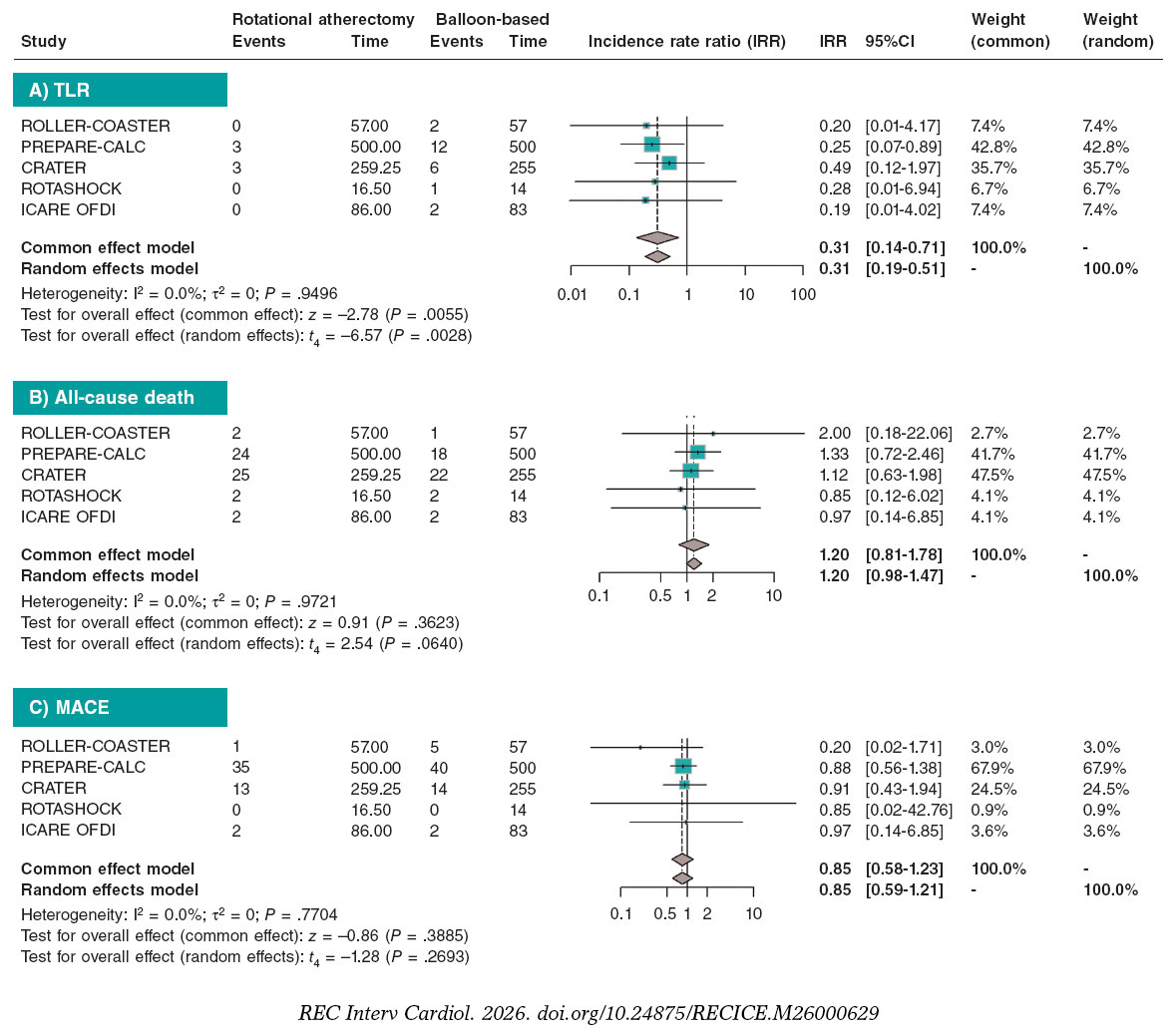
Figure 5. Forest plots for A) TLR, B) all-cause mortality, and C) MACE. 95%CI, 95% confidence interval; IRR, incidence rate ratio; MACE, major adverse cardiovascular events; TLR, target lesion revascularization. The references cited in this figure correspond to the following studies: PREPARE-CALC8 (2018), ROTA-SHOCK7 (2023), ROLLERCOASTR-EPIC229a (2025), CRATER6 (2025), and ICARE-OFDI10 (2026).
Intravascular lithotripsy subgroup analysis
In the subgroup analysis, IVL was evaluated separately from other balloon-based strategies and compared with RA across 3 RCTs (ROTA-SHOCK, ROLLERCOASTR-EPIC22, and ICARE-OFDI). For strategy success, the benefit of RA observed with non-IVL strategies was not observed vs IVL (RR, 1.05; 95%CI, 0.97-1.13; I2 = 0%), with a significant subgroup interaction; P = .013. Similarly, crossover was lower with RA vs non-IVL strategies (RR, 0.13; 95%CI, 0.02-0.78; I2 = 41.3%), but not vs IVL (RR, 0.74; 95%CI, 0.27-2.00; I2 = 0.0%), with a significant interaction; P = .016. For TLR, subgroup analyses showed a consistent direction of effect favoring RA over both IVL and other balloon-based strategies, without a significant interaction; P = .38 (figure S4). These findings should be considered exploratory given the limited number of events, particularly in the IVL subgroup. The remaining subgroup analyses are shown in figures S5 and S6. Results were consistent in sensitivity analyses using RRs (figure S7).
Sensitivity and publication bias assessment
Leave-one-out analyses showed that no single study significantly altered the pooled effect size (figure S8). No significant publication bias was observed on inspection of funnel plots (figures S9-S11).
DISCUSSION
In this meta-analysis of contemporary RCTs, RA was associated with higher strategy success and lower crossover, TLR, and TVR rates than balloon-based techniques, with comparable complication rates. However, strategy success and crossover did not differ significantly between RA and IVL. Given the heterogeneity of the comparators and the small number of events, these findings should be considered hypothesis-generating.
“Balloon-based PCI” encompassed heterogeneous technologies. NC, cutting, very-high-pressure balloons, and IVL differ in design, mechanism, and performance. Nevertheless, balloon-based approaches remain more familiar to operators: Spanish registry data show increasing use of modified balloons and IVL, with stable use of atherectomy.17 However, the distinct mechanism of IVL18 justified a separate prespecified subgroup analysis. The included RCTs differed substantially in design and comparator devices. PREPARE-CALC used modified balloons;8 the ROLLERCOASTR-EPIC22, ROTA-SHOCK, and ICARE OFDI trials compared RA with IVL, with ELCA also included in ROLLERCOASTR-EPIC22;7,9,10 and CRATER compared elective RA with a bailout strategy using NC balloons.6,12 Furthermore, patient risk differed, with CRATER including an older population with chronic kidney disease.
Contemporary calcium modification should not necessarily be viewed as a choice between mutually exclusive techniques. Devices have complementary mechanisms and may be selected or combined according to lesion and patient characteristics, availability, and operator expertise. However, most available comparative evidence has been generated from head-to-head studies of individual calcium-modification strategies, which was also the framework of the present meta-analysis. We therefore did not compare RA or balloon-based techniques with orbital atherectomy or ELCA, for which RCT evidence remains limited. Routine orbital atherectomy was not superior to balloon angioplasty in the ECLIPSE trial,19 and ELCA did not meet the noninferiority criterion vs IVL and RA in the ROLLERCOASTR-EPIC22 trial. Further studies are ongoing in specific clinical scenarios.20,21 Importantly, contemporary practice may also involve sequential or combined use of plaque-modification techniques when a single modality is insufficient, including rotatripsy and ELCA-assisted RA (RASER). Thus, orbital atherectomy, ELCA, and combined strategies form part of the individualized treatment of complex calcified lesions by experienced operators but were not captured in the present analysis.
Higher strategy success with RA was largely driven by greater crossover from balloon-based strategies, a finding that was not reproduced with IVL. Crossover to RA is expected in uncrossable lesions because balloon-based devices cannot be advanced, which is consistent with the lower crossover rate reported in the ICARE-OFDI, which excluded uncrossable lesions. Furthermore, in the PREPARE-CALC and CRATER, crossover to RA reflects the usual escalation sequence in clinical practice. Conversely, routine balloon dilatation after RA represents an integral component of the planned RA strategy and should not be considered crossover. Crossover from RA therefore implies failure or insufficient lesion preparation requiring an additional plaque-modification modality, such as IVL or a modified balloon. In earlier trials, crossover from RA was consequently uncommon and was generally limited to complications, inability to perform atherectomy, or failure of the initial strategy, whereas crossover to other advanced plaque-modification modalities was not allowed, effectively making RA the definitive bailout strategy. Since rotatripsy was introduced by Jurado-Román et al.,22 balloon-resistant lesions after RA have been increasingly recognized. Recognition of the complementary effects of superficial calcium ablation by RA and deeper calcium fracture by IVL has promoted sequential IVL after RA.23 Consequently, the growing adoption of rotatripsy in contemporary practice may have increased crossover from RA to IVL, thereby attenuating differences in crossover between the 2 strategies. These results should be interpreted in light of strategy asymmetry and differences among trials in the assessment of lesion crossability and failure criteria.
During follow-up, RA was associated with lower TLR and TVR rates, although the small number of events limits the robustness of these findings and supports an exploratory interpretation. Intravascular imaging use ranged from 43.9% to 100%. Stent underexpansion, particularly in severely calcified lesions or calcified nodules, predicts stent failure;24,25 however, our prespecified imaging analysis found no differences in MSA or stent expansion. Imaging was less frequently used in CRATER and PREPARE-CALC, potentially affecting stent optimization and clinical outcomes. Although recent studies suggest that improvement in coronary vessel compliance may predict stent success and may be greater with IVL than with NC balloons,18,26 the mechanism underlying the lower TLR and TVR rates remains uncertain and represents an important knowledge gap.
Limitations
First, although RA is a relatively homogeneous technique, the balloon angioplasty group included heterogeneous devices (NC, scoring, cutting balloons, and IVL) with different mechanisms and crossing profiles, potentially affecting outcomes. Future balloon-based devices with improved crossability may reduce crossover to RA or other dedicated devices in uncrossable lesions.
Second, differences in strategy success and crossover may have been influenced by trial design because randomization preceded assessment of lesion crossability in all studies except the ICARE-OFDI. Because balloon-based comparators are ineffective in severely calcified uncrossable lesions, crossover to RA was expected. Conversely, NC or modified balloons are routinely used after RA and do not represent crossover, making true crossover from RA uncommon except in the presence of complications or inadequate lesion preparation. IVL after RA is generally reserved for lesions that remain undilatable.
CONCLUSIONS
In PCI for severely calcified coronary lesions, RA was associated with higher strategy success than balloon-based techniques, largely driven by greater crossover from balloon-based strategies, which may partly reflect trial design. Moreover, RA may be associated with lower TLR and TVR rates during follow-up. However, these differences were not observed in the subgroup analysis comparing RA with IVL. Further studies directly comparing RA and IVL are needed, with plaque-modification strategies tailored to the clinical scenario (eg, undilatable or uncrossable lesions) and incorporating the potential role of combined modalities.
FUNDING
The authors declare that this study received no funding.
ETHICAL CONSIDERATIONS
This systematic review and meta-analysis was based exclusively on aggregate data from previously published studies. Therefore, approval by an institutional ethics committee and individual informed consent were not required. The study was conducted in full compliance with the principles outlined in the Declaration of Helsinki and followed the Preferred Reporting Items for Systematic Reviews and Meta-Analyses (PRISMA) recommendations. The Sex and Gender Equity in Research (SAGER) guidelines were not applicable to this meta-analysis because it was based on aggregate data from previously published studies and did not involve sex- or gender-specific analyses.
STATEMENT ON THE USE OF ARTIFICIAL INTELLIGENCE
During the preparation of this manuscript, the authors used a generative artificial intelligence tool (ChatGPT, OpenAI) solely to assist with language editing and improve the clarity and readability of the text. The tool was not used for study selection, data extraction, statistical analysis, interpretation of results, or generation of scientific conclusions. All AI-assisted content was critically reviewed and edited by the authors, who take full responsibility for the accuracy, integrity, and final content of the manuscript.
AUTHORS’ CONTRIBUTIONS
J. Zubiaur, M. Basile, and A. Jurado-Román conceived and designed the study. J. Zubiaur and M. Basile developed the search strategy and performed the literature search. J. Zubiaur and M. Basile independently screened the identified records, assessed study eligibility, and extracted the data. J. Zubiaur and M. Basile performed the risk-of-bias assessment. M. Basile conducted the statistical analyses. J. Zubiaur, M. Basile, and A. Jurado-Román interpreted the findings and drafted the initial version of the manuscript. All authors critically revised the manuscript for important intellectual content, approved the final version for publication, and agreed to be accountable for all aspects of the work. J. Zubiaur takes responsibility for the integrity and freedom from bias of the data presented and their interpretation.
CONFLICTS OF INTEREST
R. Moreno is associate editor of REC: Interventional Cardiology; the journal’s editorial procedure to ensure impartial handling of the manuscript has been followed. J. Basile has received a research grant from IHT. A. Jurado-Román is a proctor for Abbott, Boston Scientific, World Medica, and Philips; has received consulting fees from Boston Scientific and Philips; and has received speaker fees from Abbott, Boston Scientific, Shockwave Medical, Philips, and World Medica. The remaining authors declare no conflicts of interest.
WHAT IS KNOWN ABOUT THE TOPIC?
- Calcified coronary lesions often require specialized plaque-modification devices. Some RCTs have compared RA with balloon-based strategies, including noncompliant balloons, cutting balloons, and IVL.
WHAT DOES THIS STUDY ADD?
- In this meta-analysis of RCTs, RA was associated with higher strategy success and lower crossover rates than balloon-based techniques, although these procedural differences may partly reflect trial design. These differences were not observed in the prespecified RA-vs-IVL analysis. A potential reduction in TLR was also observed, but this finding should be considered exploratory.
SUPPLEMENTARY DATA

REFERENCES
1. Hansen DD, Auth DC, Vracko R, Ritchie JL. Rotational atherectomy in atherosclerotic rabbit iliac arteries. Am Heart J. 1988;115:160–165.
2. Sharma SK, Kini A, Mehran R, Lansky A, Kobayashi Y, Marmur JD. Randomized trial of Rotational Atherectomy Versus Balloon Angioplasty for Diffuse In-stent Restenosis (ROSTER). Am Heart J. 2004;147:16–22.
3. Abdel-Wahab M, Richardt G, Joachim Büttner H, et al. High-Speed Rotational Atherectomy Before Paclitaxel-Eluting Stent Implantation in Complex Calcified Coronary Lesions: The Randomized ROTAXUS (Rotational Atherectomy Prior to Taxus Stent Treatment for Complex Native Coronary Artery Disease) Trial. JACC Cardiovasc Interv. 2013;6:10–19.
4. Wiemer M, Serruys PW, Miquel-Hebert K, et al. Five-year long-term clinical follow-up of the XIENCE V everolimus eluting coronary stent system in the treatment of patients with de novo coronary artery lesions: The SPIRIT FIRST trial. Catheter Cardiovasc Interv. 2010;75:997–1003.
5. Kedhi E, Joesoef KS, McFadden E, et al. Second-generation everolimus-eluting and paclitaxel-eluting stents in real-life practice (COMPARE): a randomised trial. Lancet. 2010;375:201–209.
6. Galeote G, Zubiaur J, Jurado-Román A, et al. Coronary rotational atherectomy elective versus bailout in patients with severely calcified lesions and chronic renal failure (CRATER) trial. Catheter Cardiovasc Interv. 2025;106:1702-1712.
7. Blachutzik F, Meier S, Weissner M, et al. Coronary intravascular lithotripsy and rotational atherectomy for severely calcified stenosis: Results from the ROTA.shock trial. Catheter Cardiovasc Interv. 2023;102:823–833.
8. Abdel-Wahab M, Toelg R, Byrne RA, et al. High-Speed Rotational Atherectomy Versus Modified Balloons Prior to Drug-Eluting Stent Implantation in Severely Calcified Coronary Lesions. Circ Cardiovasc Interv. 2018;11:e007415.
9. Jurado-Román A, Gómez-Menchero A, Rivero-Santana B, et al. Rotational atherectomy, lithotripsy, or laser for calcified coronary stenosis: the ROLLER COASTR-EPIC22 trial. JACC Cardiovasc Interv. 2025;18:606-618.
10. Honton B, Motreff P, Mallet JS, et al. Intravascular lithotripsy in comparison to rotational atherectomy for calcified lesions: the ICARE OFDI randomised trial. EuroIntervention. 2026;22:e808-e819.
11. Basile M, Gómez-Menchero A, Rivero-Santana B, et al. Rotational Atherectomy, Lithotripsy, or Laser for Calcified Coronary Stenosis: One-Year Outcomes From the ROLLER COASTER-EPIC22 Trial. Catheter Cardiovasc Interv. 2025;106:702-710.
12. Zubiaur J, Galeote G, Jurado-Román A, et al. Coronary Rotational ATherectomy Elective Versus Bailout in Patients With Severely Calcified Lesions and Chronic Renal Failure: Long-Term Outcomes of CRATER Trial. Catheter Cardiovasc Interv. 2026;107:431-438.
13. Allali A, Richardt G, Toelg R, et al. High-speed rotational atherectomy versus modified balloons for plaque preparation of severely calcified coronary lesions: two-year outcomes of the randomised PREPARE-CALC trial. EuroIntervention. 2023;18:e1365-e1367.
14. Hemetsberger R, Gori T, Toelg R, et al. Optical Coherence Tomography Assessment in Patients Treated With Rotational Atherectomy Versus Modified Balloons. Circ Cardiovasc Interv. 2021;14:e009819.
15. Mankerious N, Richardt G, Allali A, et al. Lower revascularization rates after high-speed rotational atherectomy compared to modified balloons in calcified coronary lesions: 5-year outcomes of the randomized PREPARE-CALC trial. Clin Res Cardiol. 2024;113:1051–1059.
16. Vila-García J, Basile M, Gómez-Menchero A, et al. Senior-ROLLER: age-related outcomes of plaque modification in coronary stenosis. Subanalysis of the ROLLER COASTR-EPIC22. REC Interv Cardiol. 2026. https://doi.org/10.24875/RECICE.M26000589.
17. Bastante T, Arzamendi D, Martín-Moreiras J, Cid-Álvarez AB; ACI-SEC. Spanish cardiac catheterization and coronary intervention registry. 34th official report of the Interventional Cardiology Association of the Spanish Society of Cardiology (1990-2024). Rev Esp Cardiol. 2025;78:992-1003.
18. Oliveri F, Oort MJHV, Amri IA, et al. Coronary Compliance Modification by Intravascular Lithotripsy: New Predictor of Stent Expansion in Calcified Coronary Lesions. J Soc Cardiovasc Angiogr Interv. 2025;4:102635.
19. Kirtane AJ, Généreux P, Lewis B, et al. Orbital atherectomy versus balloon angioplasty before drug-eluting stent implantation in severely calcified lesions eligible for both treatment strategies (ECLIPSE): a multicentre, open-label, randomised trial. Lancet. 2025;405:1240-1251.
20. Jurado-Román A, Zubiaur J, Basile M, et al. Design of the LUDICO study: effectiveness and safety of coronary laser in undilatable or uncrossable lesions. REC Interv Cardiol. 2026;8:152-160.
21. Domínguez-Rodríguez LM, Bayón Lorenzo J, Amat Santos I, et al. Design of the ORBIT-SHOCK pilot study: orbital atherectomy vs intravascular lithotripsy for calcified coronary nodules. REC Interv Cardiol. 2026. https://doi.org/10.24875/RECICE.M26000582.
22. Jurado-Román A, Gonzálvez A, Galeote G, Jiménez-Valero S, Moreno R. RotaTripsy: Combination of Rotational Atherectomy and Intravascular Lithotripsy for the Treatment of Severely Calcified Lesions. JACC Cardiovasc Interv. 2019;12:e127–e129.
23. van Oort MJH, Al Amri I, Bingen BO, et al. Current applications, procedural and 1-year outcomes of Rotatripsy for the treatment of calcified coronary lesions. Catheter Cardiovasc Interv. 2024;104:203–212.
24. Zhang M, Matsumura M, Usui E, et al. Intravascular Ultrasound–Derived Calcium Score to Predict Stent Expansion in Severely Calcified Lesions. Circ Cardiovasc Interv. 2021;14:e010296.
25. Hamana T, Kawamori H, Toba T, et al. Predictors of target lesion revascularisation after drug-eluting stent implantation for calcified nodules: an optical coherence tomography study. EuroIntervention. 2023;19:e123-e133.
26. Oliveri F, Oort MJH van, Phagu A, et al. Coronary Artery Compliance Modification after Noncompliant Balloon Angioplasty and Intravascular Lithotripsy. Am J Cardiol. 2026;268:136–141.