
We present the case of a 14-year-old girl with a double mitral lesion due to a dysfunctional 31 mm Mosaic biological prosthetic valve (Medtronic, United States) implanted for symptomatic congenital mitral valve disease. Prosthetic valve replacement was indicated due to severe stenosis and functional deterioration (video S1 and video S2).
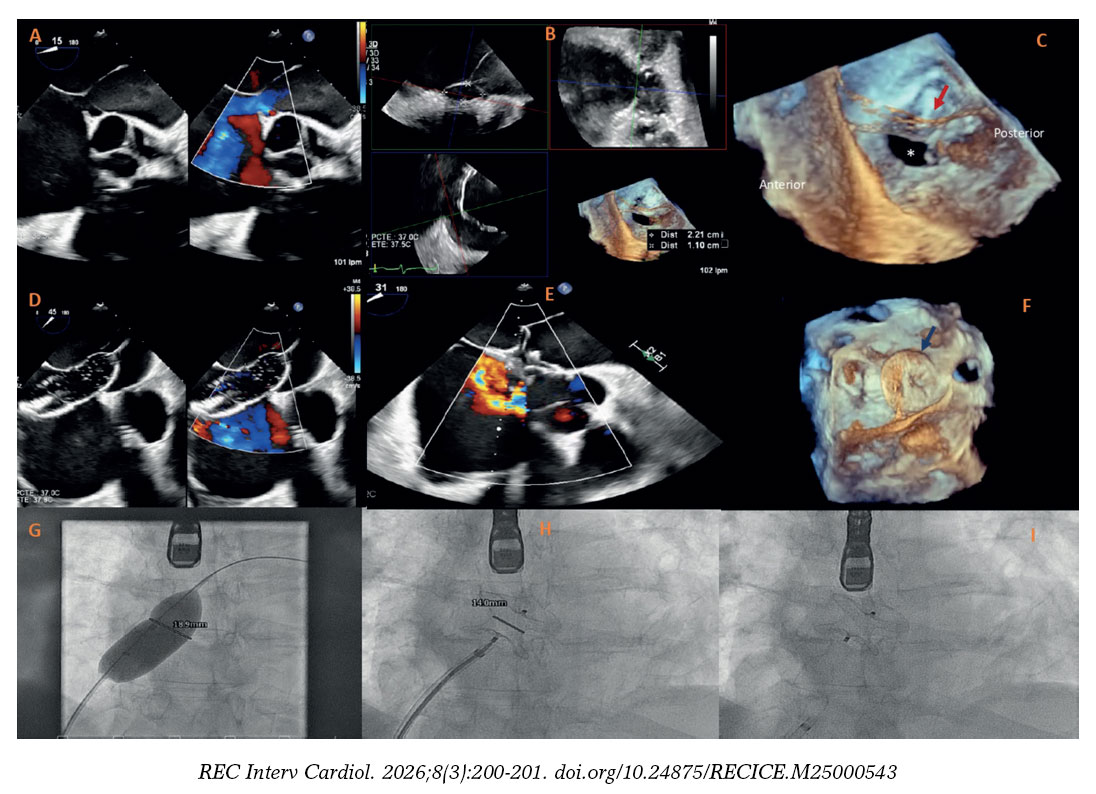
Using coronary computed tomography angiography and the 3Mensio software (PIE Medical, the Netherlands) for virtual simulation of a 29 mm SAPIEN heart valve (Edwards Lifesciences, United States), we deemed the valve suitable, which had an estimated left ventricular outflow tract area of 1.8 cm2 (figure 1A).
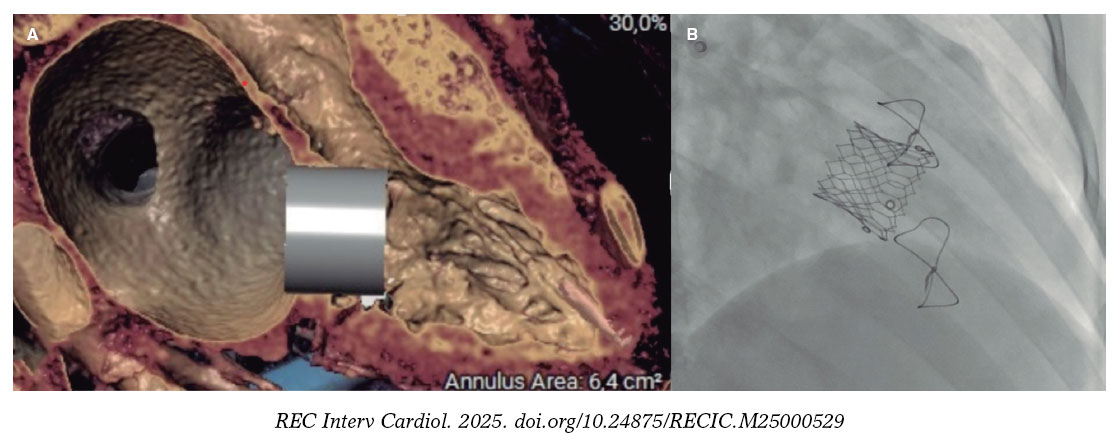
Figure 1.
We performed transseptal access with an echo-guided BRK needle and interatrial septum dilatation with a 16 mm × 40 mm Atlas balloon (Bard Medical, United States). Afterwards, we advanced the 29 mm SAPIEN 3 transcatheter valve delivery system and implanted it with simultaneous left ventricular overdrive pacing with excellent results (figure 1B, video S3, and video S4).
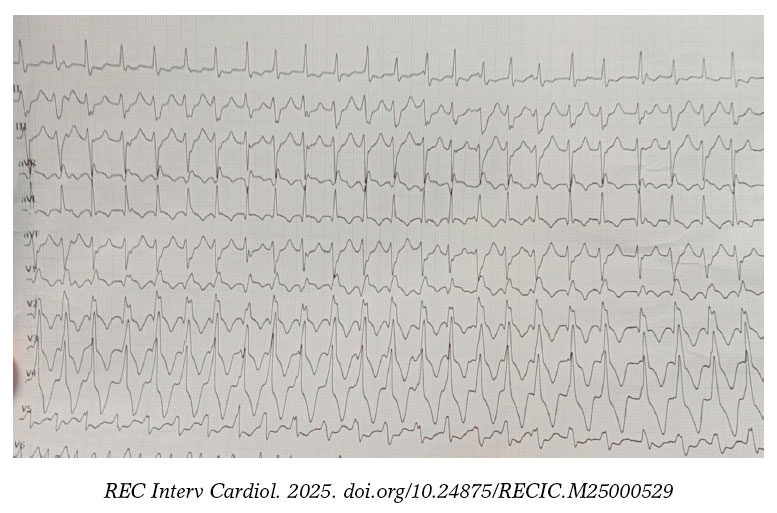
Figure 2.
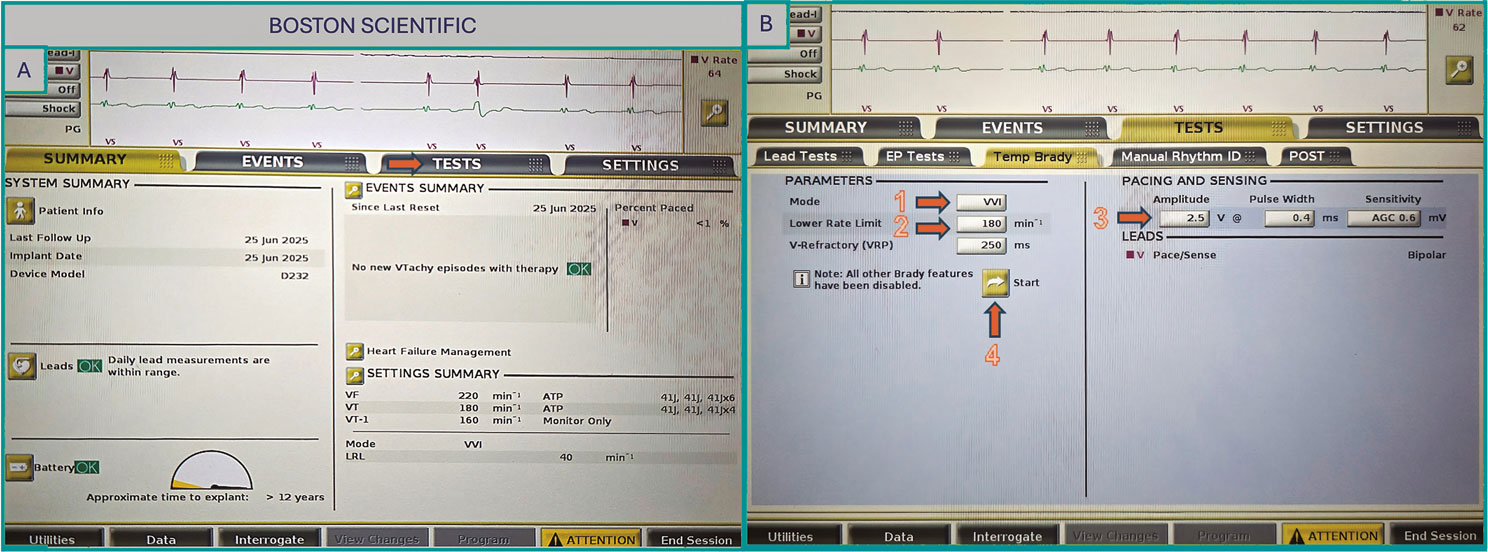
The patient developed several episodes of monomorphic ventricular tachycardia not previously documented (figure 2). Telemetry suggested a probable origin in the papillary muscles, confirmed by transthoracic echocardiography, which showed systolic contact of the valve with the posterior papillary muscle (video S5). Holter monitoring showed frequent ventricular tachycardias despite treatment with beta-blockers. Due to the low likelihood of success with ablation, we decided to explant the transcatheter valve (figure 3) and implant a 31 mm ATS mechanical mitral prosthesis (Medical Open Pivot, United States).
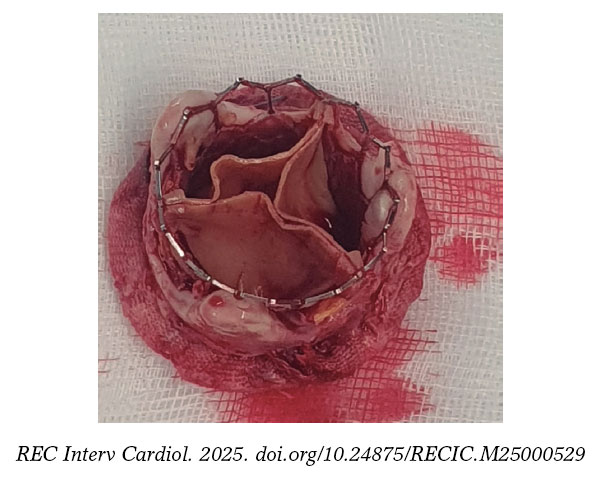
Figure 3.
The postoperative course was favorable, without any new episodes of ventricular tachycardia.
FUNDING
None declared.
ETHICAL CONSIDERATIONS
Informed consent was obtained from the patient’s legal tutors.
STATEMENT ON THE USE OF ARTIFICIAL INTELLIGENCE
No artificial intelligence was used in the preparation of this article
AUTHORS’ CONTRIBUTIONS
A. Villanueva García, C. Abelleira Pardeiro, E.J. Balbacid Domingo, M. Larman Tellechea, N. Guillén, and F. Gutiérrez-Larraya Aguado participated in the drafting, critical review, and final approval of the manuscript.
CONFLICTS OF INTEREST
None declared.
SUPPLEMENTARY DATA
Vídeo 1. Villanueva García A. DOI: 10.24875/RECICE.M25000525
Vídeo 2. Villanueva García A. DOI: 10.24875/RECICE.M25000525
Vídeo 3. Villanueva García A. DOI: 10.24875/RECICE.M25000525
Vídeo 4. Villanueva García A. DOI: 10.24875/RECICE.M25000525
Vídeo 5. Villanueva García A. DOI: 10.24875/RECICE.M25000525