
ABSTRACT
Introduction and objectives: Aortic stenosis in patients with bicuspid aortic valve (BAV) poses anatomical challenges for transcatheter aortic valve implantation (TAVI). This study aimed to compare the clinical outcomes of self-expanding valves (SEVs) and balloon-expandable valves (BEVs) in patients with BAV undergoing TAVI.
Methods: A systematic literature search was conducted to identify studies comparing SEVs vs BEVs in BAV-TAVI. Primary endpoints included procedural, all-cause, and cardiovascular mortality at 30 days and 1 year. Secondary endpoints included annular rupture, coronary obstruction, moderate or severe paravalvular leak (PVL), need for a second valve, permanent pacemaker implantation (PPI), and stroke. ORs with 95%CI were pooled using random-effects models.
Results: This meta-analysis included a total of 12 observational studies comprising 2013 patients: 1099 treated with BEVs and 914 with SEVs. No significant differences were observed in mortality outcomes: 30-day all-cause mortality (3.2% vs 3.7%; OR, 0.85; 95%CI, 0.51-1.42; P = .536), 1-year all-cause mortality (10.5% vs 13.0%; OR, 0.84, 95%CI, 0.60-1.19; P = .331), or cardiovascular death at either time point. BEVs were associated with higher rates of annular rupture (1.7% vs 0.1%; OR, 3.65, 95%CI, 1.30-10.24; P = .014) but with a lower risk of moderate-to-severe PVL (4.0% vs 10.1%; OR, 0.38, 95%CI, 0.18-0.80; P = .011), reduced need for second valve implantation (2.6% vs 5.1%; OR, 0.49, 95%CI, 0.26-0.93; P = .029), and fewer rates of PPI (12.9% vs 19.2%; OR, 0.64, 95%CI, 0.48-0.85; P = .002). No significant differences were found in the incidence of stroke (2.5% vs 2.7%; P = .805), or coronary obstruction (1.1% vs 1.3%; P = .888).
Conclusions: SEVs and BEVs showed similar mortality rates in TAVI for patients with BAV. However, BEVs were associated with higher rates of annular rupture, whereas SEVs were associated with more PVL, greater need for a second valve, and higher rates of PPI. These findings should be interpreted with caution given the observational nature of the included studies.
(PROSPERO: CRD42025634772).
Keywords: Transcatheter aortic valve implantation. Bicuspid aortic valve. Self-expanding valves. Balloon-expandable valves.
RESUMEN
Introducción y objetivos: La estenosis aórtica en pacientes con válvula aórtica bicúspide (VAB) plantea dificultades anatómicas para el implante percutáneo de válvula aórtica (TAVI). El objetivo de este estudio fue comparar los resultados clínicos de las válvulas autoexpandibles (VAE) y las válvulas expandibles con balón (VEB) en pacientes con VAB sometidos a TAVI.
Métodos: Se realizó una búsqueda bibliográfica sistemática que identificó estudios que compararon las VAE con las VEB en el TAVI en pacientes con VAB. Los objetivos primarios fueron la mortalidad perioperatoria, por cualquier causa y por causa cardiovascular a 30 días y 1 año. Los objetivos secundarios fueron la rotura anular, la obstrucción coronaria, la fuga periprotésica (FPP) moderada o grave, la necesidad de una segunda válvula, el implante de marcapasos permanente (IMP) y el ictus. Las OR se agruparon con IC95% mediante modelos de efectos aleatorios.
Resultados: Este metanálisis incluyó 12 estudios observacionales con 2.013 pacientes (1.099 con VEB y 914 con VAE). No se encontraron diferencias significativas en los resultados de mortalidad por cualquier causa a 30 días (3,2 frente a 3,7%; OR = 0,85; IC95%, 0,51-1,42; p = 0,536) y a 1 año (10,5 frente a 13,0%; OR = 0,84; IC95%, 0,60-1,19; p = 0,331), ni de mortalidad por causa cardiovascular en ninguno de los 2 momentos. Las VEB se asociaron a tasas más altas de rotura anular (1,7 frente a 0,1%; OR = 3,65; IC95%, 1,30-10,24; p = 0,014), pero a menor riesgo de FPP moderada o grave (4,0 frente a 10,1%; OR = 0,38; IC95%, 0,18-0,80; p = 0,011), menor necesidad de implantar una segunda válvula (2,6 frente a 5,1%; OR = 0,49; IC95%, 0,26-0,93; p = 0,029) y tasas más bajas de IMP (12,9 frente a 19,2%; OR = 0,64; IC95%, 0,48-0,85; p = 0,002). No hubo diferencias significativas en la incidencia de ictus (2,5 frente a 2,7%; p = 0,805) y de obstrucción coronaria (1,1 frente a 1,3%; p = 0,888).
Conclusiones: Tanto las VAE como las VEB tuvieron tasas de mortalidad similares en el TAVI en pacientes con VAB. No obstante, las VEB presentaron mayores tasas de rotura anular y las VAE se asociaron con mayor frecuencia de FPP, necesidad de una segunda válvula e IMP. Estos hallazgos deben interpretarse con cautela teniendo en cuenta el diseño observacional de los estudios incluidos.
(PROSPERO: CRD42025634772).
Palabras clave: Implante percutáneo de válvula aórtica. Válvula aórtica bicúspide. Válvulas autoexpandibles. Válvulas expandibles con balón.
Abreviaturas
AS: aortic stenosis. BAV: bicuspid aortic valve. BEV: balloon-expandable valve. SEV: self-expanding valve. TAVI: transcatheter aortic valve implantation.
INTRODUCTION
Aortic stenosis (AS) is one of the most common valvular heart diseases, particularly among older adults. In younger patients, bicuspid aortic valve (BAV) is a major underlying cause of AS. In developed countries, BAV is the most common cause of AS in individuals younger than 70 years, affects approximately 0.5%-2% of the population and is more frequent in men.1,2
The anatomical characteristics of BAV pose specific challenges that differ from those associated with tricuspid aortic valve disease. Abnormal leaflet structure, characterized by asymmetric morphology and frequent calcified raphe, predisposes the valve to accelerated calcification and fibrosis, often leading to clinically significant valvular dysfunction at a younger age.3 In addition, BAV is commonly associated with aortic root dilatation and an increased risk of aortic dissection, requiring a comprehensive assessment of the entire aortic root during treatment planning.4
Transcatheter aortic valve implantation (TAVI) has emerged as a minimally invasive alternative to surgical aortic valve replacement in patients with severe AS, with expanding indications that now include younger, low-risk populations.5,6 However, the anatomical complexity of BAV poses specific challenges for TAVI that differ substantially from those of typical tricuspid anatomy. Asymmetric leaflets, eccentric calcification patterns, and calcified raphe may influence procedural success and long-term outcomes.7,8 These anatomical considerations may affect the choice between self- expanding valves (SEVs) and balloon-expandable valves (BEVs), as each technology has distinct characteristics that may interact differently with complex BAV morphology.
Despite the increasing use of both valve technologies in patients with BAV, dedicated comparative studies evaluating the specific outcomes of SEVs vs BEVs in this challenging population remain scarce. Historically, patients with BAV have often been excluded from pivotal randomized controlled trials (RCTs) comparing TAVI with surgical aortic valve replacement because of a perceived higher risk of procedural complications. Most available evidence comes from small observational cohorts or subgroup analyses of broader TAVI registries, limiting the ability to draw definitive conclusions regarding optimal device selection.
Sá et al. previously conducted a meta-analysis of 8 observational studies (n = 1080 patients) and found no significant differences in procedural, 30-day, or 1-year mortality between valve types. However, BEVs were associated with a significantly higher risk of annular rupture than SEVs Although no statistically significant difference in paravalvular leak (PVL) was observed overall, a subgroup analysis of newer-generation devices suggested lower PVL rates with BEVs.9 Since then, several additional studies have been published, expanding the evidence base to 12 studies and more than 2000 patients. Therefore, this meta-analysis aims to provide a comprehensive and updated evaluation of the comparative safety and efficacy of SEVs vs BEVs in patients with BAV, incorporating the most recent evidence, a larger patient cohort and newer- generation devices.
METHODS
This systematic review and meta-analysis was performed in full compliance with the principles outlined in the Cochrane Collaboration and the Preferred Reporting Items for Systematic Reviews and Meta-Analysis (PRISMA) guidelines.10 The prespecified research protocol was registered with the International Prospective Register of Systematic Reviews (PROSPERO) under protocol No. CRD42025634772.
Eligibility criteria
Inclusion in this meta-analysis was restricted to studies that met all the following eligibility criteria: a) randomized controlled trials and observational studies; b) studies comparing the use of SEVs and BEVs in TAVI in patients with BAV; c) inclusion of adult patients (≥ 18 years); and d) a follow-up period of at least 30 days. The exclusion criteria were the absence of a detailed evaluation of the BAV population and the absence of outcomes of interest.
Search strategy and data extraction
We systematically searched MEDLINE, Embase, and the Cochrane Central Register of Controlled Trials on 2 March 2025, using the following search terms: “transcatheter aortic valve replacement”, “transcatheter aortic valve implantation”, “balloon-expandable”, “self-expandable”, “bicuspid aortic valve” (table S1). References from all included studies, previous systematic reviews, and meta-analyses were also manually searched for any additional eligible studies. Two authors (N.V. Sala da Silva and L. Marqueño da Cunha) independently extracted the data using predefined search criteria.
Endpoints
The clinical primary endpoints were procedural mortality, and all-cause and cardiovascular mortality at 30 days and 1 year. Secondary endpoints included stroke, annular rupture, need for a second valve, coronary obstruction, new pacemaker implantation, and moderate or severe PVL.
Sensitivity analysis
To assess the robustness of our results, we performed a leave-one-out sensitivity analysis. This approach involved sequentially excluding each study and recalculating the overall effect size for the remaining studies for each outcome.
Quality assessment
Quality assessment of observational studies was performed using the ROBINS-I tool, which assesses risk of bias in nonrandomized studies.11 Studies were rated as having low, moderate, serious or critical risk of bias across 7 domains: confounding, selection of participants, classification of interventions, deviations from intended interventions, missing data, measurement of outcomes, and selection of the reported result. Two independent authors (P.F. Gomes Nicz and W.F. Gomes) performed the risk of bias assessment. Disagreements were resolved by consensus. Risk of bias was presented by a diagram using the ROBINS I tool (table S2).
Statistical analysis
Pooled odds ratios (OR) with 95% confidence intervals (95%CI) were calculated using the Mantel-Haenszel method with a random-effects model, which was selected given the binary nature of outcomes and the potential for sparse data in some subgroups. The I2 statistic was used to assess heterogeneity; P values < .10 and I2 > 25% were considered to indicate significant heterogeneity. A leave-one-out sensitivity analysis was conducted by sequentially omitting each individual study and recalculating the pooled estimates to assess the robustness of the results and identify any disproportionately influential studies. R statistical software version 4.3.2 was used for the statistical analysis.
RESULTS
Study selection and characteristics
This study analyzed 12 observational studies including 2013 patients, of whom 1099 received BEVs and 914 received SEVs (figure 1). The mean age of the participants was 77.15 years, and 60.17% were men. The mean STS score and EuroSCORE were 4.5% and 11.97%, respectively.
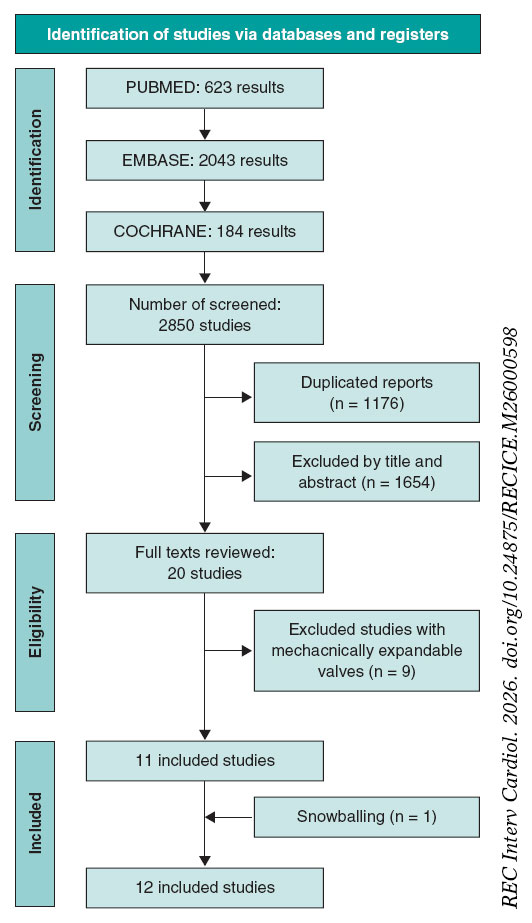
Figure 1. PRISMA flow diagram of study screening and selection.
Echocardiographic parameters showed a median aortic valve mean gradient of 49.06 mmHg and a median aortic valve area of 0.74 cm2. BEVs used in the included studies the SAPIEN, SAPIEN XT, and SAPIEN 3/3Ultra valves (Edwards Lifesciences LLC, United States). SEVs included the Acurate Neo valve (Boston Scientific Ltd, United States), CoreValve/Evolut R/Pro valves (Medtronic Inc, United States), Portico valves (Abbott Structural Heart, United States), and Venus A-Valve (Venus MedTech, China).
The access routes for valve implantation were predominantly transfemoral (87%), followed by transapical (4%) and other approaches, approximately 9%.
The complete characteristics of the included studies and the baseline characteristics of the patients are shown in table 1.
Table 1. Baseline characteristics and study design of included studies comparing balloon-expandable and self-expandable valves in patients with bicuspid aortic valve undergoing TAVI
| Study | Study design | Device name | Sample size (n) | Mean age (± SD) | Men (%) | STS-PROM score | BAV specifics (Sievers classifications) | |||||||
|---|---|---|---|---|---|---|---|---|---|---|---|---|---|---|
| BEV device | SEV device | BEV device | SEV device | BEV device | SEV device | BEV device | SEV device | BEV device | SEV device | Type | BEV device (%) | SEV device (%) | ||
| Buono et al.12 | Observational | SAPIEN | Evolut R/PRO | 301 | 301 | 78 ± 5 | 78 ± 6 | 63.1 | 64.5 | 2,55 [1.70-3.66] | 2,50 [1.59-3.86] | 0 | 0 | 0 |
| 1 | 100 | 100 | ||||||||||||
| 2 | 0 | 0 | ||||||||||||
| Lee et al.13 | Observational | SAPIEN 3 | Evolut R/PRO | 43 | 32 | 71 ± 13 | 71 ± 10 | 63 | 47 | 4.4 ± 3.7 | 4.3 ± 3.2 | 0 | 40 | 44 |
| 1 | 58 | 53 | ||||||||||||
| 2 | 2 | 2 | ||||||||||||
| Boiago et al.14 | Observational | SAPIEN 3 | CoreValve Evolut R/PRO | 67 | 83 | 80.5 ± 8.5 | 82.2 ± 6.4 | 79.1 | 57.8 | 4.7 ± 3.1 | 6 ± 8.1 | 0 | 4.8 | 8.4 |
| 1 | ||||||||||||||
| LN | 0 | 2.4 | ||||||||||||
| RN | 9 | 4.8 | ||||||||||||
| LR | 86.6 | 83.1 | ||||||||||||
| 2 | 0 | 1.2 | ||||||||||||
| Deutsch et al.15 | Observational | SAPIEN 3/3 Ultra | Evolut R/PRO | 68 | 38 | 74.6 ± 8.8 | 75.3 ± 8.7 | 72.1 | 52.6 | 2.6 ± 1.9 | 2.6 ± 1.6 | 0 | 8.8 | 5.3 |
| 1 | ||||||||||||||
| LR | 83.8 | 78.9 | ||||||||||||
| RN | 7.4 | 7.9 | ||||||||||||
| NL | 0 | 7.9 | ||||||||||||
| 2 | 0 | 0 | ||||||||||||
| Mangieri et al.16 | Observational | SAPIEN 3 | Evolut R/PRO | 242 | 111 | 77.4 ± 8.6 | 78.6 ± 7.5 | 69.0 | 55.9 | 4.4 ± 3.3 | 4.2 ± 3.3 | 71.0 | 66.7 | |
| 0 | 6.6 | 8.1 | ||||||||||||
| 1 | 63.6 | 57.7 | ||||||||||||
| 2 | 0.8 | 0.9 | ||||||||||||
| 28.5 | 32.4 | |||||||||||||
| Yoon et al.8 | Observational | SAPIEN XT SAPIEN 3 | CoreValve Lotus | 178 | 123 | 77.0 ± 8.9 | 78.6 ± 7.5 | 64.8 | 43.1 | 4.6 ± 5.1 | 4.9 ± 5.4 | 80.9 | 97.1 | |
| 0 | 13 | 10.1 | ||||||||||||
| 1 | 84.5 | 88.9 | ||||||||||||
| 2 | 2.5 | 1 | ||||||||||||
| 19.1 | 2.9 | |||||||||||||
| Jilaihawi et al.17 | Observational | SAPIEN SAPIEN 3 SAPIEN XT | CoreValve | 70 | 60 | 76.2 ± 11.6 | 77.0 ± 9.0 | 61.4 | 61.7 | 4.7 (2.8-7.4) | 4.7 (3.3-7.2) | NA | ||
| Kosek et al.18 | Observational | SAPIEN SAPIEN XT | CoreValve | 2 | 5 | 79,2 ± 5.6 | 74 ± 1.4 | 50 | 40 | NA | NA | |||
| Yousef et al.19 | Observational | Edwards SAPIEN | CoreValve | 61 | 47 | 74.4 ± 11.7 | 77.0 ± 8.0 | 72.1 | 53.2 | NA | 0 | 12.5 | 21.1 | |
| 1 | ||||||||||||||
| LR | 62.5 | 50 | ||||||||||||
| RN | 15 | 10.5 | ||||||||||||
| LN | 5 | 2.6 | ||||||||||||
| 2 | ||||||||||||||
| RL | 2.5 | 13.2 | ||||||||||||
| RN | 2.5 | 2.6 | ||||||||||||
| Costopoulos et al.20 | Observational | Edwards | CoreValve | 8 | 13 | 76.7 ± 7.1 | 79.8 ± 7.4 | 57 | 47 | 7.6 ± 4.2 | 7.8 ± 7.3 | NA | ||
| Mylotte et al.21 | Observational | SAPIEN | CoreValve | 48 | 91 | 77.6 ± 9.7 | 78.2 ± 8.4 | 62.5 | 52.7 | 5.0 ± 3.9 | 4.8 ± 3.1 | 0 | 20 | 30 |
| 1 | 77.5 | 63.8 | ||||||||||||
| LR | 65 | 42.5 | ||||||||||||
| RN | 5 | 16.3 | ||||||||||||
| LN | 7.5 | 5 | ||||||||||||
| 2 | ||||||||||||||
| LR/RN | 2.5 | 6.2 | ||||||||||||
| Hayashida et al.22 | Observational | Edwards | CoreValve | 11 | 10 | 82.0 ± 7 | 83.2 ± 6.5 | 57.1 | 53.4 | NA | NA | |||
|
BAV, bicuspid aortic valve; BEV, balloon-expandable valve; LN, left-noncoronary cusp fusion; LR, left-right cusp fusion; NA, not available; RN, right-noncoronary cusp fusion; SEV, self-expandable valve; STS-PROM, Society of Thoracic Surgeons Predicted Risk of Mortality; TAVI, transcatheter aortic valve implantation. Study author, year, study design, device name, sample size, mean age ± SD, proportion of male patients, STS-PROM score, and BAV morphology according to the Sievers classification are presented for each included study. Data are shown separately for the balloon-expandable valve and self-expandable valve groups. |
||||||||||||||
Pooled analysis of all studies
Mortality endpoints
Analysis of mortality outcomes revealed no statistically significant differences between BEV and SEV approaches across multiple time horizons. The pooled analysis showed no significant differences in 1-year all-cause mortality (10.5% vs 13.0%; OR; 0.84; 95%CI, 0.60-1.19; P = .331) or cardiovascular mortality (5.2% vs 5.5%; OR,1.07; 95%CI, 0.55-2.05; P = .851), with minimal heterogeneity in both analyses (I² = 0% and 2.5%, respectively) (figure 2).
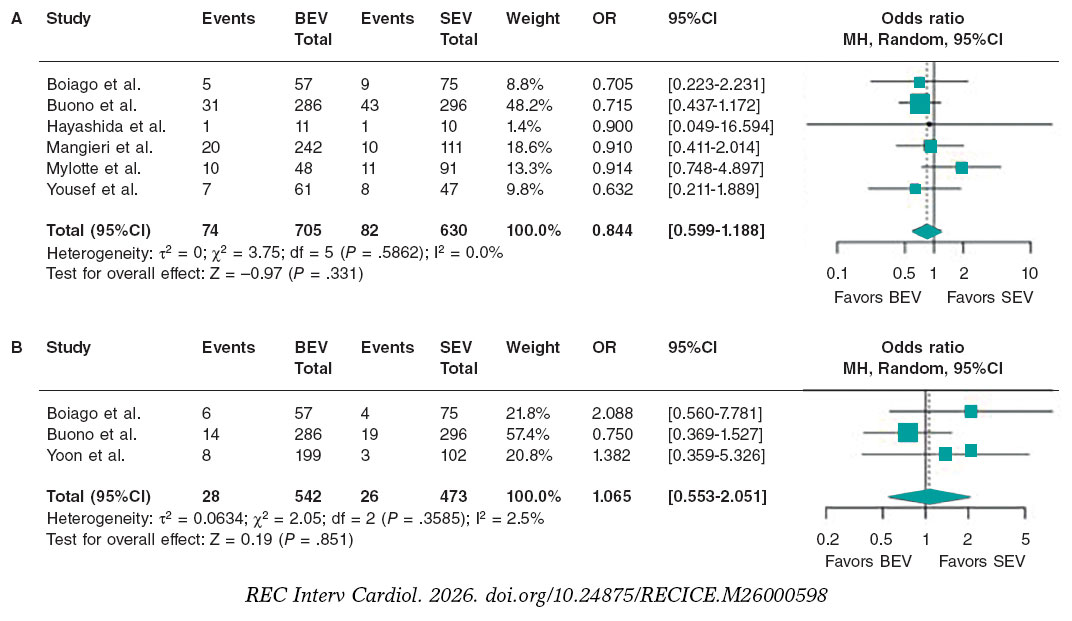
Figure 2. Forest plots of 1-year all-cause and cardiovascular mortality: BEVs vs SEVs. No significant difference between groups was identified at 1 year for all-cause mortality (A) or cardiovascular mortality (B). Individual study results, ORs and 95%CI are shown. 95%CI, 95% confidence interval; BEV, balloon- expandable valve; MH, Mantel-Haenszel; OR, odds ratio; SEV, self-expandable valve. The bibliographical references cited in this figure correspond to Yoon et al.,8 Boiago et al.,14 Yousef et al.,19 Mangieri et al.,16 Hayashida et al.,22 Mylotte et al.,21 and Buono et al.12.
Short-term mortality outcomes followed a similar pattern, with 30-day all-cause mortality showing no significant difference in the largest pooled analysis, which included 12 studies comparing BEVs with SEVs (3.2% vs 3.7%; OR, 0.85; 95%CI, 0.51-1.42; P = .536; I² = 0.0%). Thirty-day cardiovascular death, analyzed across 10 studies, likewise showed no significant treatment effect (4.1% vs 4.9%; OR, 0.87; 95%CI, 0.50-1.51; P = .619; I² = 0.0%). Procedural mortality, examined in 9 studies, showed no significant difference between the interventions (1.2% vs 1.0%; OR, 1.17; 95%CI, 0.48-2.90; P = .728; I² = 0.0%) (figure 3).
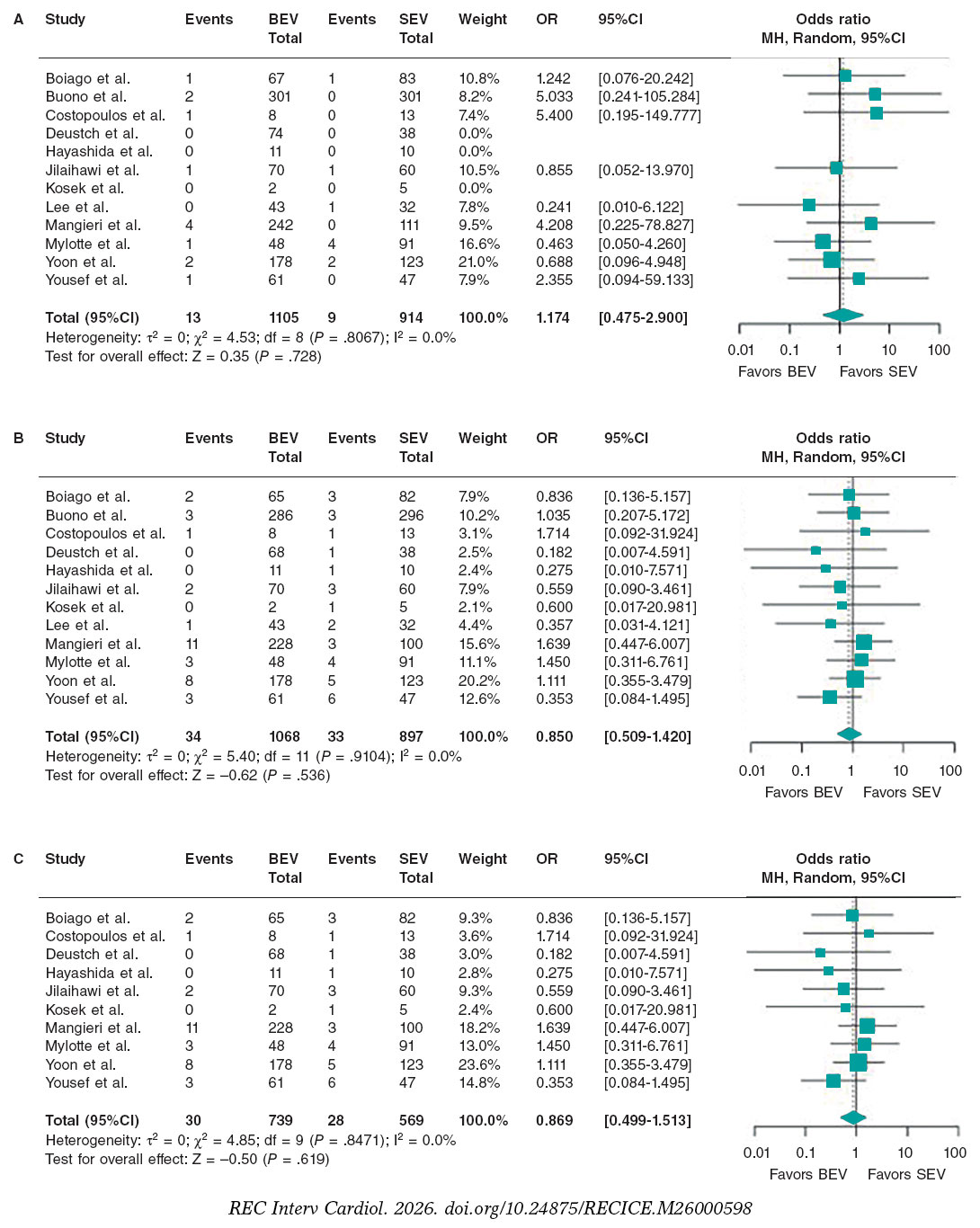
Figure 3. Forest plots of procedural (A), and all-cause (B) and cardiovascular mortality at 30 days: BEV vs SEV. No significant between-group differences were observed in short-term mortality outcomes. Individual study results, odds ratios (OR), and 95% confidence intervals (95%CI) are shown. BEV, balloon-expandable valve; SEV, self-expandable valve. The bibliographical references mentioned in this figure correspond to: Yoon et al.,8 Lee et al.,13 Boiago et al.,14 Yousef et al.,19 Jilaihawi et al.,17 Deutsch et al.,15 Mangieri et al.,16 Hayashida et al.,22 Kosek et al.,18 Mylotte et al.,21 Costopoulos et al.,20 Buono et al.12
Secondary endpoints
Annular rupture was more frequently associated with BEVs than with SEVs across 9 studies (1.7% vs 0.1%; OR, 3.65; 95%CI, 1.30-10.24; P = .014; I² = 0.0%) (figure 4).
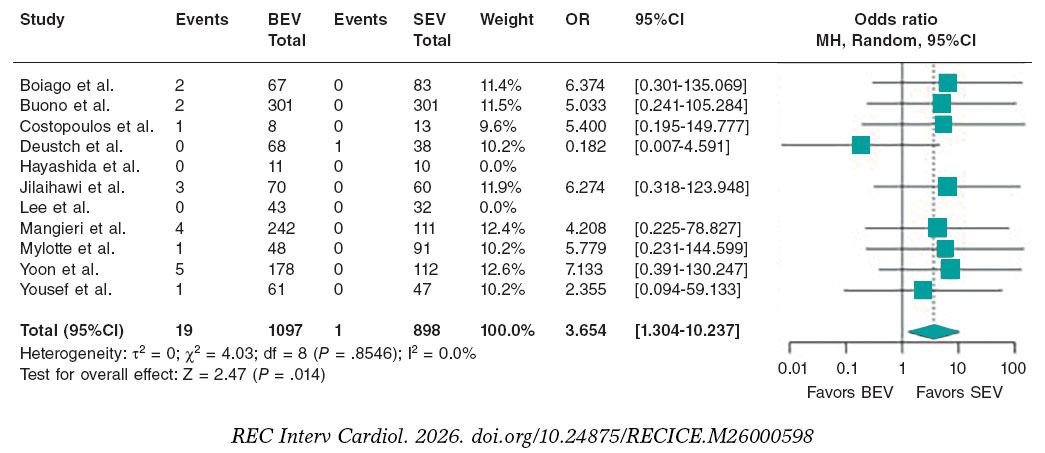
Figure 4. Forest plot of annular rupture incidence: BEV vs SEV. The pooled analysis showed a higher incidence of annular rupture with BEV. Individual study results, odds ratios (OR), and 95% confidence intervals (95%CI) are shown. BEV, balloon-expandable valve; SEV, self-expandable valve. The bibliographical references included in this figure correspond to: Yoon et al.,8 Lee et al.,13 Boiago et al.,14 Yousef et al.,19 Jilaihawi et al.,17 Deutsch et al.,15 Mangieri et al.,16 Hayashida et al.,22 Mylotte et al.,21 Costopoulos et al.,20 Buono et al.12
The need for second valve implantation was significantly lower with BEVs than with SEVs in an analysis of 8 studies (2.6% vs 5.1%; OR, 0.49; 95%CI, 0.26-0.93; P = .029), although moderate heterogeneity was observed (I² = 22.3%) (figure 5).
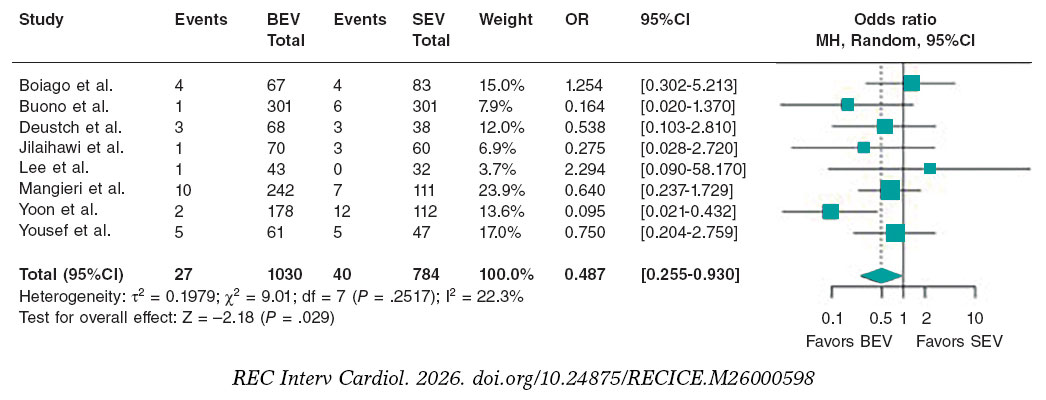
Figure 5. Forest plot comparing the need of a second valve between BEV and SEV. The pooled analysis indicates a lower need for a second valve with BEV. Individual study results, odds ratios (OR), and 95%CI are shown. BEV, balloon-expandable valve; SEV, self-expandable valve. The bibliographical references included in this figure correspond to: Yoon et al.,8 Lee et al.,13 Boiago et al.,14 Yousef et al.,19 Jilaihawi et al.,17 Deutsch et al.,15 Mangieri et al.,16 Buono et al.12
Moderate-to-severe paravalvular leak was significantly less frequent with BEVs than with SEVs across 9 studies, (4.0% vs 10.1%; OR, 0.38; 95%CI, 0.18-0.80; P = .011). This outcome demonstrated substantial heterogeneity (I² = 63.5%) (figure 6).
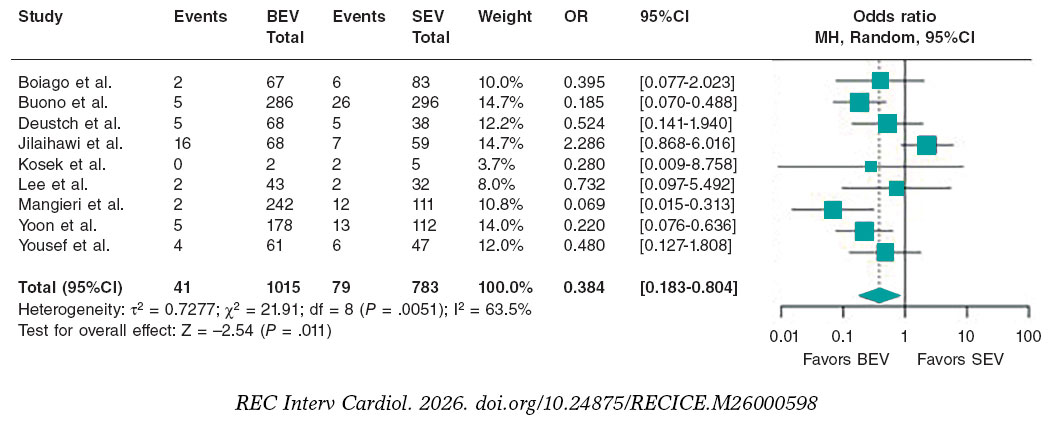
Figure 6. Forest plot comparing the incidence of moderate or severe PVL between BEV and SEV. The pooled analysis shows a significantly higher risk with SEV. Individual study results, odds ratios (OR), and 95%CI are shown. BEV, balloon-expandable valve; SEV, self-expandable valve. The bibliographical references included in this figure correspond to: Yoon et al.,8 Lee et al.,13 Boiago et al.,14 Yousef et al.,19 Jilaihawi et al.,17 Deutsch et al.,15 Mangieri et al.,16 Kosek et al.,19 Buono et al.12
New pacemaker implantation requirements differed significantly between treatment approaches, with BEV associated with lower odds than SEVs in a pooled analysis of 9 studies (12.9% vs 19.2%; OR, 0.64; 95%CI, 0.48-0.85; P = .002; I² = 0.0%) (figure 7).
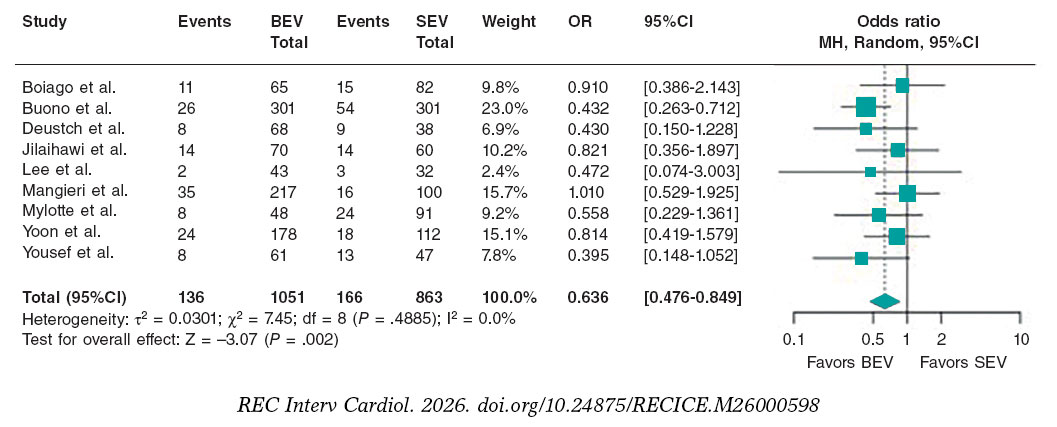
Figure 7. Forest plot of new pacemaker implantation: BEV vs SEV. Forest plot of the need for new pacemaker implantation between BEV and SEV, demonstrating a significantly lower rate with BEV. Individual study results, odds ratios (OR), and 95%CI are shown. BEV, balloon-expandable valve; SEV, self-expandable valve. The bibliographical references included in this figure correspond to: Yoon et al.,8 Lee et al.,13 Boiago et al.,14 Yousef et al.,19 Jilaihawi et al.,17 Deutsch et al.,15 Mangieri et al.,16 Mylotte et al.,21 Buono et al.12
Stroke incidence was assessed in 9 studies and showed no significant difference between BEV and SEV approaches (2.5% vs 2.7%; OR, 0.93; 95%CI, 0.52-1.67; P = .805; I² = 0.0%) (figure 8). Coronary obstruction, although analyzed in only 4 studies, also showed no significant difference between groups (1.1% vs 1.3%; OR, 1.10; 95%CI, 0.30-4.07; P = .888; I² = 0.0%) (figure 9).
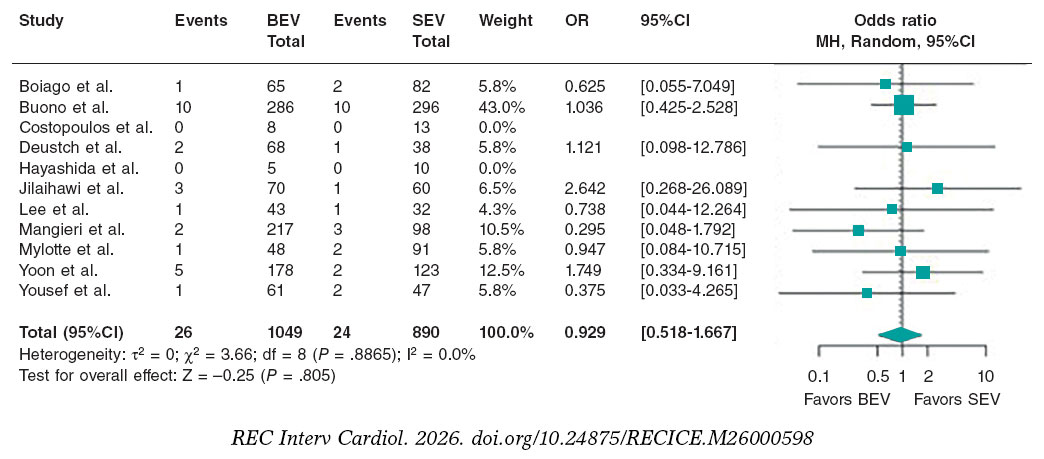
Figure 8. Forest plot of stroke incidence: BEV vs SEV. The pooled analysis showed no significant between-group difference. Individual study results, odds ratios (OR), and 95%CI are shown. BEV, balloon-expandable valve; SEV, self-expandable valve. The bibliographical references included in this figure correspond to: Yoon et al.,8 Lee et al.,13 Boiago et al.,14 Yousef et al.,19 Jilaihawi et al.,17 Deutsch et al.,15 Mangieri et al.,16 Hayashida et al.,22 Mylotte et al.,21 Costopoulos et al.,20 Buono et al.12
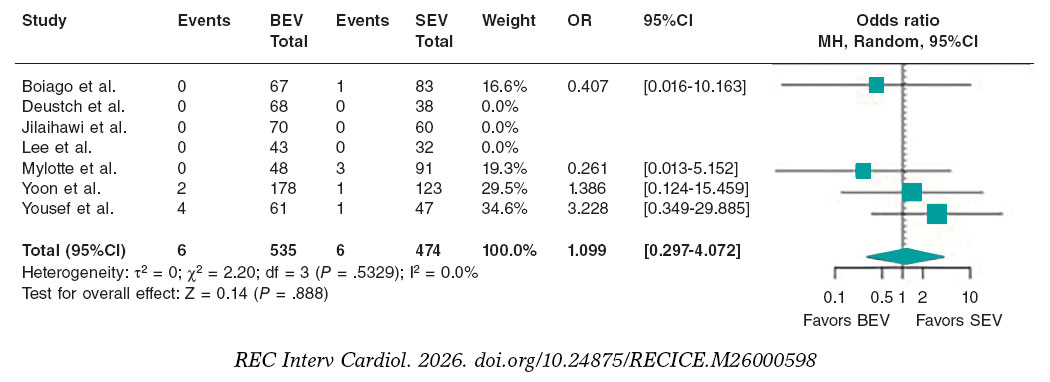
Figure 9. Forest plot of coronary obstruction incidence: BEV vs SEV. No significant between-group difference was observed in the occurrence of coronary obstruction. Individual study results, odds ratios (OR), and 95%CI are shown. BEV, balloon-expandable valve; SEV, self-expandable valve. The bibliographical references included in this figure correspond to: Yoon et al.,8 Lee et al.,13 Boiago et al.,14 Yousef et al.,19 Jilaihawi et al.,17 Deutsch et al.,15 Mylotte et al.21
Sensitivity analysis
Leave-one-out sensitivity analyses were performed for all outcomes to evaluate the influence of individual studies on the pooled effect estimates (figures S1-S11).
For mortality outcomes, all leave-one-out iterations yielded nonsignificant results. The 1-year all-cause mortality analysis showed ORs ranging from 0.798 to 0.893 across iterations, with all confidence intervals crossing unity. Similarly, 30-day all-cause mortality, 1-year cardiovascular mortality, and 30-day cardiovascular mortality remained nonsignificant in all sensitivity iterations.
Moderate-to-severe paravalvular leak, the outcome with the highest heterogeneity (I² = 63.5%), retained statistical significance in most leave-one-out iterations, although the effect size varied (figure S1). The leave-one-out sensitivity analysis for the need for a second valve implantation showed a consistent direction of effect favoring BEVs across all iterations, with the pooled OR remaining < 1 in every scenario. However, statistical significance was not uniformly maintained: when Deutsch et al.,15 Mangieri et al.,16 Jilaihawi et al.,17 Yoon et al.,8 or Buono et al.12 were omitted, the confidence intervals marginally crossed unity. These findings indicate that, although the overall pooled result is statistically significant, it should be interpreted with caution, because it may be influenced by the specific composition of the included studies (figure S2). No individual study was identified as having a disproportionate influence on the statistical significance or direction of effect for the other outcomes (figures S3-S11).
Quality assessment
Upon reassessment of all 12 included studies using the ROBINS-I tool, no study was rated as having an overall low risk of bias rating. Eight studies were classified as having a moderate overall risk of bias: Yoon et al.,8 Mylotte et al.,21 Jilaihawi et al.,17 Mangieri et al.,16 Buono et al.,12 Boiago et al.,14 Deutsch et al.,15 and Lee et al.13 These studies showed mixed risk profiles across the 7 assessed domains, with most domains rated as low to moderate risk; however, residual confounding and concerns regarding participant selection concerns were the most frequently identified methodological limitations.
Four studies were classified as having a serious overall risk of bias: Kosek et al.,18 Hayashida et al.,22 Yousef et al.,19 and Costopoulos et al.20 These studies had significant methodological limitations across multiple domains, most notably bias due to confounding (D1) and selection of participants (D2).
The detailed results of the ROBINS-I assessment for each study across all 7 domains are shown in table S2.
DISCUSSION
This meta-analysis of 12 observational studies including more than 2000 patients represents the largest comparative assessment to date of self-expanding vs balloon-expandable valve platforms in patients with bicuspid aortic stenosis undergoing TAVI. Our findings show comparable short- and intermediate-term mortality outcomes between valve types, while identifying potential differences in procedural complications and valve performance.
No statistically significant differences were observed between BEVs and SEVs for any of the mortality endpoints evaluated, including 30-day all-cause mortality, cardiovascular mortality, procedural mortality, and 1-year all-cause and cardiovascular mortality. This finding is consistent with the existing literature. A study focusing on patients with BAV and small aortic annulus reported no significant differences in 1-year all-cause mortality or cardiac mortality between the 2 valve types.23 The 30-day and 1-year mortality rates were also comparable to those reported for TAVI in tricuspid aortic valve disease in contemporary studies24. Taken together, these consistent results suggest that, in terms of overall survival, both platforms offer comparable safety in the short- to intermediate-term in patients with BAV.
In contrast, our analysis identified a significantly higher risk of annular rupture with BEVs, a finding consistent with prior evidence. The AD-HOC registry, one of the most robust datasets included in this meta-analysis, reported annular rupture exclusively in the BEV group (0.7% vs 0.0% for SEVs).12 Excessive area-based oversizing > 20% has been identified as a key predictor of BEV-related rupture, with an 8-fold increased risk reported in one study.25 In contrast, SEVs are rarely associated with annular rupture unless aggressive balloon pre- or postdilatation is performed.26 The mechanism underlying this difference is often attributed to radial force and deployment mechanism: BEVs expand with a fixed balloon size, potentially exerting greater and more localized stress, whereas SEVs deploy gradually, allowing greater conformability to irregular anatomies such as BAV. Notably, Lee et al. reported no cases of annular rupture in either the BEV or SEV groups when utilizing Wei’s sizing method was used, suggesting that meticulous preprocedural planning can mitigate this severe complication regardless of valve type.13 Overall, these data suggest that, in patients with BAV, especially those with complex annular calcification or noncircular annuli, SEVs may offer a safer profile regarding annular integrity.
Regarding paravalvular leak, BEVs were associated with a significantly lower incidence of moderate-to-severe PVL than SEVs, a finding supported by the existing literature. The AD-HOC registry reported a markedly lower risk of moderate or greater paravalvular regurgitation with BEVs,12 and the BEAT Registry specifically highlighted that, in patients with large aortic annuli, SEVs were associated with substantially higher PVL rates.27 Furthermore, Sá et al. found that new-generation BEVs were associated with significantly less PVL than newer-generation SEVs.9 Although significant heterogeneity was observed for this outcome in our analysys, sensitivity analyses consistently favored BEVs. The observed heterogeneity is likely attributable to differences in BAV morphology, including Sievers classification and severity of raphe calcification, as well as variations in sizing strategies and the inclusion of different device generations. The clinical relevance of this finding should not be understated, because moderate-to-severe PVL has been consistently associated with higher rates of overall mortality, rehospitalization, and cardiovascular mortality.28 While contemporary SEV designs incorporate modifications aimed at minimizing paravalvular regurgitation, BEVs continue to demonstrate lower rates of moderate- to-severe PVL in the current comparative evidence base.
Moreover, BEVs were associated with a significantly lower need for second valve implantation, a finding that differs from some earlier meta-analyses in which this outcome did not reach statistical significance. The inclusion of more recent and larger datasets, particularly the AD-HOC registry, likely increased the statistical power to detect this difference.24 This result is consistent with an observational study showing second valve implantation in 9.3% of SEV patients treated with SEVs vs 0% of those treated with BEVs among patients with a dilated ascending aorta, in which BAV anatomy emerged as an independent predictor of device failure in multivariable analysis.29 The need for a second valve often arises from procedural complications, such as significant PVL, device malposition, or device failure, all of which may be compounded by the complex aortic anatomy inherent to BAV. These findings underscore the importance of tailored procedural strategies for optimizing TAVI outcomes in this population.
New permanent pacemaker implantation (PPI) was significantly less frequent with BEVs, which is consistent with previous data in both general TAVI populations and BAV-specific subgroups. A meta-analysis in patients with small aortic annulus found that BEVs were associated with a lower risk of PPI,20 and a recent meta-analysis of 16 studies comparing third-generation devices confirmed that BEV use was associated with a significantly reduced PPI risk.30 The higher PPI rates observed with SEVs are generally attributed to their radial force characteristics and tendency toward deeper implantation, which may compress the conduction system. Of note, specific BAV morphological features, such as Sievers type 1 classification, have also been independently associated with higher PPI risk, highlighting the multifactorial nature of this complication23.
No statistically significant differences were identified between valve types for stroke or coronary obstruction. The absence of a difference in stroke incidence is consistent with most contemporary literature in patients with BAV,31 although some analyses of specific subgroups, such as patients with small aortic annulus, have reported lower stroke risk with BEVs, suggesting that patient-level anatomical and clinical factors may modulate this risk.20 Coronary obstruction occurred at very low absolute rates in both groups, which is consistent with pooled estimates from the broader BAV-TAVI literature,32,33 and the comparable incidence between platforms is particularly reassuring for this potentially catastrophic complication.
Limitations
This meta-analysis provides valuable insights but is subject to several limitations inherent to the pooled observational data. First, the primary limitation is the reliance on observational studies, which introduces potential selection bias and unmeasured confounding. The absence of dedicated randomized clinical trials (RCTs) comparing BEVs and SEVs specifically in patients with BAV means that conclusions drawn from meta-analyses of observational data, although informative, cannot establish causality with the same certainty as RCTs. Second, heterogeneity across the included studies for some outcomes may reflect differences in patient characteristics, evolving procedural techniques and the inclusion of different generations of transcatheter heart valves. Third, although the meta-analysis focused on patients with BAV, the specific characteristics of the included BAV anatomies could not be explored and may not represent the full spectrum of BAV disease. Fourth, the inclusion of various device generations, including the Acurate neo/neo2 transcatheter heart valve, a platform no longer commercially available, represents an additional source of heterogeneity and may limit the generalizability of the findings to contemporary practice. Unfortunately, a subgroup analysis comparing device generations was not possible because individual patient-level data were not available from the included studies.
Future directions
The current meta-analysis, along with the existing literature, highlights several critical areas for future research to further refine valve selection in TAVI for bicuspid aortic stenosis. Although dedicated randomized controlled trials comparing SEVs and BEVs in patients remain absent from the literature, several registered trials may provide valuable insights into the performance of these valve types in the BAV population. The STAR trial (NCT02541877), a multicenter randomized study focusing on sizing strategies for type 0 bicuspid aortic stenosis using SEVs, may provide critical data on procedural outcomes, hemodynamic performanc, and optimal sizing approaches specific to BAV anatomy. The study of safety and efficacy profile of TAVI in intermediate-risk BAV patients (NCT03163329) and the HANGZHOU Solution trial in bicuspid aortic stenosis (NCT04722796) may contribute data on both valve types across different risk profiles and procedural approaches, although without direct comparison of these devices for definitive conclusions on valve selection.
CONCLUSIONS
This meta-analysis of 12 observational studies represents the largest comparison of SEVs and BEVs in patients with BAV undergoing TAVI. Both valve platforms showed equivalent mortality outcomes across all the time horizons. However, BEVs were associated with a higher risk of annular rupture but lower rates of moderate-to-severe paravalvular leak, reduced need for second valve implantation and fewer permanent pacemaker implantations than SEVs.
These findings suggest potential differences in complication profiles between valve types, though current evidence is limited by the nature and quality of available observational data. Further research with randomized designs and contemporary valve generations is needed to confirm these associations.
FUNDING
This research received no specific grant from any funding agency in the public, commercial, or not-for-profit sectors.
ETHICAL CONSIDERATIONS
This systematic review and meta-analysis used previously published data and did not involve primary data collection from human participants. Therefore, ethical approval and informed consent were not required. All included studies had received appropriate ethical approval from their respective institutions, as reported in the original publications. This study complies with the SAGER guidelines for reporting sex and gender data in research.
STATEMENT ON THE USE OF ARTIFICIAL INTELLIGENCE
Claude (Anthropic) was used during the preparation of this manuscript. It assisted the authors with language editing, grammar, and readability of the text. Furthermore, it was used to support rephrasing and connecting content within the introduction and discussion sections.
The tool was not used in the study design, literature searches, data collection, data extraction, statistical analyses, or interpretation of the results. All scientific content, references, and conclusions were produced by the authors. All output from the tool was reviewed and edited before inclusion in the manuscript, and the authors take full responsibility for the final content.
AUTHORS’ CONTRIBUTIONS
Conceptualization: L. Marqueño da Cunha, N.V. Sala da Silva, and W.F. Gomes. Methodology: L. Marqueño da Cunha, N.V. Sala da Silva, and W.F. Gomes. Literature search: L. Marqueño da Cunha, N.V. Sala da Silva, and W.F. Gomes. Data extraction: L. Marqueño da Cunha and N.V. Sala da Silva. Quality assessment: P.F. Gomes Nicz , W.F. Gomes. Statistical analysis: W.F. Gomes. Writing—original draft: L. Marqueño da Cunha, N.V. Sala da Silva, W.F. Gomes, P.F. Gomes Nicz, D.C. Nercolini, A. Dumsch de Aragon Ferreira, and C.A. Kenji Nakashima. Writing—review and editing: all authors; Supervision: W.F. Gomes. Final approval: all authors.
CONFLICTS OF INTEREST
W.F. Gomes has received proctorship honoraria from Meril Lifesciences and Abbott Cardiovascular.
ACKNOWLEDGEMENTS
The authors thank all investigators of the original studies included in this meta-analysis for their valuable contributions to the evidence base.
WHAT IS KNOWN ABOUT THE TOPIC?
- TAVI in patients with BAV presents unique anatomical challenges, including asymmetric leaflet morphology, eccentric calcification, and frequent calcified raphe, which may affect procedural outcomes and device performance. BEVs and SEVs are the 2 main transcatheter valve platforms used in this population, each with distinct mechanical characteristics that may interact differently with BAV anatomy.
- Despite the increasing use of TAVI in BAV patients, this population has been underrepresented in major randomized trials, and current evidence is derived primarily from observational studies. Previous meta-analyses have shown no significant differences between BEVs and SEVs in procedural, 30-day, or 1-year mortality. However, BEVs have been associated with a higher risk of annular rupture, whereas newer-generation BEV devices may provide lower rates of moderate-to-severe paravalvular leak than SEVs. Consequently, uncertainty remains regarding the optimal valve platform for patients with BAV undergoing TAVI.
WHAT DOES THIS STUDY ADD?
- This updated meta-analysis represents the largest comparison of SEVs and BEVs in patients with BAV undergoing TAVI, including 12 observational studies and more than 2000 patients. The findings demonstrate comparable shortand intermediate-term mortality between valve platforms. However, BEVs were associated with a higher risk of annular rupture, whereas SEVs were associated with higher rates of moderate-to-severe paravalvular leak, second valve implantation, and permanent pacemaker implantation. These results provide a more comprehensive assessment of the trade-offs between valve types and may help guide individualized device selection in patients with bicuspid aortic valve anatomy undergoing TAVI.
SUPPLEMENTARY DATA

REFERENCES
1. Dargis N, Lamontagne M, Gaudreault N, et al. Identification of Gender-Specific Genetic Variants in Patients With Bicuspid Aortic Valve. Am J Cardiol. 2015;117:420-426.
2. Longobardo L, Jain R, Carerj S, Zito C, Khandheria BK. Bicuspid Aortic Valve: Unlocking the Morphogenetic Puzzle. Am J Med. 2016;129:796-805.
3. Mathieu P, Citro R, Corte AD, et al. The pathology and pathobiology of bicuspid aortic valve: State of the art and novel research perspectives. J Pathol Clin Res. 2015;1:195-206.
4. Borger MA, Elefteriades JA, Coselli JS, et al. The American Association for Thoracic Surgery consensus guidelines on bicuspid aortic valve-related aortopathy: Executive summary. J Thorac Cardiovasc Surg. 2018;156:473-480.
5. Leon MB, Smith CR, Mack MJ, et al. Transcatheter or Surgical Aortic-Valve Replacement in Intermediate-Risk Patients. N Engl J Med. 2016;374:1609-1620.
6. Mack MJ, Goldman S, Brown DL, Cohen DJ, Webb JG, Malaisrie SC, et al. Transcatheter Aortic-Valve Replacement with a Balloon-Expandable Valve in Low-Risk Patients. N Engl J Med. 2019;380:1695-705.
7. Makkar RR, Yoon SH, Tang GHL, et al. Association Between Transcatheter Aortic Valve Replacement for Bicuspid vs Tricuspid Aortic Stenosis and Mortality or Stroke. JAMA. 2019;321:2193.
8. Yoon S, Kaneko H, Leon MB, et al. Outcomes in Transcatheter Aortic Valve Replacement for Bicuspid Versus Tricuspid Aortic Valve Stenosis. J Am Coll Cardiol. 2017;69:2579-2589.
9. Sá MP, Simonato M, Ruhparwar A, et al. Balloon versus self-expandable transcatheter aortic valve implantation for bicuspid aortic valve stenosis: A meta-analysis of observational studies. Catheter Cardiovasc Interv. 2021;98:E746-E757.
10. Moher D, Liberati A, Tetzlaff J, Altman DG. The PRISMA Group. Preferred Reporting Items for Systematic Reviews and Meta-Analyses: The PRISMA Statement. PLoS Med. 2009;6:e1000097.
11. Sterne JA, Hernán MA, Reeves BC, et al. ROBINS-I: a tool for assessing risk of bias in non-randomised studies of interventions. BMJ. 2016;355:i4919.
12. Buono A, Zito A, Kim WK, et al. Balloon-Expandable vs Self-Expanding Valves for Transcatheter Treatment of Sievers Type 1 Bicuspid Aortic Stenosis. JACC Cardiovasc Interv. 2024;17:2596-608.
13. Lee YT, Yin WH, Tsao TP, et al. Comparable efficacy and safety for bicuspid aortic valve stenosis patients undergoing transcatheter aortic valve replacement with balloon-expandable or self-expanding valves using Wei's sizing method. J Chin Med Assoc. 2024;87:993-1001.
14. Boiago M, Bellamoli M, De Biase C, et al. Three-year clinical outcomes after transcatheter aortic valve implantation in patients with bicuspid aortic disease: Comparison between self-expanding and balloon-expandable valves. Catheter Cardiovasc Interv. 2024;103:1004-1014.
15. Deutsch O, Ruge H, Erlebach M, Lange R, Vitanova K, Krane M. Results of new-generation balloon vs self-expandable transcatheter heart valves for bicuspid aortic valve stenosis. Front Cardiovasc Med. 2023;10:1252163.
16. Mangieri A, Kempfert J, Chiarito M, et al. Balloon Versus Self-Expandable Valve for the Treatment of Bicuspid Aortic Valve Stenosis: Insights From the BEAT International Collaborative Registrys. Circ Cardiovasc Interv. 2020;13:e00∊.
17. Jilaihawi H, Vahanian A, Giustino G, et al. A Bicuspid Aortic Valve Imaging Classification for the TAVI Era. JACC Cardiovasc Imaging. 2016;9:1145-1158.
18. Kosek M, Michałowska I, Michałek P, et al. Transcatheter aortic valve implantation in patients with bicuspid aortic valve: a series of cases. Kardiol Pol. 2015;73:627-636.
19. Yousef A, Wijeysundera HC, Dvir D, et al. Transcatheter aortic valve implantation in patients with bicuspid aortic valve: A patient level multi-center analysis. Int J Cardiol. 2015;189:282-288.
20. Costopoulos C, Latib A, Maisano F, et al. Comparison of Results of Transcatheter Aortic Valve Implantation in Patients With Severely Stenotic Bicuspid Versus Tricuspid or Nonbicuspid Valves. Am J Cardiol. 2014;113:1390-1393.
21. Mylotte D, Buithieu J, Codner P, et al. Transcatheter aortic valve replacement in bicuspid aortic valve disease. J Am Coll Cardiol. 2014;64:2330-2339.
22. Hayashida K, Lefèvre T, Watanabe Y, et al. Transcatheter Aortic Valve Implantation for Patients With Severe Bicuspid Aortic Valve Stenosis. Circ Cardiovasc Interv. 2013;6:284-291.
23. Hosseinpour A, Gupta R, Kamalpour J, et al. Balloon-Expandable Versus Self-Expanding Transcatheter Aortic Valve Implantation in Patients With Small Aortic Annulus: A Meta-Analysis. Am J Cardiol. 2023;204:257-267.
24. Zhang J, Li X, Xu F, Chen Y, Li C. Pooled-Analysis of Association of Sievers Bicuspid Aortic Valve Morphology With New Permanent Pacemaker and Conduction Abnormalities After Transcatheter Aortic Valve Replacement. Front Cardiovasc Med. 2022;9:884911.
25. Barbanti M, Yang TH, Rodès Cabau J, et al. Anatomical and Procedural Features Associated With Aortic Root Rupture During Balloon-Expandable Transcatheter Aortic Valve Replacement. Circulation. 2013;128:244-253.
26. Coughlan JJ, Kiernan T, Mylotte D, Arnous S. Annular Rupture During Transcatheter Aortic Valve Implantation: Predictors, Management and Outcomes. Interv Cardiol. 2018;13:140-144.
27. Moscarella E, Mangieri A, Giannini F, et al. Annular size and interaction with trans-catheter aortic valves for treatment of severe bicuspid aortic valve stenosis: Insights from the BEAT registry. Int J Cardiol. 2022;349:31-38.
28. Sá MP, Jacquemyn X, Van Den Eynde J, et al. Impact of Paravalvular Leak on Outcomes After Transcatheter Aortic Valve Implantation: Meta-Analysis of Kaplan-Meier-derived Individual Patient Data. Struct Heart. 2023;7:100118.
29. An K, Zhang F, Ouyang W, Pan X. Comparison of self- and balloon-expandable valves in patients with dilatated ascending aorta undergoing transcatheter aortic valve replacement. J Thorac Dis. 2023;15:4826-4835.
30. Siddiqui SA, Kazemian S, Gupta T, et al. Outcomes of Transcatheter Aortic Valve Replacement Using Third-Generation Balloon-Expandable Versus Self-Expanding Valves: A Meta-analysis. J Soc Cardiovasc Angiogr Interv. 2024;3:102146.
31. Makkar RR, Yoon SH, Chakravarty T, et al. Association Between Transcatheter Aortic Valve Replacement for Bicuspid vs Tricuspid Aortic Stenosis and Mortality or Stroke Among Patients at Low Surgical Risk. JAMA. 2021;326:1034.
32. Chen CHJ, Jiang H, Martin O, Wilson-Smith AR. Procedural and clinical outcomes of transcatheter aortic valve replacement in bicuspid aortic valve patients: a systematic review and meta-analysis. Ann Cardiothorac Surg. 2022;11:351-362.
33. Zghouzi M, Osman H, Ullah W, et al. Safety and efficacy of transcatheter aortic valve implantation in stenotic bicuspid aortic valve compared to tricuspid aortic valve: a systematic review and meta-analysis. Expert Rev Cardiovasc Ther. 2022;20:581-588.