
ABSTRACT
Introduction and objectives: Drug-coated balloons are an established therapeutic option for in-stent restenosis (ISR) and in small-vessel disease. The rEpic04 post-market clinical follow-up study evaluated the safety and efficacy profile of the Essential Pro balloon paclitaxel-coated balloon, which uses TransferTech technology (iVascular, España) in routine clinical practice.
Methods: This prospective, multicenter, observational registry was conducted at 7 Spanish centers in full compliance with the European Union Medical Device Regulation (MDR) 2017/745. A total of 161 consecutive patients with 182 lesions treated with Essential Pro were enrolled. The primary endpoints were device success, defined as residual percent diameter stenosis < 30%, and procedural success. The primary clinical endpoint was target lesion failure (TLF) at 12 months.
Results: The cohort was clinically complex: 47.8% of the patients had diabetes, and 67.7% had undergone a previous coronary intervention. The indications for treatment were ISR (48.4%), small-vessel disease (39%), diffuse disease (18.1%) and bifurcation lesions (15.4%). Device success was achieved in 96.6% of cases and procedural success in 94.5%; bailout stenting was required in 2.2%. At 12 months, the TLF rate was 7.1%, primarily driven by target lesion revascularization (5.5%). Subgroup analysis showed a significantly lower TLF rate in small vessels (1.4%) compared with the remaining lesions (P = .02), whereas the TLF rate in ISR lesions was 12.5%. No thrombosis or device-related mechanical failures were reported.
Conclusions: The Essential Pro balloon was safe and effective across a complex spectrum of coronary lesions. The TLF rate was significantly lower in small vessels and higher in ISR, consistent with previous series. These exploratory subgroup findings support the safety and efficacy profile of the device in real-world clinical practice.
Keywords: Drug-coated balloon. Paclitaxel. In-stent restenosis. PMCF registry.
RESUMEN
Introducción y objetivos: Los balones farmacoactivos constituyen una opción terapéutica establecida tanto en la reestenosis intrastent (RIS) como en el tratamiento de la enfermedad de pequeño vaso. En el estudio de seguimiento clínico poscomercialización rEpic04 se evaluaron la seguridad y la efectividad del balón Essential Pro (paclitaxel, tecnología TransferTech, iVascular, España) en la práctica clínica habitual.
Métodos: Registro prospectivo, multicéntrico y observacional realizado en 7 centros españoles de conformidad con el Reglamento MDR 2017/745 sobre los productos sanitarios. Se incluyó consecutivamente a 161 pacientes con 182 lesiones tratados con balón Essential Pro. Los objetivos primarios fueron la efectividad del dispositivo, definida como un porcentaje residual de estenosis por diámetro < 30%, y del procedimiento. El objetivo clínico principal fue el fracaso de la lesión diana (FLD) a los 12 meses.
Resultados: La población presentó una elevada complejidad clínica: el 47,8% de los pacientes tenía diabetes y el 67,7% había sido sometido a una intervención coronaria previa. Las indicaciones para el tratamiento fueron RIS (48,4%), enfermedad de pequeño vaso (39%), enfermedad difusa (18,1%) y lesiones en bifurcación (15,4%). La efectividad del dispositivo fue del 96,6% y la del procedimiento del 94,5%; fue necesario implantar un stent de rescate en el 2,2% de los casos. A los 12 meses, la tasa de FLD fue del 7,1%, principalmente a expensas de la revascularización de la lesión diana (5,5%). El análisis de subgrupos mostró una tasa de FLD significativamente menor en los vasos pequeños (1,4%) que en el resto de las lesiones (p = 0,02), mientras que en las lesiones con RIS la tasa fue del 12,5%. No se registraron trombosis ni fallos mecánicos relacionados con el dispositivo.
Conclusiones: El balón Essential Pro demostró ser seguro y eficaz en un espectro complejo de lesiones. La tasa de FLD fue significativamente menor en los vasos pequeños y mayor en las lesiones con RIS, en línea con lo descrito en otras series. Estos hallazgos exploratorios de los análisis de subgrupo respaldan la seguridad y la efectividad del dispositivo en la práctica clínica real.
Palabras clave: Balón farmacoactivo. Paclitaxel. Reestenosis intrastent. Registro PMCF.
Abbreviations
DCB: drug-coated balloon. DES: drug-eluting stent. ISR: in-stent restenosis. TLF: target lesion failure. TLR: target lesion revascularization.
INTRODUCTION
Contemporary percutaneous coronary intervention has increasingly moved towards a stentless “leave nothing behind” strategy, aimed at restoring the vessel lumen while avoiding permanent metallic implants that may impair vasomotion, promote chronic inflammation, or complicate future revascularization procedures. Drug-coated balloons (DCBs) are an established treatment for in-stent restenosis (ISR), supported by pivotal randomized trials including ISAR-DESIRE 3,1 RIBS IV,2 and DARE,3 as well as by the individual patient-data DAEDALUS meta-analysis.4 The 2024 European Society of Cardiology clinical practice guidelines5 recommend both new-generation drug-eluting stents (DESs) and DCBs for ISR with a class I, level A indication, while favoring DESs as the first option specifically on the basis of the DAEDALUS meta-analysis. Furthermore, DCBs have emerged as safe an effective alternative for de novo small-vessel disease, as demonstrated in BASKET-SMALL 2,6 and for bifurcation lesions.7 Although their use in these settings is supported by an increasing body of evidence and by international consensus documents,8-10 specific recommendation have not yet been incorporated into clinical practice guidelines.
Recently, the Drug-coated balloon Academic Research Consortium (DCB-ARC)11 highlighted the importance of standardising endpoints in clinical trials to ensure meaningful comparisons, highlighting the need to evaluate these devices in real-world settings including patients with complex anatomies, who are frequently underrepresented or excluded from randomized trials. Although paclitaxel- coated balloons have shown superiority over plain old balloon angioplasty in several landmark historical trials12,13 and, more recently, in the randomized AGENT IDE trial,14 relevant biomechanical and pharmacokinetic differences among currently availably DCB platforms mean that a universal “class effect” cannot be assumed.
The Essential Pro device (iVascular, Spain) is a paclitaxel-coated balloon delivering 3 µg/mm2 of paclitaxel through TransferTech coating technology. This platform uses nanotechnology and ultrasound-assisted deposition to produce drug microcrystals, facilitating rapid and homogeneous transfer of paclitaxel to the vessel wall. Preclinical findings have been confirmed in subsequent studies15 and clinical investigations have demonstrated a favorable efficacy profile in both ISR and small-vessel disease.16-18 However, robust post-market clinical follow-up (PMCF) data remain necessary to determine whether these results are maintained in contemporary, unselected real-world populations.
The aim of the rEpic04 study was to assess the safety profile, technical efficacy, and 1-year clinical outcomes of the Essential Pro device in an unselected population, assessing its performance against the existing evidence in highly complex subgroups.
METHODS
Study design and population
rEpic04 is a prospective, observational, multicenter study conducted at 7 hospitals in Spain. Adult patients undergoing percutaneous coronary intervention in whom treatment with the Essential Pro device was attempted between September 2022 and August 2024 were consecutively enrolled. The study was designed to meet the post-market surveillance requirements of the European Union Medical Device Regulation (MDR) 2017/745 on medical devices and was conducted in accordance with ISO 14155:2020 and in full compliance with the principles outlined in the Declaration of Helsinki.
Procedure and device
Essential Pro is a rapid-exchange balloon catheter coated with paclitaxel within an amphiphilic matrix. The standard procedure included lesion preparation (predilatation) at the operator’s discretion. The duration of dual antiplatelet therapy was not specifically predefined and was left to the operator’s discretion, in accordance with current guideline recommendations and taking into consideration the clinical presentation and the individual patient’s risk profile.
Device efficacy was defined as successful crossing and final residual percent diameter stenosis < 30% after balloon use.
Procedural efficacy was defined as final Thrombolysis in Myocardial Infarction grade-3 flow, residual percent diameters stenosis < 30%, and no requirement for bail-out stenting.
Endpoints
The primary safety endpoint was freedom from device-related complications (including balloon rupture and hypotube failure) and procedural complications (including coronary perforation, thrombosis, and no-reflow). Clinical events were defined according to the standardised recommendations of the DCB-ARC consensus document11:
- – Target lesion failure (TLF): a composite of cardiovascular death, target vessel-related myocardial infarction, and clinically driven target lesion revascularization (TLR).
- – TLR: any repeat percutaneous or surgical revascularization of the target lesion due to restenosis or another lesion-related complication.
Additional clinical endpoints followed the Academic Research Consortium-2 (ARC-2) criteria.19
Statistical analysis
The sample size calculation estimated that a total of 176 devices would be needed to demonstrate an efficacy rate > 94.8%, using a 4% noninferiority margin. Statistical analyses were performed using JMP version16. Continuous variables are expressed as mean and standard deviation or as median and interquartile range (IQR), according to their distribution. Categorical variables are expressed as frequencies and percentages. Subgroup comparisons (ISR vs non-ISR and small-vessel vs non-small vessel disease) were performed using the chi-square test or Fisher’s exact test, as appropriate. P values < .05 were considered statistically significant. TLF-free survival was estimated using the Kaplan-Meier method, and survival curves were compared between subgroups using the log-rank test. Clinical events were reported and classified by each participant center. No independent event adjudication committee was established, and no centralised angiographic analysis by a core laboratory was performed.
RESULTS
Baseline and procedural characteristics
Between September 2022 and August 2024, a total of 161 patients with 182 lesions were enrolled and treated with 203 devices. Mean age was 67 ± 11.3 years. The population had a high burden of morbidity: 47.8% had diabetes, 40.4% had multivessel disease, and 67.7% had previously undergone percutaneous coronary intervention. Acute coronary syndrome was the clinical presentation in 64.6% of patients. The main indications for DCB treatment were ISR (48.4%), small-vessel disease (39%), diffuse disease (18.1%), and bifurcation side-branch lesions (15.4%). Angiographically, 69.8% were classified as complex type B2/C lesions, and 24.2% showed severe calcification. The median reference vessel diameter was 2.5 mm [IQR, 2-3]. Baseline, clinical, angiographic, and procedural characteristics are summarized in table 1.
Table 1. Baseline clinical, angiographic, and procedural characteristics of the cohort (161 patients, 182 lesions)
| Clinical characteristics (n = 161 patients) | |
|---|---|
| Age, years | 67 ± 11.3 |
| Diabetes mellitus | 47.8% |
| Multivessel disease | 40.4% |
| Previous percutaneous coronary intervention | 67.7% |
| Presentation with acute coronary syndrome | 64.6% |
| Angiographic and lesion characteristics (n = 182 lesions) | |
| In-stent restenosis | 48.4% |
| Small-vessel disease | 39.0% |
| Diffuse disease | 18.1% |
| Bifurcation side branch | 15.4% |
| Complex type B2/C lesions | 69.8% |
| Severe calcification | 24.2% |
| Reference vessel diameter, mm | 2.5 [2–3] |
| Procedural characteristics | |
| Essential Pro devices used, n | 203 |
| Lesion predilatation | At the operator’s discretion |
| Device efficacy | 96.6% (176/182) |
| Procedural efficacy | 94.5% |
| Bail-out stenting | 2.2% (4) |
|
Values correspond to variables available in the registry. Data are expressed as mean and standard deviation or median and interquartile range. |
|
Safety and efficacy profile
Device efficacy was achieved in 96.6% of lesions (n = 176/182). In only 1 case was a lower-profile balloon required to cross the lesion. Procedural efficacy was 94.5%. Bail-out stenting was required in only 4 cases (2.2%) because of coronary dissection greater than type C. Regarding safety, no device failures were recorded, including balloon rupture, hypotube dysfunction, or difficulties with device withdrawal. Similarly, no serious procedural complications, such as coronary perforation, no-reflow, or acute thrombosis, were observed.
12-month clinical outcomes
Follow-up was completed in 99.4% of patients (n = 160). The overall TLF rate was 7.1% (13 lesions). TLF components included clinically driven TLR in 5.5%; target vessel-related myocardial infarction in 3.3%, and cardiovascular death in 1.1%. All-cause mortality rate was 3.1%. The main clinical outcomes of the registry are summarized graphically in figure 1.
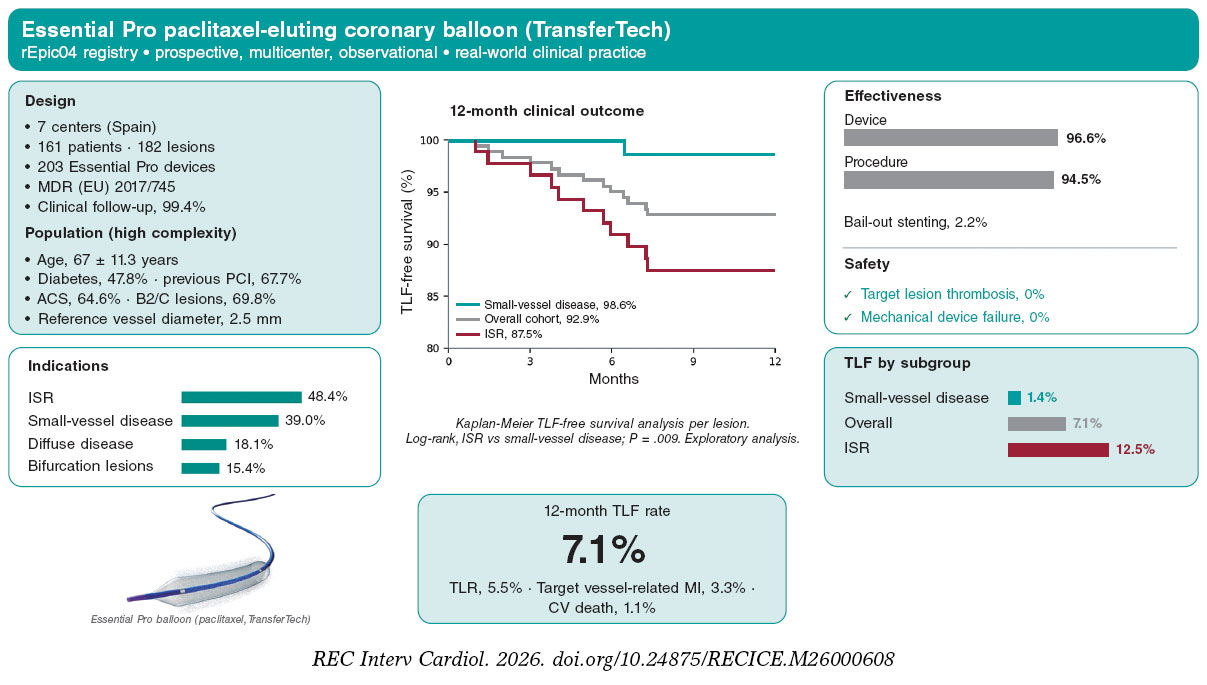
Figure 1. Central illustration. Summary of findings. ACS, acute coronary syndrome; CV, cardiovascular; DCB, drug-coated balloon; ISR, in-stent restenosis; MDR, Medical Device Regulation; MI, acute myocardial infarction; PCI, percutaneous coronary intervention; TLF, target lesion failure; TLR, target lesion revascularization.
Subgroup analysis
Small-vessel disease
Patients treated for small-vessel disease had a significantly lower TLF rate than those treated for other indications (1.4% vs 10.8%; P = .02). Furthermore, the need for repeat revascularization was low (TLR, 1.4%).
In-stent restenosis
TLF rate was significantly more frequent in patients treated for ISR than in those with de novo lesions (12.5% vs 2.1%; P = .008), mainly due to a higher TLR rate (10.2% vs 1.1%; P = .008).
Bifurcations
Among patients treated for side-branch bifurcation lesions (n = 28), device efficacy rate was 100%. No safety complications or TLF events were recorded.
The 12-month TLF-free survival for the overall cohort and for the small-vessel disease and ISR subgroups is shown using Kaplan-Meier curves in figure 2.
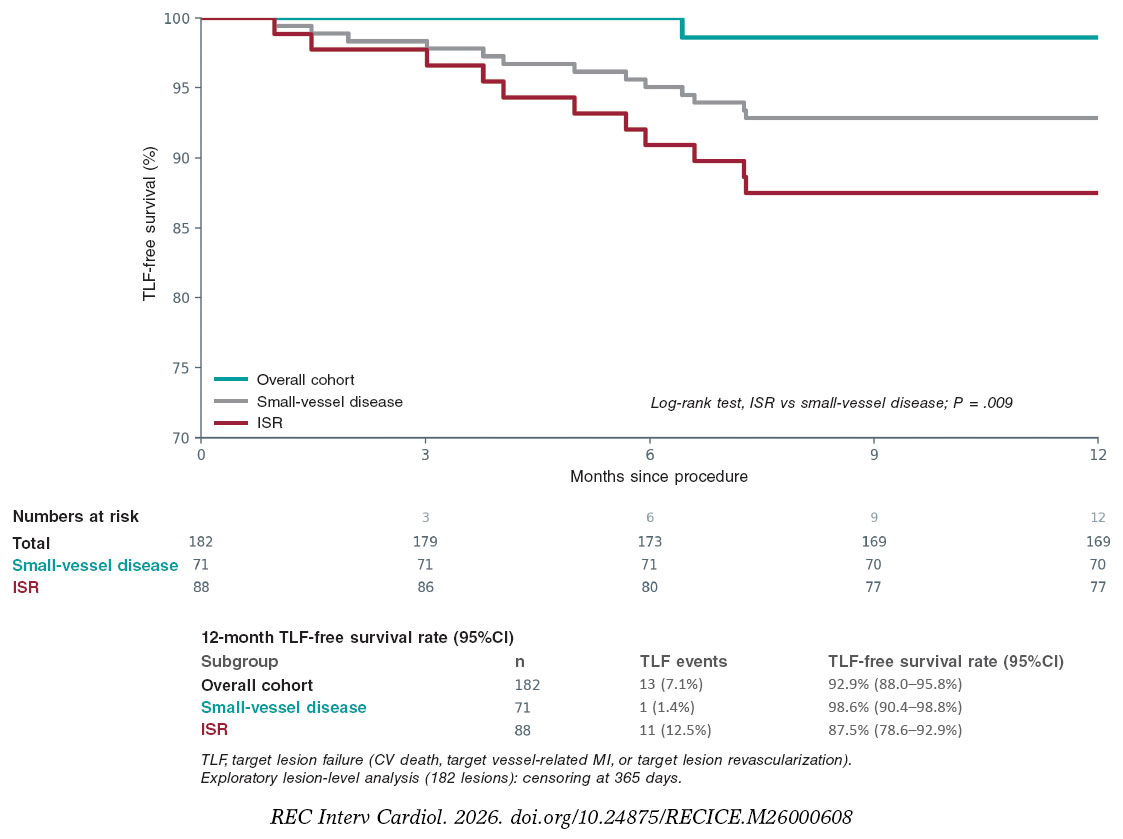
Figure 2. Kaplan-Meier curves of target lesion failure (TLF)-free survival at 12 months according to subgroup (overall cohort, small-vessel disease, and in-stent restenosis [ISR]), in the lesion-level analysis (182 lesions). Numbers at risk at 0, 3, 6, 9, and 12 months and 12-month TLF-free survival with its 95%CI are shown. Log-rank test for ISR vs small-vessel disease; P = .009. Exploratory subgroup analysis. 95%CI, 95% confidence interval; MI, myocardial infarction.
DISCUSSION
The multicenter rEpic04 registry confirms the safety and efficacy profile of the Essential Pro balloon in real-world clinical practice, with an overall 1-year TLF rate of 7.1%. These findings support the favorable performance of paclitaxel-transfer technology across a broad spectrum of complex coronary lesions.
The overall 12-month TLF rate of 7.1% observed in rEpic04 lies at the lower end of the range reported in contemporary DCB registries of unselected populations, in which 1-year TLF or major adverse cardiovascular event rates generally range from 7% to 12%, depending on endpoint definition used in each study.4,20 This finding is particularly relevant given the high complexity of the study population: 47.8% of patients had diabetes, 67.7% had previously undergone percutaneous coronary intervention, 64.6% presented with acute coronary syndrome, and 69.8% had type B2/C lesions. Such patients are often underrepresented in randomized trials. The combination of high device and procedural efficacy rates (96.6% and 94.5%, respectively), a low bail-out stenting rate (2.2%), and the absence of mechanical device failures or acute thrombosis supports the safety and feasibility profile of the Essential Pro as a “leave nothing behind” strategy in routine clinical practice.
ISR accounted for almost half of the study population. In this setting, plain old balloon angioplasty has largely been abandoned because of high recurrence rates (> 30%) leaving DCB treatment or implantation of an additional DES layer as the main therapeutic options. The DAEDALUS meta-analysis4 suggested a modest advantage of DES in reducing TLR, although at the cost of introducing another metallic layer, resulting in a so-called stent sandwich. On the basis of DAEDALUS, the 2024 European Society of Cardiology guidelines5 recommend DESs as the preferred option for ISR. In our ISR subgroup, Essential Pro was associated with a TLR rate of 10.2% and a TLF rate of 12.5%, values within the range reported for DCB treatment in this setting. Nevertheless, these cross-study comparisons should be interpreted cautiously because of differences in patient populations, inclusion criteria, and event definitions. In the pivotal ISAR-DESIRE 3 trial,1 the SeQuent Please balloon was associated with a 1-year TLR rate of 22.1% in patients with DES-ISR. In RIBS IV trial,2 which demonstrated the superiority of an everolimus-eluting stent over a DCB in DES-ISR, the TLR rate was 13% in the DCB group; importantly, this trial does not support preferential use of DCB in this setting. In the DARE trial,3 the DCB treatment yielded clinical outcomes comparable to those of an everolimus-eluting stent, without significant differences in target vessel revascularization at 12 months. More recently, the AGENT IDE trial14 confirmed the superiority of a paclitaxel DCB over an uncoated balloon for ISR, with a significant reduction in the 1-year TLF rate. Studies evaluating Essential Pro with optical coherence tomography17 reported a late lumen loss of 0.25 mm and a binary restenosis rate of 7.7%, values that compare favourably with the historical late lumen loss range of 0.37-0.46 mm reported with other leading DCBs, such as the SeQuent Please.21 Similarly, in the recent cohort reported by Padilla et al.,22 the 1-year TLR rate was 3.3%, further supporting the consistency of the available evidence.
A particularly notable finding of rEpic04 was the 1.4% TLF rate observed in the small-vessel subgroup. However, the study was neither designed nor powered for subgroup comparisons, and the absolute number of events was low. Accordingly, both the magnitude of the observed difference and its statistical significance (P = .02) should be regarded as exploratory and hypothesis-generating. Numerically, this result compares favorable with the benchmark BASKET-SMALL 2 trial,6 in which the 12-month major adverse cardiovascular event rate was 7.5% in the DCB group. Similarly, PICCOLETO II23 reported a major adverse cardiovascular event rate of 10.8% at 3 years. These comparisons should again be interpreted cautiously because of differences in endpoint definitions (major adverse cardiovascular events vs TLF) and study populations. Of note, our registry included very small-caliber vessels, with a mean reference vessel diameter of 2.5 mm, as well as a substantial proportion of high-risk patients, including 47.8% with diabetes. The low bail-out stenting rate of 2.2%, compared with historical rates between 5% and 15%,24 suggests excellent mechanical performance of the catheter and appropriate lesion preparation. These findings are consistent with the concept of using DCBs as first-line therapy in vessels < 2.75 mm to avoid permanent metallic implantation, as supported by recent meta-analyses.
In the bifurcation side-branch subgroup (n = 28), device efficacy rate was 100% and, notably, no TLF events were recorded at 12 months. Although the subgroup was small and these findings should be interpreted cautiously, they are consistent with emerging evidence supporting DCB treatment of the side branch in bifurcation lesions managed using a provisional stenting strategy. In the randomized DCB-BIF trial,7 DCB treatment of the side branch significantly reduced the side-branch TLF rate compared with plain old balloon angioplasty, without adverse safety signals. Similarly, Valencia et al.25 evaluated prognostic factors associated with DCB use in coronary bifurcation side branches in a real-world cohort and reported findings consistent with the growing role of DCBs in this setting. These findings should be interpreted with caution, as the clinical impact of restenosis in a bifurcation side branch may be lower than that at other coronary locations. This is likely related to the smaller myocardial territory supplied by the side branch and the consequently lower probability of clinically relevant ischemia or repeat revascularization.
The long-term safety profile of paclitaxel-based devices has been the subject of considerable scrutiny. In our registry, cardiovascular mortality was extremely low (1.2%), and no target lesion thrombosis was observed. These safety findings are consistent with the extended follow-up reported by Padilla et al.,22 in which thrombosis-free survival was 100% at a median follow-up of 20 months. Clinical event definitions in the present study were defined according to contemporary consensus standards, including the DCB-ARC11 and ARC-219 criteria. The use of harmonized definitions strengthens the methodological robustness of the registry and facilitates direct and meaningful comparison with other contemporary DCB trials and registries, thereby supporting integration of our findings into the growing body of evidence in the field.
Limitations and strengths
The study has the limitations inherent to its prospective, observational, single-arm design, including the absence of a comparator group. The sample size was moderate, and subgroup analyses were based on a limited number of events. Accordingly, the observed differences between small-vessel disease and ISR should be regarded as exploratory and hypothesis-generating rather than confirmatory. Although patient enrolment was consecutive, participation was voluntary: 7 centers enrolled patients over 24 months, at a mean rate of approximately 2 patients per month per center, which raises the possibility of selection and enrolment bias, particularly in the context of a novel device. However, the high clinical and angiographic complexity of the cohort makes preferential selection of low-risk or particularly favorable cases less likely. Furthermore, the study lacked an independent, blinded central angiographic analysis laboratory (core laboratory). Clinical events were reported and classified by the participant centers and were not adjudicated by an independent clinical event adjudication committee. The principal strength of the study was the virtually complete clinical follow-up, achieved in 99.4% of patients.
CONCLUSIONS
The rEpic04 registry supports the safety and efficacy profile of the Essential Pro balloon for the treatment of complex coronary artery disease in real-world clinical practice. Outcomes in small vessels were favorable, with a TLF rate of 1.4%, although this finding derives from an exploratory subgroup analysis and should be interpreted accordingly. In ISR, clinical outcomes were within the range reported for other DCBs. Overall, these findings support Essential Pro as a safe and effective option for implementing a stentless “leave nothing behind” strategy in routine clinical practice.
FUNDING
This investigator-initiated PMCF study was sponsored by Fundación EPIC, a nonprofit academic organization. The study was supported by an unrestricted grant from the device manufacturer, iVascular (Barcelona, Spain). The manufacturer had no role in the study design, data collection, data analysis, interpretation of the results, or preparation of the manuscript.
ETHICAL CONSIDERATIONS
The study protocol was approved by the Ethics Committee of the coordinating center, Hospital Universitario de León, and by the corresponding committees at each participant center, in full compliance with applicable national legislation. Furthermore, the study was conducted in full compliance with the principles outlined in the Declaration of Helsinki, ISO 14155:2020 on the clinical investigation of medical devices, the European Medical Device Regulation (MDR 2017/745), and applicable local laws and legislations governing PMCF studies. Written informed consent was obtained from all participants before enrolment. Sex and gender considerations were addressed with the SAGER (Sex and Gender Equity in Research) guidelines. Participants were consecutively enrolled without selection based on sex, and baseline characteristics and outcomes are presented disaggregated by sex where appropriate. The study population reflects the real-world distribution of patients referred for complex percutaneous coronary intervention during the enrolment period.
STATEMENT ON THE USE OF ARTIFICIAL INTELLIGENCE
The authors used artificial intelligence tools based on large language models to assist with limited editorial tasks, including linguistic improvement, consistency checks, and text formatting. Artificial intelligence was not used for data analysis, interpretation of the results, generation of scientific content, or literature review. All scientific content, conclusions, and judgements are exclusively those of the authors, who reviewed and approved the final version of the manuscript and accept full responsibility for its content.
AUTHORS’ CONTRIBUTIONS
A. Pérez de Prado conceived and designed the study, served as coordinating investigator, supervised data acquisition and analysis, and drafted and critically revised the manuscript. M. Sabaté, F. Sainz Laso, G. Nau, C. Urbano, J. Benezet, and S. Casquero served as principal investigators at the participant centers, contributed to the study design, and participated in patient enrolment, data acquisition, and clinical follow-up. C. Cuellas Ramón, S. Brugaletta, and L.D. Muñoz Jiménez participated in patient enrolment, data collection, procedural documentation, and clinical follow-up at their respective centers. J.M. de la Torre-Hernández contributed to the study design, interpretation of the data, and critical revision of the manuscript. All authors reviewed, revised, and approved the final version of the manuscript and agree to be accountable for all aspects of the work.
CONFLICTS OF INTEREST
J.M. de la Torre-Hernández is editor-in-chief of REC: Interventional Cardiology, and A. Pérez de Prado is associate editor of REC: Interventional Cardiology; the journal’s editorial procedure to ensure impartial handling of the manuscript has been followed. A. Pérez de Prado, M. Sabaté, and J.M. de la Torre-Hernández report receiving consulting or speaker fees from iVascular unrelated to the work presented here. The remaining authors declared no conflicts of interest directly related to this study. The study sponsor, Fundación EPIC, received an unrestricted grant from iVascular to conduct this PMCF registry. iVascular had no role in the study design, data collection, data analysis or interpretation, manuscript preparation, or the decision to submit the manuscript for publication.
WHAT IS NEW ABOUT THE TOPIC?
- DCBs are an established therapeutic option for ISR and small-vessel disease.
- The 2024 European Society of Cardiology clinical practice guidelines give both new-generation DESs and DCBs a class I, level A recommendation for ISR, while positioning DESs as the preferred first-line option.
- Relevant biomechanical and pharmacokinetic differences exist among DCB platforms, precluding assumption of a universal “class effect”.
- Previous evidence specifically concerning the Essential Pro balloon, which uses paclitaxel and TransferTech technology, was derived mainly from preclinical studies and limited clinical series, without prospective PMCF data from contemporary unselected cohorts.
WHAT DOES THIS STUDY ADD?
- A prospective, multicenter, real-world registry involving a total of 7 centers, 161 patients, and 182 lesions in a population with substantial clinical and angiographic complexity.
- The 12-month TLF rate was 7.1%, with high technical efficacy (device, 96.6%; procedure, 94.5%), a low bail-out stenting rate (2.2%), no thrombosis or mechanical device failures, and nearly complete clinical follow-up (99.4%).
- The results support the safety and efficacy profile of the device in real-world clinical practice.
- Subgroup analyses involving small-vessel disease, ISR, and bifurcation lesions should be considered exploratory and hypothesis-generating.
REFERENCES
1. Byrne RA, Neumann FJ, Mehilli J, et al. Paclitaxel-eluting balloons, paclitaxel-eluting stents, and balloon angioplasty in patients with restenosis after implantation of a drug-eluting stent (ISAR-DESIRE 3):a randomised, open-label trial. Lancet. 2013;381:461-467.
2. Alfonso F, Perez-Vizcayno MJ, Cardenas A, et al. A Prospective Randomized Trial of Drug-Eluting Balloons Versus Everolimus-Eluting Stents in Patients With In-Stent Restenosis of Drug-Eluting Stents:The RIBS IV Randomized Clinical Trial. J Am Coll Cardiol. 2015;66:23-33.
3. Baan J Jr., Claessen BE, Dijk KB, et al. A Randomized Comparison of Paclitaxel-Eluting Balloon Versus Everolimus-Eluting Stent for the Treatment of Any In-Stent Restenosis:The DARE Trial. JACC Cardiovasc Interv. 2018;11:275-283.
4. Giacoppo D, Alfonso F, Xu B, et al. Paclitaxel-coated balloon angioplasty vs. drug-eluting stenting for the treatment of coronary in-stent restenosis:a comprehensive, collaborative, individual patient data meta-analysis of 10 randomized clinical trials (DAEDALUS study). Eur Heart J. 2020;41:3715-3728.
5. Vrints C, Andreotti F, Koskinas KC, et al. 2024 ESC Guidelines for the management of chronic coronary syndromes. Eur Heart J. 2024;45:3415-3537.
6. Jeger RV, Farah A, Ohlow MA, et al. Long-term efficacy and safety of drug-coated balloons versus drug-eluting stents for small coronary artery disease (BASKET-SMALL 2):3-year follow-up of a randomised, non-inferiority trial. Lancet. 2020;396:1504-1510.
7. Gao X, Tian N, Kan J, et al. Drug-coated balloon for de novo coronary side branch lesions after main vessel stenting:the DCB-BIF randomized clinical trial. J Am Coll Cardiol.2024;85:1-15.
8. Jeger RV, Eccleshall S, Wan Ahmad WA, et al. Drug-Coated Balloons for Coronary Artery Disease:Third Report of the International DCB Consensus Group. JACC Cardiovasc Interv. 2020;13:1391-1402.
9. Neumann FJ, Sousa-Uva M, Ahlsson A, et al. 2018 ESC/EACTS Guidelines on myocardial revascularization. Eur Heart J. 2019;40:87-165.
10. Yerasi C, Case BC, Forrestal BJ, et al. Drug-Coated Balloon for De Novo Coronary Artery Disease:JACC State-of-the-Art Review. J Am Coll Cardiol. 2020;75:1061-1073.
11. Fezzi S, Scheller B, Cortese B, et al. Definitions and standardized endpoints for the use of drug-coated balloon in coronary artery disease:consensus document of the Drug Coated Balloon Academic Research Consortium. EuroIntervention. 2025;21:e1116-1136.
12. Scheller B, Hehrlein C, Bocksch W, et al. Treatment of coronary in-stent restenosis with a paclitaxel-coated balloon catheter. N Engl J Med.2006;355:2113-2124.
13. Unverdorben M, Vallbracht C, Cremers B, et al. Paclitaxel-coated balloon catheter versus paclitaxel-coated stent for the treatment of coronary in-stent restenosis. Circulation. 2009;119:2986-2994.
14. Yeh RW, Shlofmitz R, Moses J, et al. Paclitaxel-Coated Balloon vs Uncoated Balloon for Coronary In-Stent Restenosis:The AGENT IDE Randomized Clinical Trial. JAMA. 2024;331:1015-1024.
15. Perez de Prado A, Perez-Martinez C, Cuellas Ramon C, et al. Safety and efficacy of different paclitaxel-eluting balloons in a porcine model. Rev Esp Cardiol. 2014;67:456-462.
16. Abellas-Sequeiros RA, Benezet J, Agarrado Luna A, et al. Percutaneous coronary intervention for treating de-novo lesions in small coronary vessels:initial experience with the Essential paclitaxel-coated balloon. Coron Artery Dis. 2018;29:477-481.
17. de la Torre Hernandez JM, Garcia Camarero T, Lozano Ruiz-Poveda F, et al. Angiography and Optical Coherence Tomography Assessment of the Drug-Coated Balloon ESSENTIAL for the Treatment of In-Stent Restenosis. Cardiovasc Revasc Med. 2020;21:508-513.
18. Padilla L, Liberman F, Tello J, et al. Safety and efficacy of the Essential Pro paclitaxel drug-eluting balloon for the treatment of coronary in-stent restenosis. REC Interv Cardiol. 2024;6:166-171.
19. Garcia-Garcia HM, McFadden EP, Farb A, et al. Standardized End Point Definitions for Coronary Intervention Trials:The Academic Research Consortium-2 Consensus Document. Circulation. 2018;137:2635-2650.
20. Sorolla Romero JA, Novelli L, Llau Garcia J, et al. Drug-coated balloons vs drug-eluting stents for the treatment of large native coronary artery disease. Meta-analysis of randomized controlled trials. REC Interv Cardiol. 2026;8:8-16.
21. Xu B, Gao R, Wang J, et al. A prospective, multicenter, randomized trial of paclitaxel-coated balloon versus paclitaxel-eluting stent for the treatment of drug-eluting stent in-stent restenosis:results from the PEPCAD China ISR trial. JACC Cardiovasc Interv. 2014;7:204-211.
22. Padilla L, Tello J, Lamelas P. Extended follow-up of the Essential Pro paclitaxel drug-eluting balloon for in-stent restenosis. REC Interv Cardiol. 2025;7:130-131.
23. Cortese B, Testa G, Rivero F, Erriquez A, Alfonso F. Long-Term Outcome of Drug-Coated Balloon vs Drug-Eluting Stent for Small Coronary Vessels:PICCOLETO-II 3-Year Follow-Up. JACC Cardiovasc Interv. 2023;16:1054-1061.
24. Megaly M, Buda K, Saad M, et al. Outcomes With Drug-Coated Balloons vs. Drug-Eluting Stents in Small-Vessel Coronary Artery Disease. Cardiovasc Revasc Med. 2022;35:76-82.
25. Valencia J, Torres-Mezcua F, Herrero-Brocal M, Torres-Saura F, Pineda J, Ruiz-Nodar JM. Prognostic factors in drug-coated balloon interventions for treating the side branch of coronary bifurcation lesions. REC Interv Cardiol. 2025;7:57-59.