
ABSTRACT
Introduction and objectives: Coronary artery disease (CAD) is common in candidates for transcatheter aortic valve implantation (TAVI), but the benefits and optimal timing of periprocedural percutaneous coronary intervention (PCI) remain uncertain. We evaluated the prognostic impact and timing of periprocedural PCI in TAVI candidates with significant CAD.
Methods: Retrospective study of patients with severe symptomatic aortic stenosis and significant CAD who underwent TAVI at a Portuguese tertiary center between 2009 and 2023. Patients received planned periprocedural PCI (≤ 6 months before or concomitant with TAVI) or optimal medical therapy. The primary endpoints were 24-month overall and cardiovascular survival. Secondary outcomes included 30-day mortality, major adverse cardiovascular events (MACE), life-threatening bleeding, periprocedural laboratory changes, and unplanned revascularization. Furthermore, propensity score matching was performed. PCI timing (before vs concomitant with TAVI) was compared.
Results: Of 174 patients, 80 (46.0%) underwent PCI and 94 (54.0%) received optimal medical therapy. At 24 months, overall and cardiovascular survival were comparable (19.5 vs 18.2 months; P = .586 and 22.3 vs 20.8 months; P = .182, respectively). In the propensity-matched cohort (n = 108), PCI was not associated with a survival benefit (all-cause mortality: HR, 0.98; P = .950; cardiovascular mortality: HR, 1.40; P = .610). Thirty-day mortality, MACE, bleeding, and revascularization rates did not differ significantly between groups. Among patients undergoing PCI, concomitant PCI required more contrast and longer procedures. Although the unadjusted analysis suggested lower 24-month all-cause survival with concomitant PCI, this association did not persist after multivariable adjustment.
Conclusions: In TAVI candidates with obstructive CAD, planned periprocedural PCI did not improve survival compared with optimal medical therapy, even after propensity score matching. PCI timing was not associated with differences in clinical outcomes, although concomitant procedures increased procedural burden.
Keywords: Transcatheter aortic valve implantation. Coronary artery disease. Percutaneous coronary intervention. Timing. Propensity score. Survival.
RESUMEN
Introducción y objetivos: La coronariopatía es frecuente en candidatos a implante percutáneo de válvula aórtica (TAVI), pero el beneficio y el momento óptimo de la intervención coronaria percutánea (ICP) perioperatoria siguen siendo inciertos. Se evaluaron el impacto pronóstico y el momento de la ICP perioperatoria en candidatos a TAVI con coronariopatía significativa.
Métodos: Estudio retrospectivo de pacientes con estenosis aórtica grave sintomática y coronariopatía significativa sometidos a TAVI en un centro terciario portugués (2009-2023). Los pacientes recibieron ICP perioperatoria planificada (≤ 6 meses antes del TAVI o concomitante con este) o tratamiento médico. Los objetivos principales fueron las supervivencias global y cardiovascular a 24 meses. Los objetivos secundarios incluyeron la mortalidad a 30 días, los eventos cardiovasculares adversos mayores (MACE), las hemorragias potencialmente mortales, los cambios analíticos perioperatorios y la revascularización no planificada. Se aplicó emparejamiento por puntuación de propensión. También se comparó el momento de la ICP (antes del TAVI frente a concomitante con este).
Resultados: De los 174 pacientes, 80 (46,0%) recibieron ICP y 94 (54,0%) tratamiento médico. A los 24 meses, las supervivencias global y cardiovascular fueron comparables (19,5 frente a 18,2 meses; p = 0,586; y 22,3 frente a 20,8 meses; p = 0,182, respectivamente). En la cohorte emparejada (n = 108), la ICP no mostró un beneficio en términos de supervivencia (mortalidad por cualquier causa: HR = 0,98; p = 0,950; cardiovascular: HR = 1,40; p = 0,610). No se observaron diferencias en la mortalidad a 30 días, los MACE, las hemorragias ni la revascularización. La ICP concomitante requirió un mayor volumen de contraste y procedimientos más prolongados; el análisis no ajustado sugirió menor supervivencia a 24 meses, pero esta asociación no persistió tras el ajuste multivariable.
Conclusiones: En candidatos a TAVI con coronariopatía obstructiva, la ICP perioperatoria planificada no mejoró la supervivencia frente al tratamiento médico. El momento de realización de la ICP no se asoció con diferencias en los resultados clínicos, aunque la ICP concomitante incrementó la carga del procedimiento.
Palabras clave: Implante percutáneo de válvula aórtica. Coronariopatía. Intervención coronaria percutánea. Momento de realización. Puntuación de propensión. Supervivencia.
Abbreviations
AS: aortic stenosis. CAD: coronary artery disease. MACE: major adverse cardiovascular events. PCI: percutaneous coronary intervention. TAVI: transcatheter aortic valve implantation.
INTRODUCTION
Severe aortic stenosis (AS) and coronary artery disease (CAD) frequently coexist, reflecting shared risk factors and overlapping pathobiology.1 Contemporary series report CAD in approximately 40%-75% of patients evaluated for transcatheter aortic valve implantation (TAVI), and several observational series have linked the presence and complexity of CAD to worse outcomes after TAVI.1,2 In particular, meta-analyses suggest higher 1-year mortality among TAVI recipients with CAD vs those without CAD, although short-term outcomes appear similar.3,4 Moreover, lesion burden and location seem to matter as well: more complex or proximal disease has been associated with an adverse mid- to long-term prognosis after TAVI.4-6
These observations underpin the rationale for treating obstructive coronary lesions in TAVI candidates. By analogy with surgical practice, in which concomitant coronary artery bypass grafting (CABG) is recommended at the time of surgical aortic valve replacement for prognostically significant CAD, many heart teams consider percutaneous coronary intervention (PCI) around the time of TAVI.7 Potential benefits include reducing ischemic burden during rapid pacing and valve deployment and lowering the risk of subsequent myocardial infarction or emergency revascularization. These potential benefits must be balanced against concerns regarding bleeding associated with dual antiplatelet therapy, additional contrast exposure and procedure time—particularly when PCI and TAVI are combined—and the possibility that treating AS first may allow more accurate physiological assessment of lesion significance. In the long term, the choice of TAVI platform and commissural alignment may affect future coronary access, another factor that may influence whether and when revascularization should be performed.7
Guideline recommendations remain cautious. Revascularization guidelines emphasize treatment of prognostically important lesions, and consensus documents suggest that PCI is reasonable for proximal percent diameter stenoses ≥ 70% in TAVI candidates, with the decision to stage or combine procedures tailored to coronary anatomy and clinical context.7,8 However, evidence of a benefit in hard clinical outcomes remains mixed. Observational cohorts and meta-analyses generally show no clear survival advantage of routine pre-TAVI PCI.9-11 The randomized ACTIVATION trial did not establish noninferiority of a routine pre-TAVI PCI strategy compared with optimal medical therapy for the composite endpoint of death or rehospitalization at 1 year, and bleeding was more frequent with PCI.12 In contrast, the recent NOTION-3 randomized trial, which enrolled patients with functionally significant (fractional flow reserve [FFR] ≤ 0.80) or very severe angiographic stenoses, reported fewer composite endpoints with a PCI strategy, an effect largely driven by reductions in emergency revascularization rather than mortality.13
Beyond the question of whether to revascularize, the timing of PCI relative to TAVI remains unsettled. Large multicenter registry analyses suggest that concomitant PCI and TAVI increase contrast exposure and may be associated with more acute kidney injury and longer procedures, whereas staged strategies distribute risk across separate encounters. However, adjusted long-term clinical differences among timing strategies have been inconsistent across studies.14,15 A recent meta-analysis found that staged PCI after TAVI ranked best for reducing the risks of 30-day and 2-year all-cause mortality; however, in the absence of robust randomized evidence, no definitive consensus has been reached regarding the optimal timing of PCI relative to TAVI.16,17
Against this background of heterogeneous data and evolving clinical practice, we sought to address 2 pragmatic questions in a contemporary single-center cohort of TAVI recipients with obstructive CAD: a) whether a strategy of planned periprocedural PCI vs optimal medical therapy alone improves clinical outcomes and b) among patients selected for PCI, whether timing—within 6 months before TAVI compared with concomitant with TAVI—affects procedural parameters, laboratory changes, and short- and mid-term outcomes. Furthermore, we used propensity score matching to reduce confounding in the comparison between PCI and optimal medical therapy and applied time-to-event methods to evaluate 24-month all-cause and cardiovascular mortality.
METHODS
Study design and population
We conducted a retrospective observational study of consecutive patients with severe symptomatic aortic stenosis and significant CAD who underwent TAVI at a high-volume tertiary referral center in Portugal from January 2009 through December 2023.
The study was approved by the institutional Ethics Committee and conducted in full compliance with the principles outlined in the Declaration of Helsinki. Owing to its retrospective observational design, the requirement for individual informed consent was waived.
Significant CAD was defined according to quantitative angiographic criteria as percent diameter stenosis ≥ 70% in an epicardial vessel with a reference diameter ≥ 2 mm or percent diameter stenosis ≥ 50% in the left main coronary artery on angiography. Coronary physiology (FFR or instantaneous wave-free ratio) was used selectively at the operator’s discretion. Patients were excluded if they underwent emergency TAVI, had undergone unplanned revascularization within 6 months before TAVI, had incomplete coronary assessment, or lacked follow-up data.
Treatment strategies
Patients were categorized into 2 groups: a) planned periprocedural PCI—PCI performed within 6 months before or concomitantly with TAVI as a predefined heart-team decision—and b) optimal medical therapy alone—no PCI during the periprocedural period.
Among patients undergoing PCI, timing was further classified as a) PCI before TAVI—PCI performed within the 6 months preceding TAVI, during the same admission or earlier—and b) concomitant PCI—PCI performed during the same procedural session as TAVI.
PCI decisions and timing were determined by the heart team. Antithrombotic therapy followed European Society of Cardiology clinical practice guidelines.18 Patients without PCI generally received single antiplatelet therapy or oral anticoagulation when indicated. Patients undergoing PCI received dual antiplatelet therapy for a median of 6 months, followed by single antiplatelet therapy, with treatment adjusted according to bleeding and ischemic risks and anticoagulation requirements.
Data collection
Baseline demographic, clinical, echocardiographic, and computed tomography data were obtained from institutional databases and health records. Coronary anatomy was characterized according to the number of vessels involved, presence of left main coronary artery disease (LMCAD), and proximal vessel involvement, including proximal left anterior descending coronary artery (LAD) lesions. Surgical risk was assessed using the European System for Cardiac Operative Risk Evaluation II (EuroSCORE II) and the Society of Thoracic Surgeons (STS) score. Procedural details, including contrast volume, procedure duration, stent characteristics, and TAVI valve type (balloon-expandable or self-expandable), were recorded.
Endpoints
The primary endpoint was overall survival within 24 months after TAVI.
Secondary endpoints included cardiovascular survival within 24 months after TAVI; overall and cardiovascular survival at 30 days; MACE at 30 days, defined as the composite of all-cause mortality, myocardial infarction, and stroke; life-threatening bleeding according to Valve Academic Research Consortium-2 criteria during hospitalization; changes in hemoglobin during the index hospitalization; changes in estimated glomerular filtration rate (eGFR) during the index hospitalization; and unplanned coronary revascularization during follow-up.
Cause of death was determined from the health records, imaging reports, and autopsy findings, when available.
Statistical analysis
Continuous variables are expressed as mean ± SD or median (IQR) and compared between groups using the Student t test or Mann-Whitney U test, as appropriate. Categorical variables are expressed as counts and percentages and were compared using the chi-square test or Fisher‘s exact test.
Survival was estimated using Kaplan-Meier curves and compared using the log-rank test. Cox regression was used to estimate HRs with 95%CIs. Secondary endpoints were compared using the chi-square test or Fisher’s exact test. A sensitivity analysis was performed by adding the year of the TAVI procedure as a continuous covariate to the multivariable Cox model.
All statistical analyses were performed using SPSS Statistics (IBM Corp., United States). A 2-sided P < .05 was considered statistically significant.
Propensity score matching
Propensity scores were estimated using logistic regression including age, STS score, and coronary anatomy (number of diseased vessels, LMCAD, proximal LAD involvement, and proximal lesions), while maintaining a parsimonious model of approximately 7-10 subjects per covariate. Patients were matched 1:1 using nearest-neighbor matching with a caliper of 0.2 and without replacement. Covariate balance was assessed using standardized mean differences (SMDs), with an SMD < 0.2 considered acceptable. Outcomes in the matched cohort were analyzed using Kaplan-Meier analysis and stratified Cox regression. As a sensitivity analysis, multivariable Cox regression was performed in the full cohort with adjustment for age, sex, dyslipidemia, pulmonary disease, atrial fibrillation, LMCAD, CAD severity, proximal CAD, dialysis-dependent chronic kidney disease (CKD), and Canadian Cardiovascular Society (CCS) class.
RESULTS
Baseline characteristics
Of the 972 TAVI procedures performed during the study period, 174 patients with significant CAD (17.9%) were included in the study. Among them, 80 (46.0%) received planned periprocedural PCI and 94 (54.0%) were managed with optimal medical therapy alone. Baseline characteristics of the study population according to treatment strategy are shown in table 1. Most cardiovascular risk factors were evenly distributed, although dyslipidemia was more prevalent among patients undergoing PCI (88.8% vs 71.3%; P = .005), whereas pulmonary disease was less common (10.0% vs 24.5%; P = .013). Angina (CCS class ≥ 1) was reported more frequently in the PCI group (57.4% vs 28.8%; P = .002). Regarding coronary anatomy, patients undergoing PCI more frequently had proximal CAD (63.7% vs 39.4%; P = .001) and proximal LAD involvement (23.8% vs 8.5%; P = .006).
Table 1. Baseline clinical, anatomical, and procedural characteristics of patients undergoing TAVI with significant CAD, stratified by treatment strategy
| Variables | All (n = 174) | Without periprocedural PCI (n = 94) | With periprocedural PCI (n = 80) | P |
|---|---|---|---|---|
| Baseline characteristics | ||||
| Age, y | 82.3 ± 5.8 | 82.5 ± 6.1 | 82.2 ± 5.4 | .356 |
| Female sex | 79 (45.4) | 41 (43.6) | 38 (47.5) | .608 |
| BMI | 27.2 ± 4.4 | 27.4 ± 4.6 | 26.9 ± 4.2 | .204 |
| EuroSCORE II | 5.1 [6.5] | 5.2 [6.3] | 4.8 [7.5] | .944 |
| STS mortality score | 5.2 [4.7] | 5.3 [5.0] | 5.2 [4.8] | .949 |
| Risk factors | ||||
| Hypertension | 160 (92.0) | 87 (92.6) | 73 (91.3) | .753 |
| Dyslipidemia | 138 (79.3) | 67 (71.3) | 71 (88.8) | .005 |
| Diabetes mellitus | 82 (47.1) | 44 (46.8) | 38 (47.5) | .927 |
| Peripheral artery disease | 34 (19.5) | 18 (19.1) | 16 (20.0) | .888 |
| Cerebrovascular disease | 22 (12.6) | 11 (11.7) | 11 (13.8) | .685 |
| Pulmonary disease | 31 (17.8) | 23 (24.5) | 8 (10.0) | .013 |
| CKD | 97 (55.7) | 51 (54.3) | 46 (57.5) | .668 |
| Hemodialysis-dependent CKD | 6 (3.7) | 1 (1.1) | 5 (6.5) | .069 |
| Atrial fibrillation | 67 (38.5) | 37 (39.4) | 30 (37.5) | .801 |
| NYHA class | 2.8 ± 0.6 | 2.8 ± 0.6 | 2.8 ± 0.7 | .651 |
| CCS class ≥ 1 | 48 (42.5) | 17 (28.8) | 31 (57.4) | .002 |
| CAD | ||||
| No. of vessels involved | .357 | |||
| 1 VD | 84 (48.3) | 44 (46.8) | 40 (50.0) | |
| 2 VD | 50 (28.7) | 31 (33.0) | 19 (23.8) | |
| 3 VD | 40 (23.0) | 19 (20.2) | 21 (26.3) | |
| LMCAD | 27 (15.5) | 13 (14.1) | 14 (17.5) | .545 |
| Proximal CAD | 88 (50.6) | 37 (39.4) | 51 (63.7) | .001 |
| Proximal LAD involvement | 27 (15.5) | 8 (8.5) | 19 (23.8) | .006 |
| Past medical history of MI | 39 (22.4) | 23 (24.5) | 16 (20.0) | .481 |
| Previous CABG | 28 (16.1) | 17 (18.1) | 11 (13.8) | .285 |
| Previous PCI | 39 (22.4) | 24 (25.5) | 15 (18.8) | .438 |
| Computed tomography | ||||
| Aortic valve calcium score | 2278.0 ± 1375.3 | 2414.4 ± 1540.0 | 2117.0 ± 1142.8 | .059 |
| Left coronary height, mm | 14.3 ± 3.2 | 14.6 ± 2.8 | 14.0 ± 3.6 | .348 |
| Right coronary height, mm | 14.8 ± 3.2 | 15.3 ± 3.2 | 14.3 ± 3.2 | .962 |
| Echocardiography | ||||
| Mean aortic valve gradient | 43.7 ± 12.3 | 43.0 ± 11.1 | 44.6 ± 13.6 | .067 |
| LVEF | 51.8 ± 11.0 | 52.2 ± 11.6 | 51.5 ± 10.4 | .569 |
| Transcatheter heart valve type | ||||
| Balloon-expandable | 45 (25.9) | 23 (24.5) | 22 (27.5) | .729 |
| Self-expanding | 129 (74.1) | 71 (75.5) | 58 (72.5) | |
|
BMI, body mass index; CABG, coronary artery bypass grafting; CAD, coronary artery disease; CCS, Canadian Cardiovascular Society; CKD, chronic kidney disease; LAD, left anterior descending coronary artery; LMCAD, left main coronary artery disease; LVEF, left ventricular ejection fraction; MI, myocardial infarction; NYHA, New York Heart Association; PCI, percutaneous coronary intervention; STS, Society of Thoracic Surgeons; VD, vessel disease. Data are expressed as no. (%), mean ± standard deviation, or median [interquartile range]. |
||||
Outcomes
Outcomes were analyzed in 2 prespecified steps: a primary strategy- level comparison of planned periprocedural PCI compared with optimal medical therapy alone, followed by a secondary analysis of PCI timing (before vs concomitant with TAVI) within the PCI cohort.
Periprocedural percutaneous coronary intervention vs optimal medical therapy
Over a mean follow-up of 19.3 ± 8.2 months, survival analysis showed no significant difference in mean overall survival (19.5 months in the optimal medical therapy group vs 18.2 months in the PCI group; P = .586) or cardiovascular survival (22.3 in the optimal medical therapy group vs 20.8 months in the PCI group; P = .182) at 24 months. Consistently, Cox regression confirmed that periprocedural PCI was not associated with differences in all-cause mortality (HR, 0.85; 95%CI, 0.48-1.52; P = .590) or cardiovascular mortality (HR, 0.53; 95%CI, 0.21-1.38; P = .190). In the subgroup with LMCAD or proximal disease (91 patients; 39 treated with optimal medical therapy and 52 with PCI), overall survival (18.3 vs 17.8 months; P = .974) and cardiovascular survival (21.6 vs 20.5 months; P = .472) were similar too.
Given the 14-year enrollment period, we evaluated potential temporal confounding. Treatment allocation did not differ significantly between the early (2009-2016) and late (2017-2023) periods; P = .253. Adding TAVI year as a continuous covariate to the multivariable Cox model for all-cause mortality did not alter the findings: the adjusted HR for PCI vs optimal medical therapy was 1.23 (95%CI, 0.69-2.20; P = .488), with no independent effect of procedure year (HR, 0.92 per year; 95%CI, 0.82-1.02; P = .117).
In Cox regression analyses, CKD was significantly associated with higher all-cause mortality (HR, 1.95; 95%CI, 1.03-3.70; P = .042), and patients requiring dialysis had a markedly increased risk of death, with an almost 16-fold higher hazard than patients not undergoing dialysis (HR, 15.62; 95%CI, 6.0-40.1; P < .001). Additionally, the STS score was a strong predictor, with each 1-unit increase associated with a 7% higher hazard of death (HR, 1.07; 95%CI, 1.03-1.11; P < .001). In contrast, CAD severity—including left main involvement, proximal LAD involvement, number of diseased vessels, and proximal lesions—and other clinical and echocardiographic variables were not significantly associated with mortality.
After propensity score matching based on STS score and CAD characteristics (number of diseased vessels, LMCAD, proximal LAD involvement, and proximal lesions), a total of 108 of the initial 174 patients remained (54 per group), with all matched covariates adequately balanced (SMD ≤ 0.12; table S1). In this matched cohort, no significant differences were observed between planned periprocedural PCI and optimal medical therapy in all-cause mortality (HR, 0.98; 95%CI, 0.41-2.30; P = .950), as shown in figure 1, or cardiovascular mortality (HR, 1.40; 95%CI, 0.39-4.96; P = .610). In a sensitivity multivariable Cox regression analysis of the full unmatched cohort with adjustment for an expanded set of covariates, the adjusted HR for periprocedural PCI vs optimal medical therapy was 1.13 (95%CI, 0.43-2.98; P = .811) for all-cause mortality and 1.72 (95%CI, 0.59-5.04; P = .330) for cardiovascular mortality, which is consistent with the propensity- matched analysis.
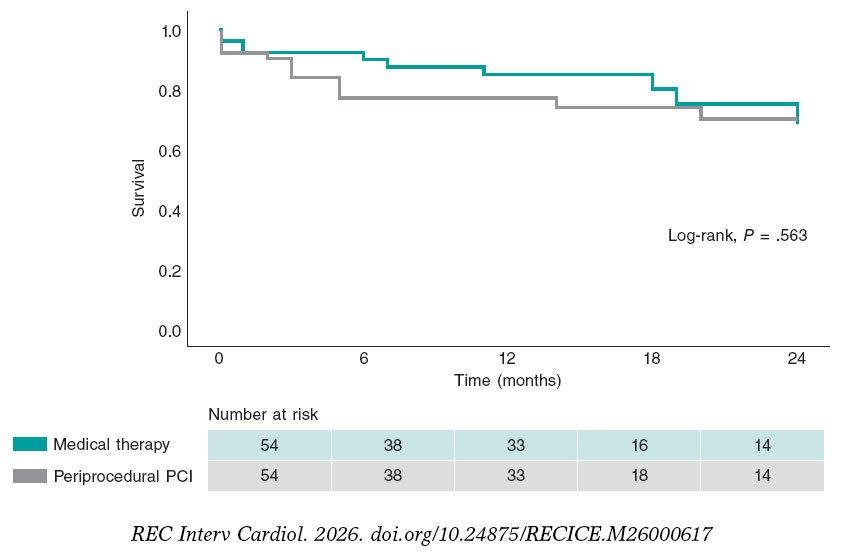
Figure 1. Kaplan-Meier curves for overall survival in the propensity-matched cohort comparing planned periprocedural PCI with optimal medical therapy alone. PCI, percutaneous coronary intervention.
Regarding secondary outcomes at 30 days, all-cause mortality occurred in 8.8% of patients undergoing PCI and 3.2% of those on optimal medical therapy (OR, 2.91; 95%CI, 0.73-11.64; P = .120), and cardiovascular mortality occurred in 7.5% of the PCI group vs 2.1% of the optimal medical therapy group (OR, 3.73; 95%CI, 0.73-19.0; P = .145); neither difference was statistically significant. MACE at 30 days occurred in 10.0% of patients undergoing PCI and 7.4% of those on optimal medical therapy (OR, 1.38; 95%CI, 0.48-3.99; P = .550). Life-threatening bleeding occurred in 5.0% vs 2.1% of patients; P = .300. Major bleeding occurred in 6 patients undergoing PCI (7.5%) compared with 2 on optimal medical therapy (2.1%), and minor bleeding occurred in 10 (12.5%) vs 10 (10.6%), respectively. The overall distribution of bleeding severity did not differ significantly between groups; P = .219. The median decrease in eGFR during hospitalization was 3.66 mL/min/1.73 m2 (IQR, 14.55) in the optimal medical therapy group and 6.62 mL/min/1.73 m2 (IQR, 12.22) in the PCI group; P = .093. The median decrease in hemoglobin was 2.10 in both groups (optimal medical therapy: IQR, 1.25; PCI: IQR, 2.2; P = .574).
Unplanned revascularization during follow-up occurred in 5 patients on optimal medical therapy (5.6%) and 2 patients undergoing PCI (2.6%); P = .455. No significant differences were reported either.
Overall, mortality was numerically higher in the PCI group and unplanned revascularization rates were lower, but neither difference reached statistical significance, supporting comparable safety and efficacy of both treatment strategies in this cohort.
Timing of periprocedural percutaneous coronary intervention
Of the 80 patients who underwent periprocedural PCI, 47 (58.8%) underwent PCI before TAVI and 33 (41.2%) underwent PCI concomitantly with TAVI. Baseline characteristics according to PCI timing are shown in table 2. Patients in the concomitant group were more frequently female (60.6% vs 38.3%; P = .049) and tended to be slightly older (83.6 ± 5.0 vs 81.3 ± 5.6 years; P = .063). Body mass index, EuroSCORE II, and STS mortality scores were comparable. Cardiovascular risk factors were similarly distributed, except for hemodialysis-dependent CKD, which was more frequent in the concomitant PCI group (12.5% vs 2.2%; P = .071).
Table 2.. Baseline clinical, anatomical, and procedural characteristics of patients undergoing planned periprocedural PCI, stratified by PCI timing
| Variables | All (n = 80) | PCI before TAVI (n = 47) | Concomitant PCI (n = 33) | P |
|---|---|---|---|---|
| Baseline characteristics | ||||
| Age, y | 82.2 ± 5.4 | 81.3 ± 5.6 | 83.6 ± 5.0 | .063 |
| Female sex | 38 (47.5) | 18 (38.3) | 20 (60.6) | .049 |
| BMI | 26.9 ± 4.2 | 27.7 ± 4.6 | 25.9 ± 3.5 | .066 |
| EuroSCORE II | 4.8 [7.5] | 4.4 [5.5] | 5.4 [9.8] | .528 |
| STS mortality score | 5.2 [4.8] | 5.0 [4.7] | 5.4 [11.5] | .301 |
| Risk factors | ||||
| Hypertension | 73 (91.3) | 42 (89.4) | 31 (93.9) | .476 |
| Dyslipidemia | 71 (88.8) | 41 (87.2) | 30 (90.9) | .609 |
| Diabetes mellitus | 38 (47.5) | 25 (53.2) | 13 (39.4) | .224 |
| Peripheral artery disease | 16 (20.0) | 11 (23.4) | 5 (15.2) | .364 |
| Cerebrovascular disease | 11 (13.8) | 9 (19.1) | 2 (6.1) | .094 |
| Pulmonary disease | 8 (10.0) | 5 (10.6) | 3 (9.1) | .820 |
| CKD | 46 (57.5) | 27 (57.4) | 19 (57.6) | .991 |
| Hemodialysis-dependent CKD | 5 (6.5) | 1 (2.2) | 4 (12.5) | .071 |
| Atrial fibrillation | 30 (37.5) | 19 (40.4) | 11 (33.3) | .519 |
| NYHA class | 2.8 ± 0.7 | 2.8 ± 0.6 | 2.8 ± 0.7 | .726 |
| CCS class ≥ 1 | 31 (57.4) | 21 (60.0) | 10 (52.7) | .875 |
| CAD | ||||
| No. of vessels involved | .513 | |||
| 1 VD | 40 (50.0) | 25 (53.2) | 15 (45.5) | |
| 2 VD | 19 (23.8) | 9 (19.1) | 10 (30.3) | |
| 3 VD | 21 (26.3) | 13 (27.7) | 8 (24.2) | |
| LMCAD | 14 (17.5) | 8 (17.0) | 6 (18.2) | .893 |
| Proximal CAD | 51 (63.7) | 31 (66.0) | 20 (60.6) | .624 |
| Proximal LAD involvement | 19 (23.8) | 12 (25.5) | 7 (21.2) | .655 |
| Past medical history of MI | 16 (20.0) | 12 (25.5) | 4 (12.1) | .140 |
| Previous CABG | 11 (13.8) | 8 (17.0) | 3 (9.1) | .311 |
| Previous PCI | 15 (18.8) | 12 (25.5) | 3 (9.1) | .064 |
| Computed tomography | ||||
| Aortic valve calcium score | 2117.0 ± 1142.8 | 2244.2 ± 1193.1 | 1906.8 ± 1045.8 | .267 |
| Left coronary height, mm | 14.0 ± 3.6 | 14.7 ± 3.3 | 12.7 ± 3.9 | .065 |
| Right coronary height, mm | 14.3 ± 3.2 | 15.3 ± 2.9 | 12.6 ± 2.9 | .002 |
| Echocardiography | ||||
| Mean aortic valve gradient | 44.6 ± 13.6 | 43.4 ± 12.8 | 46.0 ± 14.6 | .410 |
| LVEF | 51.5 ± 10.4 | 52.0 ± 10.3 | 50.7 ± 10.6 | .595 |
| Transcatheter heart valve type | ||||
| Balloon-expandable | 22 (27.5) | 13 (27.7) | 9 (27.3) | .970 |
| Self-expanding | 58 (72.5) | 34 (72.3) | 24 (72.7) | |
|
BMI, body mass index; CABG, coronary artery bypass grafting; CAD, coronary artery disease; CCS, Canadian Cardiovascular Society; CKD, chronic kidney disease; LAD, left anterior descending artery; LMCAD, left main coronary artery disease; LVEF, left ventricular ejection fraction; MI, myocardial infarction; NYHA, New York Heart Association; PCI, percutaneous coronary intervention; STS, Society of Thoracic Surgeons; VD, vessel disease. Data are expressed as no. (%), mean ± SD, or median [IQR]. |
||||
A past medical history of myocardial infarction, CABG, or previous PCI was numerically more common in the PCI-before-TAVI group, with a history of previous PCI showing a borderline difference between groups (25.5% vs 9.1%; P = .064).
Coronary angiographic findings—including the number of diseased vessels, prevalence of LMCAD, and proximal LAD involvement—were similar between strategies. Computed tomography measurements of aortic valve calcium burden were comparable; however, the concomitant PCI group had a lower mean left coronary height (12.7 ± 3.9 mm vs 14.7 ± 3.3 mm; P = .065) and a significantly lower right coronary height (12.6 ± 2.9 mm vs 15.3 ± 2.9 mm; P = .002). Echocardiographic parameters and transcatheter valve type did not differ significantly.
Technical aspects of PCI—including the proportion of left main interventions, LAD PCI, median number of stents, total stent length, and use of adjunctive techniques—were broadly similar between groups (table 3). In contrast, procedural metrics during TAVI differed: concomitant PCI was associated with greater contrast use (419.6 ± 110.1 mL vs 256.0 ± 120.3 mL; P < .001) and longer procedure times (200.0 ± 58.3 minutes vs 154.4 ± 50.7 minutes; P = .006). Laboratory changes after TAVI, including hemoglobin decline and reduction in eGFR, did not differ significantly between strategies.
Table 3. Technical aspects of PCI and TAVI procedures and laboratory changes during the index hospitalization, stratified by PCI timing
| Variables | All (n = 80) | PCI before TAVI (n = 47) | Concomitant PCI (n = 33) | P |
|---|---|---|---|---|
| PCI procedure | ||||
| LMCAD PCI | 17 (21.3) | 11 (23.4) | 6 (18.2) | .574 |
| LAD PCI | 41 (51.2) | 22 (46.8) | 19 (57.6) | .343 |
| No. of stents | 1 [1] | 1 [1] | 1 [0] | .179 |
| Total stent length, mm | 24.0 [20.0] | 30.0 [24.5] | 23.0 [20.5] | .173 |
| FFR/iFR | 7 (9.6) | 5 (12.2) | 2 (6.3) | .392 |
| Rotational atherectomy | 8 (11.3) | 5 (12.8) | 3 (9.4) | .648 |
| TAVI procedure | ||||
| Contrast volume, mL | 306.8 ± 139.0 | 256.0 ± 120.3 | 419.6 ± 110.1 | < .001 |
| Procedure duration, min | 173.2 ± 57.8 | 154.4 ± 50.7 | 200.0 ± 58.3 | .006 |
| Laboratory values after TAVI | ||||
| ΔHb (minimum − initial), g/dL | −2.1 [2.2] | −1.7 [1.9] | −2.5 [1.7] | .108 |
| ΔGFR (minimum − initial) | −6.6 [12.3] | −7.7 [12.0] | −4.7 [11.7] | .237 |
|
FFR, fractional flow reserve; GFR, glomerular filtration rate; Hb, hemoglobin; iFR, instantaneous wave-free ratio; LMCAD, left main coronary artery disease; LAD, left anterior descending coronary artery; PCI, percutaneous coronary intervention; TAVI, transcatheter aortic valve implantation. Data are expressed as no. (%), mean ± SD, or median [IQR]. |
||||
During a mean follow-up of 18.2 ± 7.1 months, cardiovascular survival was comparable (20.4 vs 21.1 months; P = .667). Consistently, Cox regression analysis showed no significant association between PCI timing and cardiovascular mortality (HR, 1.29; 95%CI, 0.39-4.23; P = .670). Unadjusted analysis suggested longer overall survival in the PCI-before-TAVI group (20.3 vs 15.4 months; log-rank P = .010), as shown in figure 2, but this association was no longer significant after adjustment. In a Cox model including age, sex, STS score, and dialysis-dependent CKD (figure 3), concomitant PCI was not independently associated with mortality (HR, 0.52; 95%CI, 0.18-1.52; P = .231), whereas dialysis-dependent CKD emerged as a strong predictor of death (HR, 8.45; 95%CI, 2.34-31.35; P = .001). These findings suggest that early and mid-term outcomes are broadly comparable between the 2 timing strategies, with baseline comorbidities—particularly advanced renal disease—playing a larger role in prognosis.
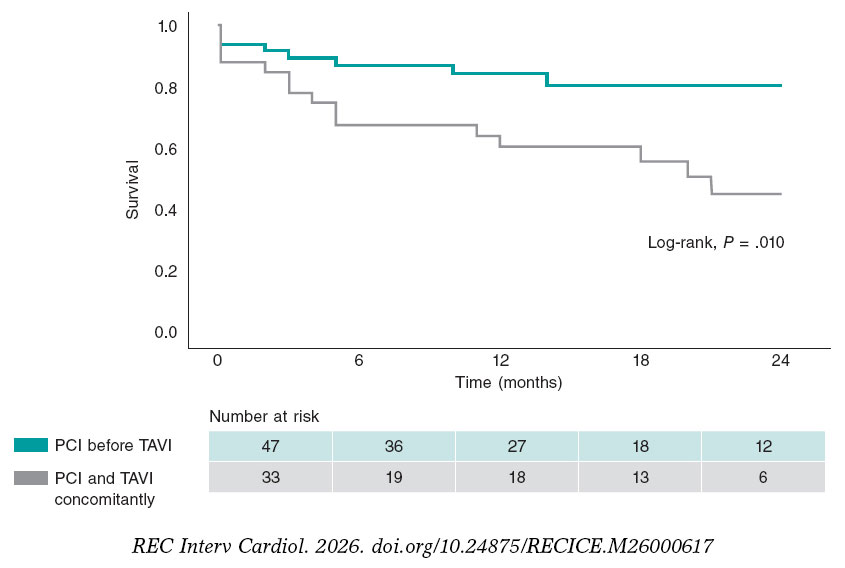
Figure 2. Kaplan-Meier curves for overall survival according to periprocedural PCI timing (PCI before TAVI vs concomitant PCI). PCI, percutaneous coronary intervention; TAVI, transcatheter aortic valve implantation.
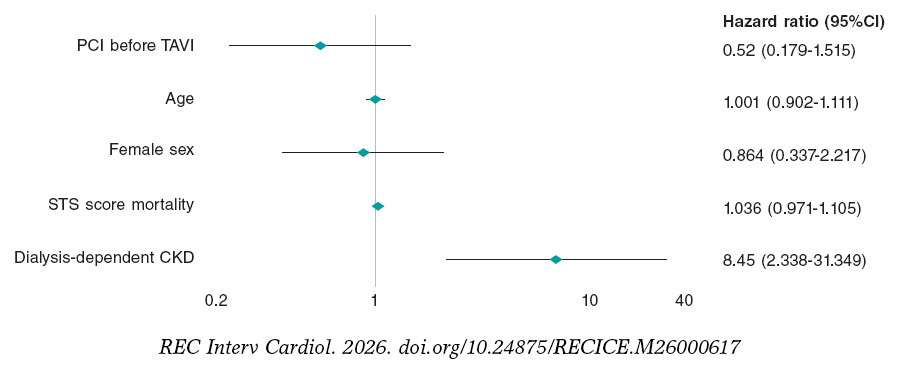
Figure 3. Forest plot showing HRs with 95%CIs for variables included in the multivariable Cox regression model. HRs are plotted on a logarithmic scale; values to the right of the vertical line at HR, 1 indicate increased risk, whereas values to the left indicate reduced risk. 95%CI, 95% confidence interval; CKD, chronic kidney disease; PCI, percutaneous coronary intervention; STS, Society of Thoracic Surgeons; TAVI, transcatheter aortic valve implantation.
Thirty-day rates of all-cause mortality (12.1% vs 6.4%; P = .439), MACE (12.1% vs 8.5%; P = .711), and life-threatening bleeding during hospitalization (3.0% vs 6.4%; P = .639) were similar for concomitant PCI vs PCI before TAVI.
DISCUSSION
In this single-center cohort of TAVI candidates with obstructive CAD, a strategy of planned periprocedural PCI—within 6 months before or concomitant with TAVI—was not associated with statistically significant differences in 24-month overall or cardiovascular survival compared with optimal medical therapy alone. Similarly, no differences were observed in 30-day overall or cardiovascular survival, 30-day MACE, life-threatening bleeding during hospitalization, or unplanned revascularization during follow-up. Findings for the primary endpoints remained consistent after propensity score matching, with adequate covariate balance. Among patients selected for PCI, timing (before vs concomitant with TAVI) did not affect clinical outcomes; however, concomitant PCI was associated with greater contrast use and longer procedure duration. Importantly, unplanned revascularization rates were low overall in our cohort (5.6% without PCI vs 2.6% with PCI) and lower than those reported in NOTION-3, while remaining consistent with contemporary real-world series reporting modest rates of post-TAVI coronary events under selective revascularization strategies. Overall, our findings rule out major differences in mortality between strategies, although mortality event rates were numerically higher in the PCI group.
Our findings are consistent with the observational literature and the ACTIVATION trial, neither of which demonstrated a survival advantage of routine PCI before TAVI. Both relied on angiographic lesion selection, whereas NOTION-3 used FFR ≤ 0.80, which may partly explain the divergent findings. The numerically lower rate of unplanned revascularization with PCI mirrors the effect observed in NOTION-3, which was driven primarily by reductions in emergency revascularization rather than mortality; the lower absolute rates in our cohort likely reflect selective patient management.
Concomitant PCI did not worsen clinical outcomes but increased contrast use by approximately 160 mL and procedure duration by approximately 45 minutes, consistent with registry data demonstrating a greater concentrated periprocedural burden. Timing should therefore be individualized: staged PCI may be preferable in patients with renal vulnerability or requiring complex PCI, whereas concomitant PCI may be appropriate when a single procedural encounter is advantageous and contrast exposure can be safely managed.
CKD, particularly dialysis-dependent CKD, emerged as a strong, independent predictor of mortality and outweighed the effects of treatment timing. This finding underscores the importance of renal risk mitigation—including judicious contrast use, careful hemodynamic management, and individualized antithrombotic strategies—throughout the TAVI pathway. Notably, physiological assessment and plaque-modifying techniques were used infrequently; broader adoption of these approaches may refine lesion selection and could alter the net clinical impact of PCI in future practice.
Our findings support a selective, heart-team-guided revascularization strategy that prioritizes proximal lesions, symptom relief, and procedural feasibility. Given the wide CIs, decisions should integrate coronary anatomy and physiology, renal and bleeding risks, and considerations regarding future coronary access.
Several limitations should be considered. This retrospective single-center analysis included a modest sample size and a low number of events, limiting statistical power and increasing the risk of type II error. Residual confounding, including confounding by indication, remains possible despite propensity score matching. The 14-year enrollment period encompassed substantial evolution in both TAVI and PCI practice, although treatment allocation did not differ between periods and a sensitivity analysis incorporating TAVI year did not alter the conclusions. Systematic antithrombotic data were unavailable throughout the entire study period. Physiological assessment was infrequently performed, lesion complexity (eg, SYNTAX score) was not quantified, and completeness of revascularization was not assessed. Our findings reflect an angiography-guided strategy and should not be extrapolated to physiology-guided approaches such as that used in NOTION-3.
Future studies should incorporate physiology-guided lesion selection and intravascular imaging, stratify patients according to proximal and LMCAD, and compare timing strategies using standardized protocols. Adequately powered randomized trials with prespecified renal and bleeding subgroups are needed.
CONCLUSIONS
In TAVI candidates with obstructive CAD, a strategy of planned periprocedural PCI vs optimal medical therapy alone was not associated with statistically significant differences in 24-month overall or cardiovascular mortality, including after propensity score matching, nor was it associated with differences in short-term events. Among patients undergoing PCI, PCI before TAVI vs concomitant PCI produced similar clinical outcomes, although concomitant procedures required more contrast and longer procedure times (figure 4). Unplanned revascularization was infrequent in our cohort—lower than in NOTION-3 and consistent with real-world series—supporting a selective approach to revascularization. Given the wide CIs around treatment effects and the strong prognostic impact of dialysis-dependent CKD, patient-level factors (renal function and bleeding risk), lesion characteristics (particularly LMCAD and proximal disease), and anticipated future coronary access should guide both the decision to revascularize and the choice of timing, pending larger randomized trials.
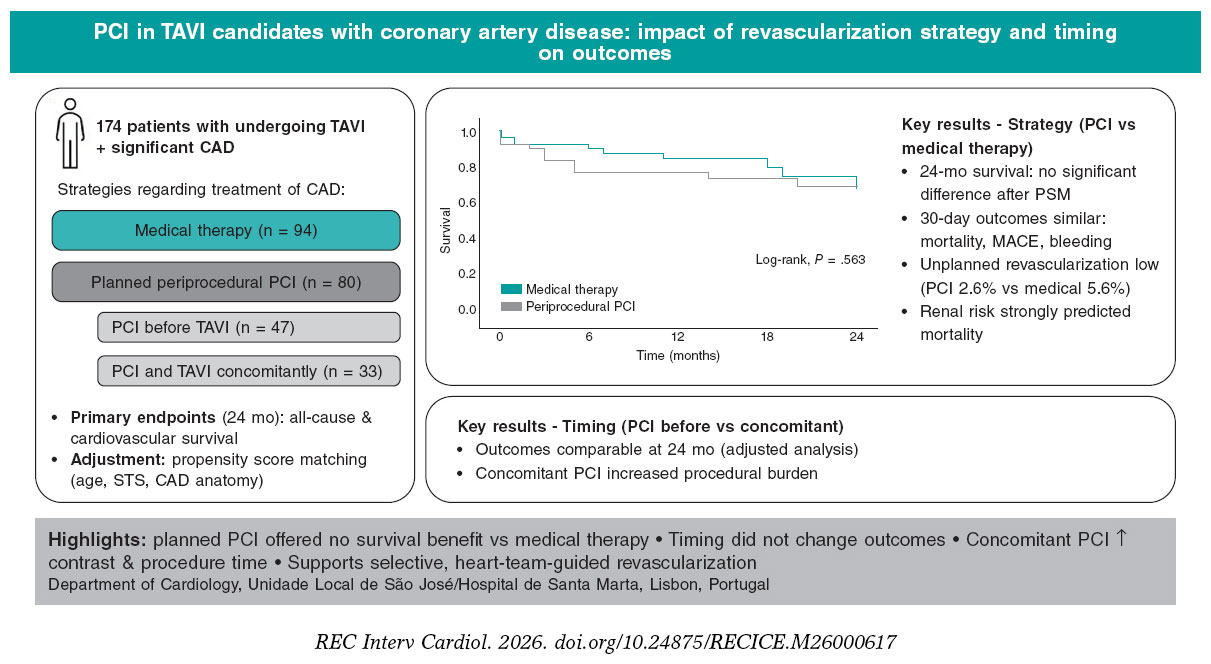
Figure 4. Central illustration. Planned periprocedural PCI vs optimal medical therapy in TAVI candidates with obstructive CAD. Of 174 patients with severe aortic stenosis and significant CAD undergoing TAVI, 80 received planned periprocedural PCI and 94 optimal medical therapy alone. The primary analysis and propensity-matched cohort (n = 108) showed no significant differences in 24-month overall or cardiovascular survival. Among patients undergoing PCI, concomitant PCI vs PCI before TAVI produced similar clinical outcomes but required greater contrast volume and longer procedure time. CAD, coronary artery disease; CKD, chronic kidney disease; HR, hazard ratio; PCI, percutaneous coronary intervention; PSM, propensity score matching; STS, Society of Thoracic Surgeons; TAVI, transcatheter aortic valve implantation.
DATA AVAILABILITY
The data supporting the findings of this study are available from the corresponding author upon reasonable request.
FUNDING
No funding was received for this study.
ETHICAL CONSIDERATIONS
The study was approved by the institutional Ethics Committee and conducted in full compliance with the principles outlined in the Declaration of Helsinki. Owing to its retrospective observational design, the requirement for individual informed consent was waived. This study was conducted in accordance with the SAGER guidelines; although sex was included as a covariate in multivariable analyses, the sample size precluded dedicated sex-stratified subgroup analyses.
STATEMENT ON THE USE OF ARTIFICIAL INTELLIGENCE
The authors used ChatGPT (OpenAI) to assist with language editing and clarification of wording during manuscript drafting. Artificial intelligence tools were not used for study design, data collection, statistical analysis, or scientific interpretation, and no identifiable patient data were provided to the tool. All content was reviewed, edited, and approved by the authors, who take full responsibility for the accuracy and integrity of the published work.
AUTHORS’ CONTRIBUTIONS
R. Carvalheiro: conceptualization, study design, data collection, statistical analysis, manuscript drafting, and revision. M. Marques Antunes and F. Barbas de Albuquerque: data collection, critical review of the manuscript, and approval of the final version. B. Teixeira, A. Grazina, P. Brás, T. Mendonça, L. Almeida Morais, T. Pereira da Silva, R. Ramos, and A. Fiarresga: critical review of the manuscript and approval of the final version. I. Rodrigues, R. Cruz Ferreira, and D. Cacela: supervision, critical review of the manuscript, and approval of the final version. All authors read and approved the final manuscript.
CONFLICTS OF INTEREST
The authors declared no conflicts of interest whatsoever.
WHAT IS KNOWN ABOUT THE TOPIC?
- CAD coexists in 40%-75% of TAVI candidates and has been associated with worse outcomes. By analogy with surgical practice, many heart teams consider PCI around TAVI, yet evidence of a benefit in hard clinical outcomes remains mixed.
- The ACTIVATION trial did not establish noninferiority of routine pre-TAVI PCI, whereas NOTION-3, using FFR-guided lesion selection, reported fewer composite endpoints, driven by reductions in emergency revascularization.
- Although registry data suggest that concomitant PCI increases procedural burden, adjusted long-term differences among timing strategies remain inconsistent.
WHAT DOES THIS STUDY ADD?
- In 174 TAVI candidates with obstructive CAD, planned periprocedural PCI was not associated with improved 24-month survival compared with optimal medical therapy, either in the full cohort or after propensity score matching (HR, 0.98; 95%CI, 0.41-2.30), a finding confirmed by multivariable sensitivity analysis (HR, 1.13; 95%CI, 0.43-2.98).
- PCI timing (before vs concomitant with TAVI) did not influence clinical outcomes, although concomitant PCI increased procedural burden.
- Dialysis-dependent CKD emerged as the dominant prognostic factor.
- These findings support selective, heart-team-guided revascularization and highlight the need for physiologyguided randomized trials.
SUPPLEMENTARY DATA

REFERENCES
1. Goel SS, Ige M, Tuzcu EM, et al. Severe aortic stenosis and coronary artery disease - implications for management in the transcatheter aortic valve replacement era: a comprehensive review. J Am Coll Cardiol. 2013;61:1-10.
2. Persits I, Layoun H, Kondoleon NP, et al. Impact of untreated chronic obstructive coronary artery disease on outcomes after transcatheter aortic valve replacement. Eur Heart J. 2024;45:1890-900.
3. Sankaramangalam K, Banerjee K, Kandregula K, et al. Impact of coronary artery disease on 30-day and 1-year mortality in patients undergoing transcatheter aortic valve replacement: a meta-analysis. J Am Heart Assoc. 2017;6:e006928.
4. D'Ascenzo F, Verardi R, Visconti M, et al. Independent impact of extent of coronary artery disease and percutaneous revascularisation on 30-day and 1-year mortality after TAVI: a meta-analysis of adjusted observational results. EuroIntervention. 2018;14:e1169- e1177.
5. Stephan T, Thoma E, Rattka M, et al. Impact of extent of coronary artery disease and percutaneous revascularization assessed by the SYNTAX score on outcomes following transcatheter aortic valve replacement. BMC Cardiovasc Disord. 2021;21:568.
6. Danson E, Hansen P, Sen S, et al. Assessment, treatment, and prognostic implications of coronary artery disease in patients undergoing TAVI. Nat Rev Cardiol. 2016;13:276-285.
7. Tarantini G, Tang G, Nai Fovino L, et al. Management of coronary artery disease in patients undergoing transcatheter aortic valve implantation: a clinical consensus statement from the European Association of Percutaneous Cardiovascular Interventions in collaboration with the ESC Working Group on Cardiovascular Surgery. EuroIntervention. 2023;19:37-52.
8. Lawton JS, Tamis-Holland JE, Bangalore S, et al. 2021 ACC/AHA/SCAI guideline for coronary artery revascularization: a report of the American College of Cardiology/American Heart Association Joint Committee on Clinical Practice Guidelines. Circulation. 2022;145:e18-114.
9. Costa G, Pilgrim T, Amat-Santos IJ, et al. Management of myocardial revascularization in patients with stable coronary artery disease undergoing transcatheter aortic valve implantation. Circ Cardiovasc Interv. 2022;15:e012417.
10. Aarts HM, van Hemert ND, Meijs TA, et al. Percutaneous coronary intervention in patients undergoing transcatheter aortic valve implantation: a systematic review and meta-analysis. Neth Heart J. 2023;31:489-499.
11. Kotronias RA, Kwok CS, George S, et al. Transcatheter aortic valve implantation with or without percutaneous coronary artery revascularization strategy: a systematic review and meta-analysis. J Am Heart Assoc. 2017;6:e005960.
12. Patterson T, Clayton T, Dodd M, et al. ACTIVATION (PercutAneous Coronary inTervention prIor to transcatheter aortic VAlve implantaTION): a randomized clinical trial. JACC Cardiovasc Interv. 2021;14:1965-1974.
13. Lønborg J, Jabbari R, Sabbah M, et al. PCI in patients undergoing transcatheter aortic-valve implantation. N Engl J Med. 2024;391:2189-2200.
14. Rheude T, Costa G, Ribichini FL, et al. Comparison of different percutaneous revascularisation timing strategies in patients undergoing transcatheter aortic valve implantation. EuroIntervention. 2023;19:589-599.
15. Dhoble A, Ahmed T, McKay RG, et al. Timing and outcomes of PCI in conjunction with TAVR with balloon-expandable valves. JACC Cardiovasc Interv. 2025;18:244-254.
16. Carvalho PEP, Nascimento BR, Gewehr DM, et al. Optimal timing for percutaneous coronary intervention in patients undergoing transcatheter aortic valve replacement: a network meta-analysis. Cardiovasc Revasc Med. 2025;76:56-63.
17. Murray C, Ryan C, Cronin M, et al. Management of coronary artery disease in the context of transcatheter aortic valve implantation: a systematic review and meta-analysis of percutaneous coronary intervention timing and an algorithmic approach to management. Interv Cardiol Rev Resour. 2025;20:100-112.
18. Vrints C, Andreotti F, Koskinas KC, et al. 2024 ESC guidelines for the management of chronic coronary syndromes. Eur Heart J. 2024;45:3415-3537.