
ABSTRACT
Introduction and objectives: Persistent microvascular obstruction and incomplete myocardial reperfusion remain major challenges in ST-segment elevation myocardial infarction (STEMI) despite timely primary percutaneous coronary intervention (pPCI). Adjunctive intracoronary fibrinolysis has re-emerged as a potential strategy to improve tissue-level reperfusion, but the effect of low-dose prourokinase remains uncertain.
Methods: We performed a systematic review and meta-analysis of randomized controlled trials evaluating adjunctive intracoronary low-dose prourokinase during pPCI in adults with STEMI. CENTRAL, LILACS, MEDLINE/PubMed, trial registries, and citation sources were searched from inception through 12 January 2026. Risk of bias was assessed using RoB 2. Random-effects meta-analyses were conducted using risk ratios (RRs) or mean differences (MDs) with 95% confidence intervals (95%CIs).
Results: Six randomized trials including 1328 patients were eligible. Compared with control, adjunctive intracoronary low-dose prourokinase significantly improved complete ST-segment resolution (RR, 1.28; 95%CI, 1.12-1.46; P < .001) and final TIMI grade 3 flow (RR, 1.08; 95%CI, 1.03-1.14; P = .002). Furthermore, it was associated with a lower corrected TIMI frame count and reduced peak cardiac biomarker levels. No clear difference was observed in 30-day major adverse cardiovascular events (MACE), although a signal toward lower 6-month MACE was observed in 3 trials (RR, 0.59; 95%CI, 0.38-0.92; P = .02). Safety evidence for major bleeding was limited to 2 trials and remained imprecise.
Conclusions: Adjunctive intracoronary low-dose prourokinase appears to improve myocardial reperfusion. However, current evidence is insufficient to confirm clinical benefit or exclude a clinically meaningful increase in major bleeding; larger contemporary trials are needed to determine whether these benefits translate into meaningful clinical advantages.
PROSPERO CRD420261284192.
Keywords: STEMI. Primary PCI. Prourokinase. Intracoronary. Microvascular reperfusion. No-reflow phenomenon.
RESUMEN
Introducción y objetivos: La obstrucción microvascular persistente y la reperfusión miocárdica incompleta plantean desafíos importantes en el infarto agudo de miocardio con elevación del segmento ST (IAMCEST), pese a la intervención coronaria percutánea (ICP) primaria oportuna. La fibrinolisis intracoronaria adyuvante ha resurgido como estrategia potencial para mejorar la reperfusión tisular, pero el efecto de la prourocinasa a dosis bajas sigue siendo incierto.
Métodos: Se realizó una revisión sistemática y metanálisis de ensayos aleatorizados controlados sobre prourocinasa intracoronaria adyuvante a dosis bajas durante la ICP primaria en adultos con IAMCEST. Se buscó en CENTRAL, LILACS, MEDLINE/PubMed, registros de ensayos y fuentes de citación desde su inicio hasta el 12 de enero de 2026 (riesgo de sesgo: RoB 2). Se realizaron metanálisis de efectos aleatorios con riesgos relativos (RR), diferencias de medias e intervalos de confianza del 95% (IC95%).
Resultados: Fueron elegibles 6 ensayos aleatorizados controlados con 1.328 pacientes. Frente al control, esta intervención mejoró significativamente la resolución completa del segmento ST (RR = 1,28; IC95%, 1,12-1,46; p < 0,001) y el grado final de flujo TIMI 3 (RR = 1,08; IC95%, 1,03-1,14; p = 0,002), y se asoció con menor recuento de fotogramas TIMI corregido y menores picos de biomarcadores cardiacos. No hubo diferencia clara en eventos cardiovasculares adversos mayores a 30 días, aunque 3 ensayos señalaron una menor incidencia de estos a 6 meses (RR = 0,59; IC95%, 0,38-0,92; p = 0,02). La evidencia de seguridad para sangrado mayor se limitó a 2 ensayos y fue imprecisa.
Conclusiones: La intervención parece mejorar la reperfusión miocárdica. Sin embargo, la evidencia actual s insuficiente para confirmar un beneficio clínico o excluir un aumento clínicamente relevante de sangrado mayor. Se necesitan ensayos contemporáneos de mayor tamaño para determinar si estos beneficios se traducen en una ventaja clínica significativa.
PROSPERO CRD420261284192.
Palabras clave: IAMCEST. Intervención coronaria percutánea primaria. Prourocinasa intracoronaria. Reperfusión microvascular. Fenómeno de no reflujo.
Abbreviations
MACE: major adverse cardiovascular events. PCI: primary percutaneous coronary intervention. STEMI: ST-segment elevation myocardial infarction. TIMI: Thrombolysis in Myocardial Infarction.
INTRODUCTION
ST-segment elevation myocardial infarction (STEMI) remains a major cause of morbidity and mortality. Primary PCI (pPCI) restores epicardial patency and improves outcomes, yet adequate myocardial tissue reperfusion is not always achieved despite an open infarct-related artery.1-7
A major mechanism is microvascular obstruction, clinically expressed as no-reflow or slow-flow. Distal embolization, ischemia- reperfusion injury, endothelial swelling, inflammation, and platelet- leukocyte aggregation may all impair microvascular perfusion after pPCI and are associated with larger infarcts, poorer left ventricular recovery, and worse outcomes.5-9
Adjunctive intracoronary fibrinolysis with low-dose prourokinase has therefore been proposed to dissolve residual thrombus and distal emboli and improve tissue-level reperfusion beyond mechanical reperfusion alone. However, available randomized clinical trials have been small, have reported heterogeneous outcomes, and have focused largely on surrogate endpoints, leaving efficacy and bleeding risk uncertain.10-14
We performed a narrower, prespecified systematic review and meta-analysis restricted to randomized trials of adjunctive intracoronary low-dose prourokinase during primary PCI vs control without intracoronary fibrinolysis, focusing on predefined reperfusion, clinical, and safety outcomes.
METHODS
Protocol, registration, and reporting framework
This review was prospectively planned, registered in PROSPERO (CRD420261284192), and reported according to PRISMA.15 Because only previously published deidentified data were used, patient consent and institutional review board approval were not required.
Eligibility criteria
Parallel-group randomized controlled trials enrolling adults aged ≥18 years with acute STEMI treated with pPCI were included. Trials enriched for high thrombus burden were considered eligible. High thrombus burden was used as a descriptive trial-level characteristic based on each study’s eligibility criteria. Studies involving patients aged <18 years, non-STEMI populations, and studies not conducted in the setting of pPCI were excluded.
The intervention of interest was adjunctive intracoronary low-dose (10-20 mg) prourokinase administered during pPCI using any catheter- based delivery method, before or after stent deployment according to the trial protocol, with background antithrombotic therapy as defined by each study. The comparator was pPCI without intracoronary fibrinolytic therapy, including intracoronary placebo/normal saline administration or standard care. For multiarm trials, only the arms corresponding to the prespecified comparison were extracted and analyzed. Thus, in the 3-arm trial by Huang et al.,11 only the prourokinase and placebo arms were included; the tirofiban arm (n = 117) was excluded because it represented an active intracoronary nonfibrinolytic comparator outside the scope of this review.
Studies in which prourokinase was not administered intracoronarily during primary PCI, in which groups differed only by delivery technique, or in which the experimental strategy included additional active cointerventions that were not matched in the control arm were excluded.
Information sources and search strategy
The Cochrane Central Register of Controlled Trials (CENTRAL), MEDLINE/PubMed, Literatura Latinoamericana y del Caribe en Ciencias de la Salud (LILACS), ClinicalTrials.gov, and the World Health Organization International Clinical Trials Registry Platform (WHO ICTRP) were searched from inception through 12 January 2026, without language or date restrictions. Searches combined controlled vocabulary and free-text terms for STEMI, pPCI, intracoronary prourokinase, and randomized clinical trials. Backward and forward citation searches of included studies were also performed using Google Scholar. Full search strategies are provided in tables S1-S3.
Selection process
Records were imported into Rayyan for deduplication and screening.16 Two reviewers (G.A. Reartes and J.E. Robledo Almonacid) independently screened titles and abstracts and subsequently assessed full-text articles. Disagreements were resolved by discussion or, when necessary, arbitration by a third reviewer (V.P. Carlini). Reasons for full-text exclusion were documented (table S4), and the selection process was summarized in a PRISMA flow diagram (figure 1; tables S5-S6).
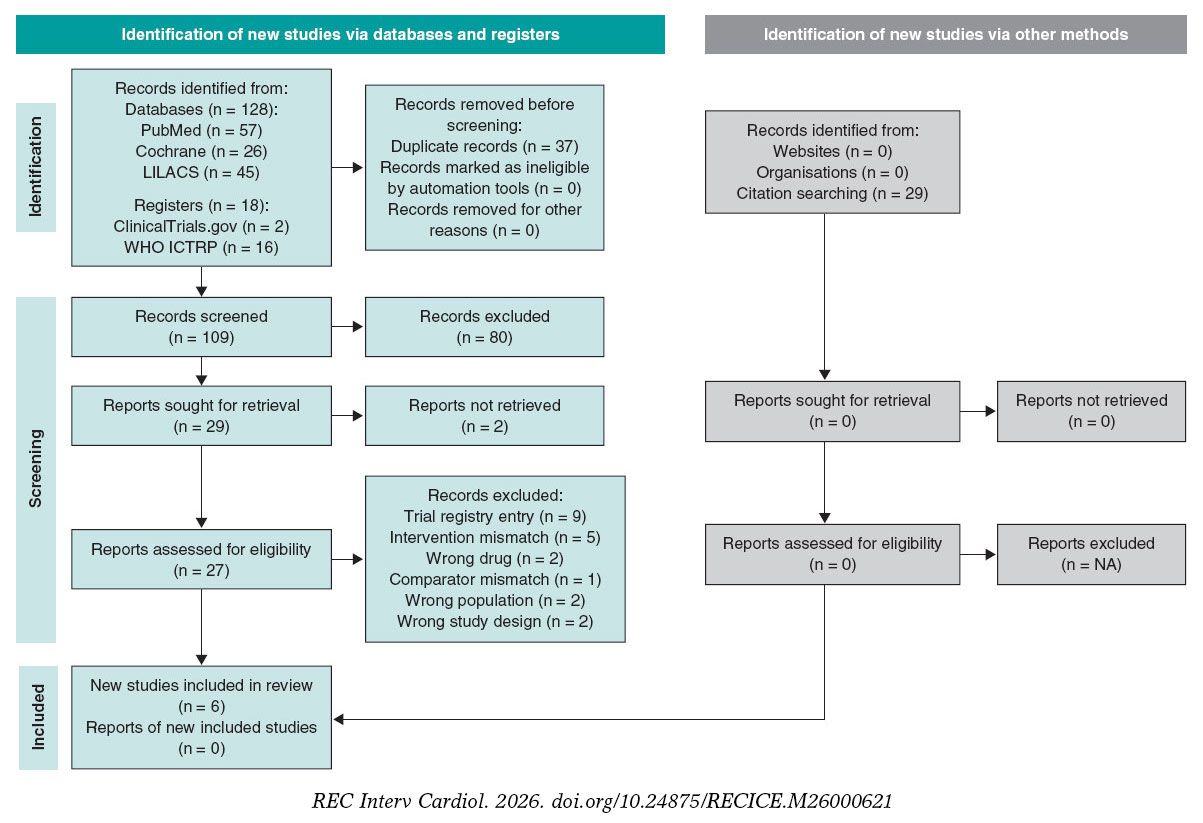
Figure 1. PRISMA 2020 flow diagram summarizing study identification, screening, eligibility assessment, and inclusion. NA: not available.
Data collection process
Data were extracted by 1 reviewer (G.A. Reartes) and independently verified by a second reviewer (J.E. Robledo Almonacid). Extracted items included study, participant, procedural, intervention, comparator, follow-up, and outcome data. Data were taken directly from published tables and text; no imputation or statistical conversion of summary data was performed.
Data items and endpoints
The primary endpoint was complete ST-segment resolution (STR), prespecified and strictly defined as a ≥ 70% reduction in ST-segment elevation. An additional secondary analysis pooled all trials reporting complete STR, including an additional trial that used a > 50% threshold, to assess the robustness of the finding.
Secondary endpoints included measures of microvascular and angiographic reperfusion (final TIMI grade 3 flow, no-reflow/slow-flow, myocardial perfusion grades [TMPG/MBG], corrected TIMI frame count [cTFC], and index of microcirculatory resistance [IMR]); infarct-size surrogates (peak or area-under-the-curve CK-MB and troponin); left ventricular ejection fraction (LVEF) at prespecified time points; clinical outcomes (major adverse cardiovascular events [MACE] as defined by each trial and extracted according to follow-up duration); and safety endpoints such as major bleeding (preferentially TIMI major bleeding or Bleeding Academic Research Consortium [BARC] grade ≥3).
Study risk-of-bias assessment
Risk of bias was assessed at the outcome level using RoB 2 by a reviewer (G.A. Reartes) and verified by a second reviewer (J.E. Robledo Almonacid). Overall judgments were derived across the 5 domains using the RoB 2 algorithm, with disagreements resolved by consensus.17 Full RoB 2 information is provided in the supplementary data (Risk of Bias in Studies [Full Domain-Level Assessments] section).
Data synthesis and statistical analysis
Meta-analyses were performed using R version 4.5.2 and the meta package (version 8.2-1). When at least 2 clinically comparable trials reported the same outcome, dichotomous data were pooled as risk ratios (RRs) and continuous data as mean differences (MDs), or standardized mean differences (SMDs) when measurement scales differed, each with 95% confidence intervals (95%Cis). Random- effects models used restricted maximum likelihood estimation (REML). Heterogeneity was assessed using I2 and τ2. Outcomes with differing definitions or time points were analyzed separately, and nonpooled results were summarized narratively. Sensitivity analyses were not prespecified in the protocol. When substantial heterogeneity was identified, exploratory post hoc leave-one-out influence analyses were conducted to assess the robustness of the pooled estimates.
Certainty assessment
Certainty of evidence was assessed using GRADE for critical and important outcomes. For randomized trials, certainty was initially rated as high and was downgraded for risk of bias, inconsistency, indirectness, imprecision, and publication bias. Summary-of-findings tables were generated using GRADEpro.18
RESULTS
Study selection
Database and registry searches identified a total of 146 records. After deduplication, 109 records were screened and 27 full-text articles were assessed for eligibility; 21 were excluded (table S4). Six randomized trials were included (figure 1 and table 1).10-13,19,20 Citation searching identified no additional eligible trials (tables S2-S3).
Table 1. Characteristics of included studies
| Study | Year | Country | Design | Registry | Enrollment | Randomized/analyzed | Symptom window | Enriched for high thrombus burden | Key exclusions (brief) | Funding |
|---|---|---|---|---|---|---|---|---|---|---|
| Cao et al.13 | 2022 | China | Prospective single-center RCT | ChiCTR1900022290 | 2015-2018 | 390/378 | ≤ 12 h | Yes (modified TIMI grade 4-5 flow) | CABG, shock, liver/renal failure, pregnancy | None reported |
| Geng et al.10 | 2018 | China | Prospective single-center RCT | ChiCTR-INR-16009135 | 2015-2016 | 230/230 | ≤ 12 h | No | ICH/stroke, aortic dissection, severe HTN, major surgery | Public |
| Huang et al.11,a | 2021 | China | Multicenter, placebo-controlled, single-blind RCT | NCT02131220 | 2015-2017 | 345/345 | ≤ 12 h | Noa | Bailout PCI, shock, stroke, surgery, liver/kidney failure | Public |
| Jiang et al.19 | 2021 | China | Prospective single-center RCT | SZXJ2018009-20170202 | 2017-2019 | 260/260 | ≤12 h | No | ICH/stroke, dissection, bleeding, severe HTN | Public |
| Wang et al.20 | 2020 | China | Single-center randomized study | None reported | 2017-2018 | 182/182 | ≤ 12 h | Yes (modified TIMI grade 3-5 flow) | Bailout PCI, CABG, liver/renal failure, bleeding, small IRA | None reported |
| Wu et al.12,b | 2020 | China | Single-center controlled randomized study | ChiCTR1800016207 | 2017 | 50/50 | ≤ 6 h | Nob | Shock, dissection, ICH/stroke, recent trauma/surgery | None reported |
|
CABG, coronary artery bypass grafting; ChiCTR, Chinese Clinical Trial Registry; HTN, hypertension; ICH, intracranial hemorrhage; IRA, infarct-related artery; NCT, ClinicalTrials.gov identifier; PCI, percutaneous coronary intervention; RCT, randomized controlled trial; TIMI, Thrombolysis in Myocardial Infarction. a Huang et al.11 did not formally select patients for high thrombus burden, although a large proportion had a high thrombus load. The original 3-arm trial included prourokinase, tirofiban, and placebo groups. Only the prourokinase and placebo arms were included in the quantitative syntheses; the tirofiban arm (n = 117) was excluded because it represented an active intracoronary nonfibrinolytic comparator outside the prespecified review question.11,12 b Wu et al.12 did not explicitly enrich for TIMI grade 4-5 flow but excluded patients without evident thrombus. |
||||||||||
Study characteristics
Table 1 and table 2 summarize the study characteristics. All 6 trials were randomized studies conducted in China; most were single-center studies, and 1 was multicenter, placebo-controlled, and single-blind. Sample sizes ranged from 50 to 390 participants. Five trials enrolled patients within 12 hours of symptom onset and 1 within 6 hours; 2 specifically targeted patients with high thrombus burden according to their trial-level eligibility criteria. Funding was mainly public or was not reported.
Table 2. Baseline and procedural characteristics of included populations
| Characteristic | Cao et al. 202213 | Geng et al. 201810 | Huang et al. 202111,* | Jiang et al. 202119 | Wang et al. 202020 | Wu et al. 202012 |
|---|---|---|---|---|---|---|
| Age, years (I vs C) | 58.2; SD, 10.4 vs 59.1; SD, 10.0 | 53.5; SD, 11.4 vs 55.2; SD, 10.4 | 59.4; SD, 10.1 vs 60.6; SD, 9.7 vs 58.5; SD, 9.9 | 53.9; SD, 6.6 vs 55.1; SD, 6.8 | 61.1; SD, 11.3 vs 58.8; SD, 11.0 | 59.5; SD, 14.4 vs 61.0; SD, 12.6 |
| Female, n (%) (I vs C) | 42/190 (22.1) vs 44/188 (23.4) | 41/118 (34.7) vs 42/112 (37.5) | 9.9-13.7% | 48/125 (38.4) vs 47/135 (34.8) | 16/92 (17.4) vs 17/90 (18.9) | 4/25 (16.0) vs 3/25 (12.0) |
| Diabetes, n (%) (I vs C) | 40 (21.1) vs 37 (19.7) | 26 (22.0) vs 22 (19.6) | 18.0-23.1% | 32 (25.6) vs 35 (25.9) | 20 (21.7) vs 22 (24.4) | 8 (32.0) vs 6 (24.0) |
| Hypertension, n (%) (I vs C) | 101 (53.2) vs 95 (50.5) | 84 (71.2) vs 69 (61.6) | 46.8-53.0% | 62 (49.6) vs 69 (51.1) | 54 (58.7) vs 46 (51.1) | 17 (68.0) vs 19 (76.0) |
| Smokers, n (%) (I vs C) | 112 (58.9) vs 105 (55.9) | 50 (42.4) vs 58 (51.8) | 55.6-64.1% | 69 (55.2) vs 77 (57.0) | 51 (55.4) vs 55 (61.1) | 12 (48.0) vs 13 (52.0) |
| Prior MI, n (%) (I vs C) | 28 (14.7) vs 25 (13.3) | NR | 0.9-4.5% | NR | 8 (8.7) vs 5 (5.6) | NR |
| Killip class ≥ 2, n (%) (I vs C) | 59 (31.1) vs 55 (29.3) | 40 (33.9) vs 38 (33.9) | NR | 60 (48.0) vs 61 (45.2) | 22 (23.9) vs 18 (20.0) | 15 (60.0) vs 11 (44.0) |
| Symptom-to-balloon time (I vs C) | 4.15 vs 4.12 h | 4.06 vs 4.15 h | 3.9-4.3 h | 5.10 vs 4.78 h | 203.6 vs 193.8 min | NR |
| Initial TIMI grade 0-1 flow, n (%) (I vs C) | 173 (91.1) vs 173 (92.0) | NR | 88.0-94.9% | NR | NR | NR |
| High thrombus grade, n (%) (I vs C) | 190 (100) vs 188 (100) | NR | 87.2-94.9% | NR | 92 (100) vs 90 (100) | 21 (84.0) vs 21 (84.0) |
|
C, control group; I, intervention group; MI, myocardial infarction; NR, not reported; SD, standard deviation; TIMI, Thrombolysis in Myocardial Infarction. Data are presented as intervention group vs control group unless otherwise specified. * For Huang et al.,11 values are summarized across the 3 study arms and are therefore presented either as the 3 individual values or as the range across arms. |
||||||
Risk of bias in studies
Risk of bias was assessed at the outcome level using RoB 2. The main concerns involved the randomization process and selection of the reported result; missing outcome data were generally not a major concern. Objective outcomes such as peak CK-MB were less vulnerable to measurement bias than visually interpreted angiographic outcomes. Cao et al. (2022) and Huang et al. (2021) had the lowest overall concerns, whereas Jiang et al. (2021) was rated as having a high risk of bias for final TIMI grade 3 flow because assessment was performed by unblinded operators.13,11,19 Full domain-level assessments are provided in the supplementary data.
Results of individual studies and synthesis
Complete ST-segment resolution (STR): primary and secondary analyses
Five trials (n = 1041) reported complete STR using a ≥ 70% threshold. In this prespecified primary analysis, intracoronary prourokinase significantly increased the rate of complete STR (n = 380/523; 72.7%) compared with control (n = 296/518; 57.1%; RR, 1.28; 95%CI, 1.12-1.46; P < .001; I2 = 46.5%) (figure 2 and figure 3). In the secondary analysis, which included an additional trial using a > 50% threshold (total n = 1301), the pooled effect remained consistent (RR, 1.22; 95%CI, 1.11-1.35; P < .001; I2 = 43.3%; figure S1), with no significant interaction between STR definitions (P for interaction = .13).
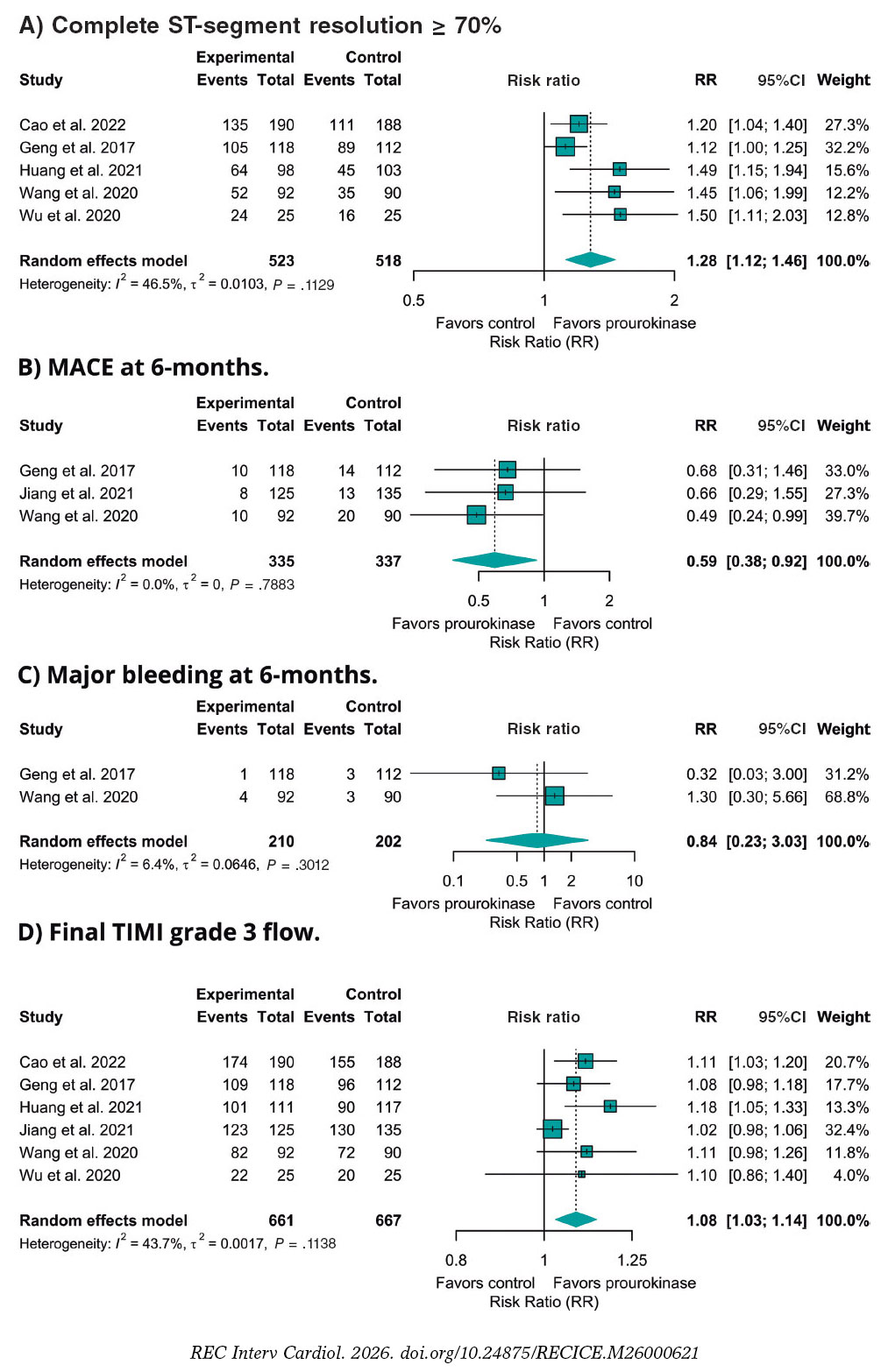
Figure 2. Adjunctive intracoronary low-dose prourokinase in STEMI: pooled effects on reperfusion and clinical outcomes. A: Complete ST-segment resolution ≥ 70%. B: 6-month major adverse cardiovascular events. C: 6-month major bleeding. D: Final TIMI grade 3 flow after pPCI. All comparisons are between adjunctive intracoronary low-dose prourokinase and control. The references cited in this figure correspond to Cao et al.,13 Geng et al.,10 Huang et al.,11 Wu et al.,12 Jiang et al.,19 and Wang et al.20
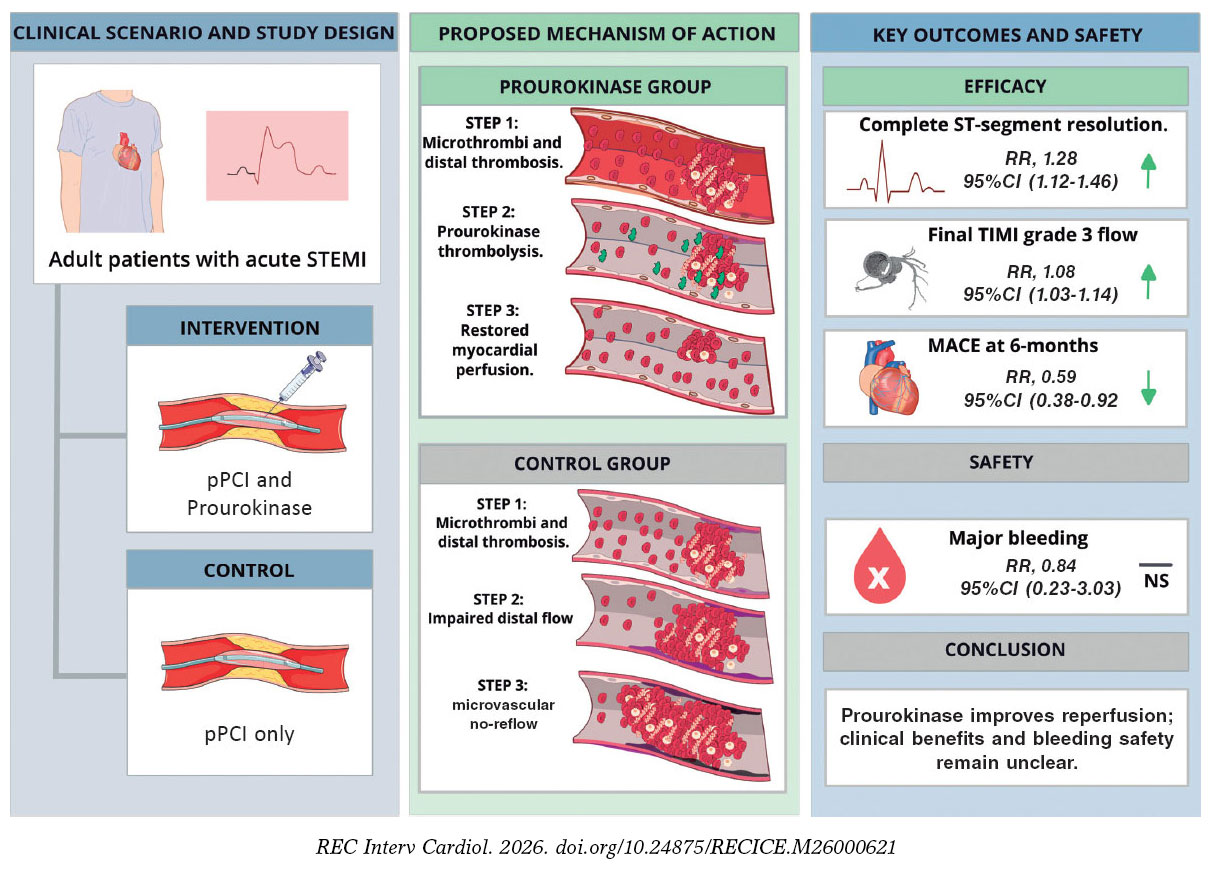
Figure 3. Central illustration. Study design, proposed mechanism, and key findings of adjunctive intracoronary prourokinase in STEMI. During pPCI for STEMI, adjunctive intracoronary low-dose prourokinase is hypothesized to dissolve residual distal thrombus and improve tissue-level reperfusion. Compared with control, prourokinase was associated with higher rates of complete ST-segment resolution (RR, 1.28; 95%CI, 1.12-1.46), final TIMI grade 3 flow (RR, 1.08; 95%CI, 1.03-1.14), and lower 6-month MACE (RR, 0.59; 95%CI, 0.38-0.92). Evidence regarding major bleeding was sparse and insufficient to confirm or exclude clinically meaningful harm (RR, 0.84; 95%CI, 0.23-3.03). MACE, major adverse cardiovascular events; NS, nonsignificant; pPCI, primary percutaneous coronary intervention; RR, risk ratio; STEMI, ST-segment elevation myocardial infarction; TIMI, Thrombolysis in Myocardial Infarction.
Major adverse cardiovascular events (MACE)
MACE at 30 days
Three trials (n = 788) reported 30-day MACE. Intracoronary prourokinase was not associated with a significant difference in the risk of MACE (n = 27/393; 6.9%) compared with control (n = 35/395; 8.9%; RR, 0.76; 95%CI, 0.47-1.23; P = .26; I2 = 0.0%) (figure S2).
MACE at 6 months
Three trials (n = 672) reported 6-month MACE. Intracoronary prourokinase significantly reduced the risk of MACE (n = 28/335; 8.4%) compared with control (n = 47/337; 13.9%; RR, 0.59; 95%CI, 0.38-0.92; P = .02; I2 = 0.0%) (figure 2 and figure 3).
Major bleeding at 6 months
Two trials (n = 412) reported TIMI-defined major bleeding at 6 months. There was no significant difference in the risk of major bleeding between the prourokinase and control groups (RR, 0.84; 95%CI, 0.23-3.03; P = .80; I2 = 6.4%). One trial reporting major bleeding at 30 days was excluded from the meta-analysis because of the differing follow-up duration (figure 2 and figure 3).
Angiographic reperfusion (final TIMI grade 3 flow)
Six trials (n = 1328) reported final TIMI grade 3 flow immediately after PCI. Intracoronary prourokinase significantly increased the likelihood of achieving TIMI grade 3 flow (n = 611/661; 92.4%) compared with control (n = 563/667; 84.4%; RR, 1.08; 95%CI, 1.03-1.14; P = .002; I2 = 43.7%) (figure 2 and figure 3).
Peak CK-MB
Six trials (n = 1328) reported in-hospital peak CK-MB levels. Intracoronary prourokinase significantly reduced peak CK-MB levels compared with control (SMD, -0.45; 95%CI, -0.61 to -0.30; P < .001; I2 = 45.3%) (figure S3). Standardized mean differences were used to account for differing measurement units across the included trials.
Corrected TIMI frame count
Four trials (n = 838) reported cTFC immediately after PCI. Intracoronary prourokinase significantly reduced cTFC compared with control (MD, -4.85 frames; 95%CI, –7.05 to -2.64; P < .001; I2 = 44.9%) (figure S4).
Index of microcirculatory resistance
One trial (n = 50) reported IMR immediately after PCI. IMR was lower in the prourokinase group than in the control group (34.56; SD, 7.48 vs 49.00; SD, 8.98; n = 25 per group; P < .001). No meta-analysis was performed for this outcome.
Left ventricular ejection fraction
Follow-up at 30 days
Three trials (n = 836) reported 30-day LVEF. Intracoronary prourokinase increased LVEF compared with control (MD, 2.26 percentage points; 95%CI, 0.54-3.98; P = .01; I2 = 71.9%). Because heterogeneity was substantial for 30-day LVEF (I2 = 71.9%), a post hoc leave-one-out sensitivity analysis was performed. Exclusion of Geng et al. eliminated heterogeneity (I2 = 0%) and yielded a larger pooled effect (MD, 3.22 percentage points; 95%CI, 2.11-4.33), suggesting that this study was the main contributor to between-study heterogeneity. In contrast, exclusion of Cao et al. or Huang et al. reduced precision, and the confidence interval crossed the null. Overall, the direction of effect remained favorable, but the statistical robustness of the 30-day LVEF estimate was limited (figure S5).10,13,11
Follow-up at 3-months
One study reported LVEF at 3 months, but quantitative synthesis was not possible because measures of dispersion were unavailable.
Follow-up at 6-months
Two trials (n = 442) reported 6-month LVEF. Intracoronary prourokinase increased LVEF compared with control (MD, 1.89 percentage points; 95%CI, 0.69-3.09; P = .002; I2 = 0%) (figure S6).
Myocardial blood flow
One trial (n = 230) reported 7-day myocardial blood flow (MBF) measured by myocardial contrast echocardiography. MBF was higher in the intervention group compared with the control group (34.13; SD, 15.59 vs 14.28; SD, 9.44 mL/min/g; P < .001). No meta-analysis was performed for this outcome.
NT-proBNP
One trial (n = 378) reported 30-day N-terminal pro–B-type natriuretic peptide (NT-proBNP). NT-proBNP levels were lower in the intervention group than in the control group (452.3; SD, 259.4 vs 632.7; SD, 278.3 ng/L; P < .001). No meta-analysis was performed for this outcome.
Peak troponin
Five trials (n = 1100) reported in-hospital peak troponin levels. Intracoronary prourokinase significantly reduced peak troponin levels compared with control (SMD, –0.37; 95%CI, –0.49 to –0.25; P < .001; I2 = 0.0%) (figure S7). Standardized mean differences were used to account for differing measurement units and assay scales across trials.
Reporting biases
As prespecified, we planned to evaluate publication bias using funnel plots for outcomes with > 10 studies. Because all syntheses included no more than 6 trials, these analyses could not be performed. Risk of bias due to selective reporting was evaluated within RoB 2 Domain 5.
Certainty of evidence
The certainty of evidence for each outcome was assessed using the GRADE approach (table S7). Certainty was rated as moderate for peak CK-MB and cTFC and was downgraded once because of the use of surrogate endpoints (indirectness). Evidence for complete STR, final TIMI grade 3 flow, and 6-month MACE was of low certainty, reflecting methodological limitations (risk of bias) and indirectness or imprecision. The certainty of evidence for 6-month major bleeding and LVEF was rated as very low because of critical imprecision, limited sample sizes, and study-level risks of bias. Detailed assessments and justifications for downgrading are provided in the Summary of Findings table (table S7).
DISCUSSION
General interpretation of findings
In this systematic review and meta-analysis, adjunctive intracoronary low-dose prourokinase during pPCI consistently improved reperfusion-related surrogate outcomes in STEMI. Compared with control, it increased complete ST-segment resolution and final TIMI grade 3 flow while reducing cTFC, peak CK-MB, and peak troponin levels, suggesting benefits at both the epicardial and tissue levels. However, evidence for patient-important outcomes was less consistent. Therefore, the overall interpretation should give greater weight to the consistency of the reperfusion-related effects than to findings for clinical endpoints, which were based on fewer studies, modest sample sizes, and heterogeneous follow-up definitions.
This pattern is consistent with prior meta-analyses showing that adjunctive intracoronary therapies, including fibrinolytics, may improve reperfusion surrogates without clearly reducing major clinical outcomes or bleeding.21-23 A plausible explanation is that, despite restoration of epicardial patency, tissue perfusion remains impaired by microvascular obstruction or no-reflow caused by distal embolization, endothelial injury, inflammation, and microvascular spasm.24,25 Intracoronary fibrinolysis may therefore act primarily at the microcirculatory level by dissolving residual thrombotic material and distal emboli, an interpretation supported in our review by lower IMR and higher myocardial blood flow reported in individual studies.26
Despite these favorable reperfusion effects, evidence for hard clinical outcomes remained limited. There was no clear difference in 30-day MACE, although a signal toward lower 6-month MACE was observed with prourokinase. Safety evidence was sparse and imprecise, and current data are insufficient to confirm or exclude a clinically meaningful increase in major bleeding. LVEF also improved modestly at 30 days and 6 months, consistent with lower 30-day NT-proBNP levels in 1 trial, but the clinical relevance of these changes remains uncertain. The 30-day LVEF analysis showed substantial heterogeneity. In leave-one-out analyses, Geng et al. appeared to be the principal contributor to between-study heterogeneity, whereas omission of Cao et al. or Huang et al. reduced precision and rendered the pooled estimate nonsignificant. Accordingly, although the overall direction of effect favored intracoronary prourokinase, the short-term LVEF finding should be interpreted cautiously.10,13,11
This pattern likely reflects limited statistical power, short follow-up, and the common dissociation between reperfusion surrogates and clinical endpoints in small randomized clinical trials.
Limitations of the included evidence
The evidence base has important limitations. Only 6 randomized trials were eligible, many analyses relied on small samples, and several favorable findings were based on surrogate rather than patient-important outcomes. Certainty ranged from moderate to very low across key outcomes. Accordingly, the apparent consistency of reperfusion benefits should not be interpreted as definitive evidence of improved clinical prognosis. Concerns regarding risk of bias recurred in the randomization process and selection of the reported result, and some angiographic and longer-term outcomes were especially vulnerable when blinded assessment or independent adjudication was unclear. Moreover, heterogeneity in patient selection, outcome definitions, and follow-up windows, together with the fact that all trials were conducted in China and most were single-center studies, may limit generalizability as well. However, the direction of effect for reperfusion outcomes was generally consistent across trials. Translation to European STEMI networks should consider differences in prourokinase availability, background antithrombotic therapy, reperfusion logistics, and intracoronary delivery practices.
Limitations of the review process
Furthermore, the resent review has process-level limitations. Some eligible unpublished or inadequately indexed studies may have been missed, particularly because no formal search was conducted in Chinese or other Asian-specific biomedical databases, despite all included trials having been conducted in China. In addition, the small number of trials and their geographic concentration precluded reliable formal assessment of publication bias, and the use of aggregate rather than individual participant data limited subgroup analyses and uniform readjudication of endpoints.
Implications for practice, policy, and research
Although adjunctive intracoronary low-dose prourokinase appears promising for improving reperfusion during pPCI in STEMI, current evidence is insufficient to support routine adoption because the apparent benefit is driven mainly by surrogate outcomes and certainty remains limited for major clinical and safety endpoints. From a practical perspective, the 10-20 mg range reflects the low-dose intracoronary prourokinase regimen evaluated across the available randomized trials, although these studies were not designed to define an optimal dose or dose-response relationship. Additionally, clinical translation may be influenced by background antithrombotic therapy, including P2Y12 inhibitor selection, heparin use, and variable glycoprotein IIb/IIIa inhibitor administration, as well as by thrombus aspiration, timing of infusion, and catheter-based delivery technique. The focus on prourokinase reflects the agent-specific randomized evidence available for this strategy and should be interpreted as a dedicated synthesis of this approach, not as evidence of superiority over other intracoronary fibrinolytics such as urokinase or alteplase. Adequately powered multicenter trials across contemporary STEMI networks, using standardized endpoints, blinded core laboratory angiographic adjudication, contemporary bleeding criteria, and longer follow-up, are needed to clarify whether these reperfusion gains translate into meaningful reductions in mortality, recurrent ischemic events, heart failure, or long-term functional impairment and to define the optimal dose, timing, delivery strategy, background antithrombotic regimen, and target population.
CONCLUSIONS
Adjunctive intracoronary low-dose prourokinase during pPCI could improve myocardial reperfusion, as reflected by better ST-segment resolution, TIMI grade flow, and infarct-size surrogates. However, these physiological benefits do not yet translate into clear and consistent improvements in patient-important clinical outcomes, underscoring the need for adequately powered trials to determine whether targeting the microcirculation can meaningfully improve prognosis in STEMI across contemporary STEMI networks and different geographic settings. Current evidence is also insufficient to confirm or exclude a clinically meaningful increase in major bleeding.
DATA AVAILABILITY
The database search strategy, citation searching, backward citation searching, table of excluded studies, PRISMA 2020 main and abstract checklists, risk-of-bias assessments (full domain-level assessments), supplementary figures, summary of findings table, RStudio scripts, and Excel files containing the extracted raw data used for the meta-analyses (tables S8-S12) are available in the supplementary data.
FUNDING
This research received no grant from any funding agency in the public, commercial, or not-for-profit sectors.
ETHICAL CONSIDERATIONS
This systematic review and meta-analysis were conducted in full compliance with the PRISMA 2020 statement and based exclusively on previously published aggregate data. Therefore, ethics committee approval and informed consent were not required. The authors accept full responsibility for the integrity and accuracy of the reported data and analyses. Potential sex- and gender-related biases were not assessed because the studies analyzed did not report the information required for such an assessment.
STATEMENT ON THE USE OF ARTIFICIAL INTELLIGENCE
During the preparation of this work, the authors used Gemini to assist with translation and improve the language and structure of the text. After using this tool, the authors reviewed and edited the content as needed and take full responsibility for the content of the published article.
AUTHORS’ CONTRIBUTIONS
G.A. Reartes: conceptualization, data curation, formal analysis, investigation, methodology, project administration, resources, software, validation, visualization, writing–original draft. J.E. Robledo Almonacid: data curation, formal analysis, investigation, methodology, validation, drafting–review and editing, supervision. V.P. Carlini: drafting–review and editing, supervision.
CONFLICTS OF INTEREST
The authors declared no conflicts of interest whatsoever.
ACKNOWLEDGEMENTS
The authors thank Victor Barreto and Clarisa Lagares for their collegial support within the Instituto de Fisiología Humana, Facultad de Ciencias Médicas, Universidad Nacional de Córdoba (Córdoba, Argentina). The authors also acknowledge the Instituto de Fisiología Humana, Facultad de Ciencias Médicas, Universidad Nacional de Córdoba, for providing its academic and institutional environment. Finally, the authors thank all investigators and study participants from the original trials included in this systematic review and meta-analysis.
WHAT IS KNOWN ABOUT THE TOPIC?
- Although pPCI restores epicardial patency in STEMI, microvascular obstruction and no-reflow may persist, contributing to larger infarcts and worse outcomes.
- Low-dose intracoronary prourokinase has been proposed as an adjunct to dissolve distal thrombus and microthrombi, but prior trials were small and largely focused on surrogate endpoints.
WHAT DOES THIS STUDY ADD?
- This focused systematic review and meta-analysis of low-dose (10-20 mg) intracoronary prourokinase during pPCI, with evidence through January 2026, shows improved ST-segment resolution, TIMI grade flow, and infarct-size surrogates.
- However, safety evidence for major bleeding was sparse and very imprecise, and the study highlights the persistent gap between improved reperfusion metrics and clear patient-important clinical benefit.
SUPPLEMENTARY DATA

REFERENCES
1. Salari N, Morddarvanjoghi F, Abdolmaleki A, et al. The global prevalence of myocardial infarction: a systematic review and meta-analysis. BMC Cardiovasc Disord. 2023;23:206.
2. Byrne RA, Rossello X, Coughlan JJ, et al. 2023 ESC Guidelines for the management of acute coronary syndromes. Eur Heart J. 2023;44:3720-826.
3. Rao SV, O'Donoghue ML, Ruel M, et al. 2025 ACC/AHA/ACEP/NAEMSP/SCAI Guideline for the Management of Patients With Acute Coronary Syndromes: A Report of the American College of Cardiology/American Heart Association Joint Committee on Clinical Practice Guidelines. Circulation. 2025;151:e771-e862.
4. Tamis-Holland JE, Abbott JD, Al-Azizi K, et al. SCAI Expert Consensus Statement on the Management of Patients With STEMI Referred for Primary PCI. J Soc Cardiovasc Angiogr Interv. 2024;3:102294.
5. Bouleti C, Mewton N, Germain S. The no-reflow phenomenon: State of the art. Arch Cardiovasc Dis. 2015;108:661-674.
6. Niccoli G, Scalone G, Lerman A, Crea F. Coronary microvascular obstruction in acute myocardial infarction. Eur Heart J. 2016;37:1024-1033.
7. Konijnenberg LSF, Damman P, Duncker DJ, et al. Pathophysiology and diagnosis of coronary microvascular dysfunction in ST-elevation myocardial infarction. Cardiovasc Res. 2020;116:787-805.
8. Niccoli G, Burzotta F, Galiuto L, Crea F. Myocardial no-reflow in humans. J Am Coll Cardiol. 2009;54:281-292.
9. Stone GW, Selker HP, Thiele H, et al. Relationship Between Infarct Size and Outcomes Following Primary PCI: Patient-Level Analysis From 10 Randomized Trials. J Am Coll Cardiol. 2016;67:1674-1683.
10. Geng W, Zhang Q, Liu J, et al. A randomized study of prourokinase during primary percutaneous coronary intervention in acute ST-segment elevation myocardial infarction. J Interv Cardiol. 2018;31:136-143.
11. Huang D, Qian J, Liu Z, et al. Effects of intracoronary proUrokinase or Tirofiban on coronary flow during primary percutaneous coronary intervention for acute myocardial infarction: A multi-center, placebo-controlled, single-blind, randomized clinical trial. Front Cardiovasc Med. 2021;8:710994.
12. Wu Y, Fu X, Feng Q, et al. Efficacy and safety of intracoronary prourokinase during percutaneous coronary intervention in treating ST-segment elevation myocardial infarction patients: a randomized, controlled study. BMC Cardiovasc Disord. 2020;20:308.
13. Cao M, Wang Z, Meng X, et al. Effects of intracoronary low-dose prourokinase administration on ST-segment elevation in patients with myocardial infarction and a high thrombus burden: a randomized controlled trial. J Int Med Res. 2022;50:3000605221139723.
14. Rehan R, Virk S, Wong CCY, et al. Intracoronary thrombolysis in ST-elevation myocardial infarction: a systematic review and meta-analysis. Heart. 2024;110:988-996.
15. Page MJ, McKenzie JE, Bossuyt PM, et al. The PRISMA 2020 statement: an updated guideline for reporting systematic reviews. BMJ. 2021;372:n71.
16. Ouzzani M, Hammady H, Fedorowicz Z, Elmagarmid A. Rayyan — a web and mobile app for systematic reviews. Syst Rev. 2016;5:210.
17. Sterne JAC, Savovic´ J, Page MJ, et al. RoB 2: a revised tool for assessing risk of bias in randomised trials. BMJ. 2019;366:l4898.
18. McMaster University, Evidence Prime. GRADEpro GDT: GRADEpro Guideline Development Tool [software]. 2023. Available at: https://gradepro.org. Accessed 19 Mar 2026.
19. Jiang W, Xiong X, Du X, Ma H, Li W, Cheng F. Safety and efficacy study of prourokinase injection during primary percutaneous coronary intervention in acute ST-segment elevation myocardial infarction. Coron Artery Dis. 2021;32:25-30.
20. Wang X, Liu H, Wu H, et al. Safety and efficacy of intracoronary prourokinase administration in patients with high thrombus burden. Coron Artery Dis. 2020;31:493-499.
21. Laborante R, Bianchini E, Ciliberti G, et al. Intracoronary adjunctive therapies for ST-elevation myocardial infarction: a network meta-analysis of trials. Eur Heart J Cardiovasc Pharmacother. 2026;12:25-34.
22. Geum MJ, Yu YM, Jeon J, et al. Intracoronary antithrombotic therapy during primary percutaneous coronary intervention in patients with STEMI: A systematic review and network meta-analysis. Thromb Res. 2024;233:127-134.
23. Kaddoura R, Mohamed Ibrahim MI, Al-Badriyeh D, Omar A, Al-Kindi F, Arabi AR. Intracoronary pharmacological therapy versus aspiration thrombectomy in STEMI (IPAT-STEMI): A systematic review and meta-analysis of randomized trials. PLoS One. 2022;17:e0263270.
24. Ndrepepa G, Kastrati A. Coronary No-Reflow after Primary Percutaneous Coronary Intervention—Current Knowledge on Pathophysiology, Diagnosis, Clinical Impact and Therapy. J Clin Med. 2023;12:5592.
25. Jaffe R, Charron T, Puley G, Dick A, Strauss BH. Microvascular obstruction and the no-reflow phenomenon after percutaneous coronary intervention. Circulation. 2008;117:3152-6.
26. Sezer M, Oflaz H, Gören T, et al. Intracoronary Streptokinase after Primary Percutaneous Coronary Intervention. N Engl J Med. 2007;356:1823-34.