
In patients with ST-segment elevation myocardial infarction (STEMI) who experience cardiac arrest and are successfully resuscitated, the location of the arrest may significantly influence prognosis. López-Palop et al.1 recently investigated this association in a study published in REC: Interventional Cardiology. Of 2344 patients with STEMI, 170 (7.3%) experienced cardiac arrest followed by successful resuscitation, and 158 (92.9%) of these had an initially shockable rhythm. The 30-day mortality rate was 7.5% for cardiac arrests occurring in hospital settings, 15.4% in primary care settings, 21.2% in advanced life support ambulances, and 48.8% outside health care settings. When out-of-hospital locations were grouped together, mortality was significantly higher than in hospital settings (38.5% vs 7.5%; P < .0005) (figure 1).1
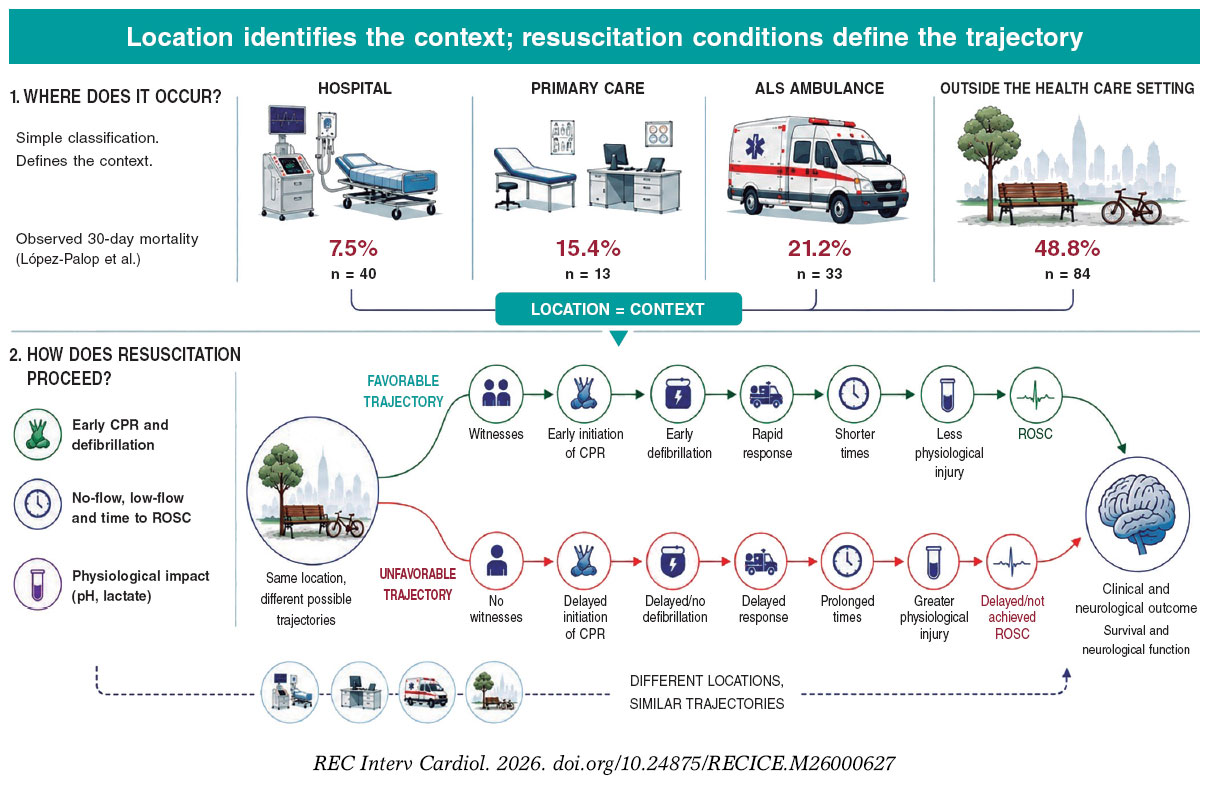
Figure 1. From cardiac arrest location to resuscitation characteristics. Conceptual representation of the heterogeneity of resuscitation trajectories according to the cardiac arrest setting. Observed 30-day mortality rates by location were obtained from López-Palop et al.1 The trajectories depicted are conceptual and do not correspond to individual patients in that cohort. ALS, advanced life support. CPR, cardiopulmonary resuscitation; ROSC, return of spontaneous circulation.
The question is whether these differences are attributable to the location of the arrest per se. In-hospital cardiac arrests generally occur in monitored settings with immediate access to resuscitation resources. By contrast, out-of-hospital cardiac arrests may be witnessed, allowing early initiation of cardiopulmonary resuscitation (CPR) and prompt defibrillation, or may go unattended for prolonged periods. This variability is reflected in major European registries. In the EuReCa TWO, bystander CPR rates ranged from 13% to 82% across 28 countries.2 In the EuReCa THREE, emergency medical services attended 32 033 of 45 251 confirmed out-of-hospital cardiac arrests. Mean response time was 12.2 minutes (range, 6.4-22.8 minutes), with longer response times associated with lower survival rates.3 Resuscitation circumstances vary considerably across cardiac arrest settings, particularly outside the hospital. It is therefore essential to consider not only where the arrest occurs but also how cardiopulmonary resuscitation is initiated and performed.
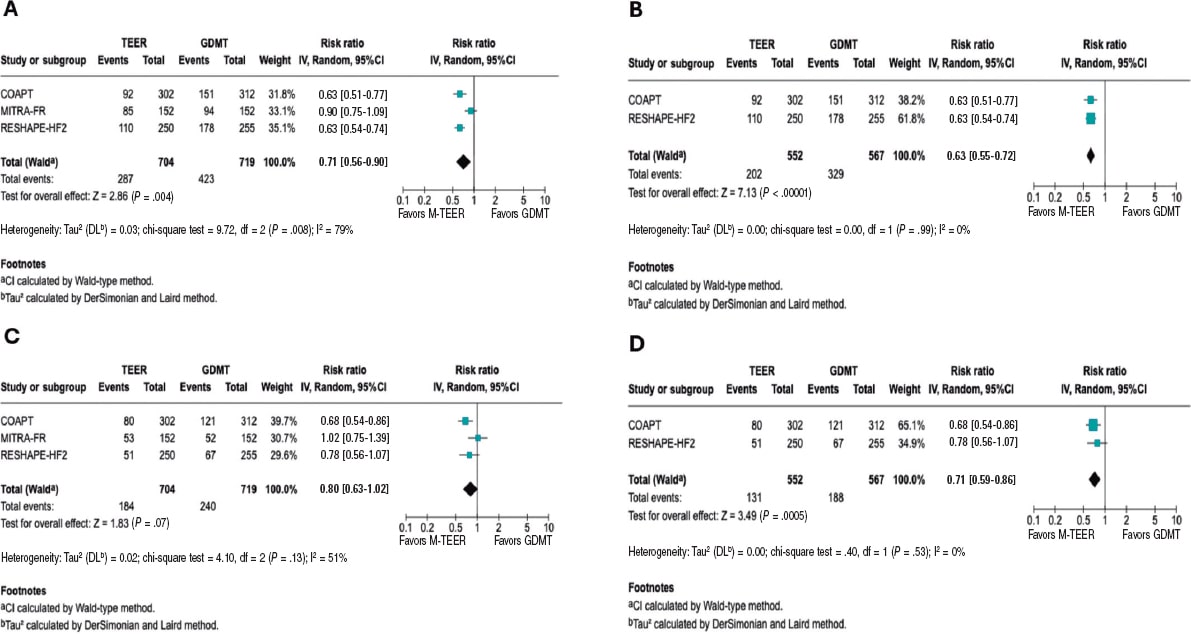
This question is not new in STEMI either. In 2015, Kunadian et al.4 studied a total of 4118 patients with STEMI undergoing primary angioplasty, of whom 484 experienced cardiac arrest, and distinguished 4 circumstances: arrest before ambulance arrival, after ambulance arrival, in hospital and in the cath lab. The in-hospital mortality rate was 29.7%, 12.0%, 16.1% and 23.8%, respectively. In multivariable analysis, arrest before ambulance arrival was independently associated with higher mortality (odds ratio [OR], 5.77; 95%CI, 2.55-13.07). Furthermore, asystole or pulseless electrical activity was associated with higher in-hospital mortality (OR, 13.43; 95%CI, 5.34-33.80). These data already suggested that, even within a classification based on location, a characteristic intrinsic to the arrest, such as initial rhythm, might provide additional prognostic information.4
The need to characterize cardiac arrest appropriately becomes particularly evident when comparing outcomes after in-hospital and out-of-hospital cardiac arrests. Høybye et al.5 studied a total of 12 347 patients, including 3501 with in-hospital arrest and 8846 with out-of-hospital arrest. The initial 30-day survival advantage of in-hospital arrest decreased from a relative risk of 1.51 (95%CI, 1.39-1.65) to 1.06 (95%CI, 0.93-1.20) when arrest characteristics were incorporated into the model.5
Andersson et al.6 provided a complementary perspective in a study of 799 patients admitted to intensive care after return of spontaneous circulation. In this cohort, witnessed arrest, age, no-flow and low-flow times, lactate, shockable rhythm and cardiac etiology were independent predictors of neurological outcome, whereas in-hospital or out-of-hospital location was not.6 Once circulation has been restored and the patient has reached the intensive care setting, prognosis appears to depend more on the characteristics of the cardiac arrest than on where it occurred.
This consideration is particularly relevant to the cohort of López-Palop et al.,1 in which 92.9% of patients had had an initially shockable rhythm. In patients with STEMI and out-of-hospital cardiac arrest, Choudry et al.7 observed that each additional minute until return of spontaneous circulation was associated with a 1.7% increase in the instantaneous risk (hazard) of death and a 7.0% increase in the odds of neurological deficit. Resuscitation duration is therefore closely related to the consequences of cardiac arrest and helps explain why 2 patients experiencing cardiac arrests in the same location may have different prognoses.7
López-Palop et al.1 adjusted their models for clinical and infarction-related variables, including age, diabetes mellitus, cardiogenic shock, anterior infarct location, percutaneous coronary intervention and time from symptom onset to first medical contact. However, they did not account for arrest-specific variables, such as whether the arrest was witnessed, the availability of defibrillation or the characteristics of the first responder, which the authors themselves acknowledge they were unable to assess. Physiological markers of the consequences of cardiac arrest, such as pH and lactate levels, were not included either.1 Although the association between arrest location and mortality persisted after adjustment for the variables considered, this finding does not establish causality or rule out residual confounding from unmeasured characteristics of the arrest and subsequent resuscitation.
Furthermore, there is an inherent limitation related to the population studied. López-Palop et al.1 included patients with STEMI who underwent successful resuscitation following cardiac arrest and subsequently received primary angioplasty. Patients who died before reaching the cath lab were excluded, thus limiting the generalizability of the reported mortality rates and potentially introducing selection bias when comparing arrest locations, particularly for out-of-hospital cardiac arrests.1
The available evidence therefore suggests that the question is not simply whether arrest location matters. Høybye et al.5 showed that the association between location and survival was attenuated after accounting for arrest characteristics, while Andersson et al.6 identified characteristics of the arrest per se, rather than its location, as independent predictors of neurological outcome.
Although arrest location defines the context, it does not necessarily determine the patient’s ultimate prognosis. The priority should therefore be to focus on modifiable factors: the response to cardiac arrest and the quality of resuscitation.
FUNDING
None declared.
STATEMENT ON THE USE OF ARTIFICIAL INTELLIGENCE
ChatGPT (OpenAI) was used as a supporting tool for drafting and reviewing the text and for graphical preparation of the figure. The authors reviewed and edited the generated content and take responsibility for the final version.
CONFLICTS OF INTEREST
S.O. Rosillo Rodríguez declares having received honoraria from Abiomed and Fresenius Medical Care for lectures, manuscript preparation and educational activities, and holding unpaid positions as Spain’s national representative to the Association for Acute CardioVascular Care of the European Society of Cardiology (ESC ACVC) and as a member of the Spanish Society of Cardiology Working Group on Ischemic Heart Disease and Acute Cardiovascular Care The remaining authors declared no conflicts of interest whatsoever.
REFERENCES
1. López-Palop R, Carrillo Sáez P, López-Palop López R, et al. Differences in the prognosis of resuscitated cardiac arrest before primary angioplasty according to location of occurrence.
2. Gräsner JT, Wnent J, Herlitz J, et al. Survival after out-of-hospital cardiac arrest in Europe — Results of the EuReCa TWO study.
3. Gräsner JT, Wnent J, Lefering R, et al. European registry of cardiac arrest study THREE (EuReCa-THREE) — EMS response time influence on outcome in Europe.
4. Kunadian V, Bawamia B, Maznyczka A, Zaman A, Qiu W. Outcomes following primary percutaneous coronary intervention in the setting of cardiac arrest: a registry database study.
5. Høybye M, Stankovic N, Holmberg M, Christensen HC, Granfeldt A, Andersen LW. In-Hospital vs. Out-of-Hospital Cardiac Arrest: Patient Characteristics and Survival.
6. Andersson A, Arctaedius I, Cronberg T, et al. In-hospital versus out-of-hospital cardiac arrest: characteristics and outcomes in patients admitted to intensive care after return of spontaneous circulation.
7. Choudry FA, Weerackody RP, Timmis AD, et al. Importance of primary percutaneous coronary intervention for reducing mortality in ST-elevation myocardial infarction complicated by out of hospital cardiac arrest.